Blair meets Herzog in push to revive stalled Gaza reconstruction plan
Tony Blair, a former UK prime minister and senior member of Trump's Board of Peace, met Israeli President Isaac Herzog on Thursday, Ynet reported, in a push to revive a Gaza reconstruction plan stalled for a year.
 Dr. Amara PatelEconomy, business and world
Blair's mission
Herzog met Blair on Thursday between rounds of the president's consultations with Israeli political parties, Ynet reported. During the visit Blair is expected to discuss the first stages of the plan, including the entry of a technocratic committee into Gaza and the establishment of an international stabilization force. He is scheduled to meet several other Israeli officials.
Officials familiar with the negotiations describe a significant deadlock, with no meaningful movement in the American framework.
Reconstruction: $2.45bn against $71.4bn of need
The Board of Peace unveiled a $2.45 billion plan in September to begin rebuilding Gaza. That is a fraction of the need: the board cited an EU and UN assessment released in April that put recovery and reconstruction needs at $71.4 billion over the next decade.
Rebuilding waits on disarmament. Israel has said there would be no reconstruction in Gaza without Hamas's complete disarmament, so the timetable is set by a political deal nobody has closed.
Hamas remains armed and continues to rebuild its ranks, while the Israeli military keeps up operations targeting its operatives, Ynet reported. Israel's 26th Knesset election produced no clear parliamentary majority and no certainty that a stable government can be formed, leaving officials in Jerusalem unsure what Israeli policy will look like in the coming months. Washington has kept pressing for progress on the plan even after the vote.
A year after the ceasefire
The plan's first phase produced a ceasefire on 10 October 2025 and the release of the last hostages seized in the 2023 attacks, in exchange for hundreds of Palestinian prisoners, Reuters reported.
Later phases foresaw Hamas disarming, governance by a Palestinian body overseen by the Board of Peace, and a gradual Israeli withdrawal handing territory to the International Stabilization Force. A year on, most of that has not happened.
Gaza's health ministry says at least 1,400 Palestinians have been killed since the ceasefire, without disclosing militant casualties. The Israeli military says five of its soldiers have been killed by Palestinian militants or in combat. Israel says its strikes target Hamas, which denies trying to rearm. Israeli troops now control around two-thirds of Gaza, up from the 53% marked by the plan's initial yellow line.
The advancing yellow line has squeezed the population of 2 million into a shrinking coastal strip where they shelter in tents and damaged buildings. Israeli-backed Palestinian militias opposed to Hamas use the Israeli-held zone to launch attacks into Hamas-controlled areas.
Aid below the plan's own minimum
More than 1.2 million people in Gaza face acute hunger, the IPC says.
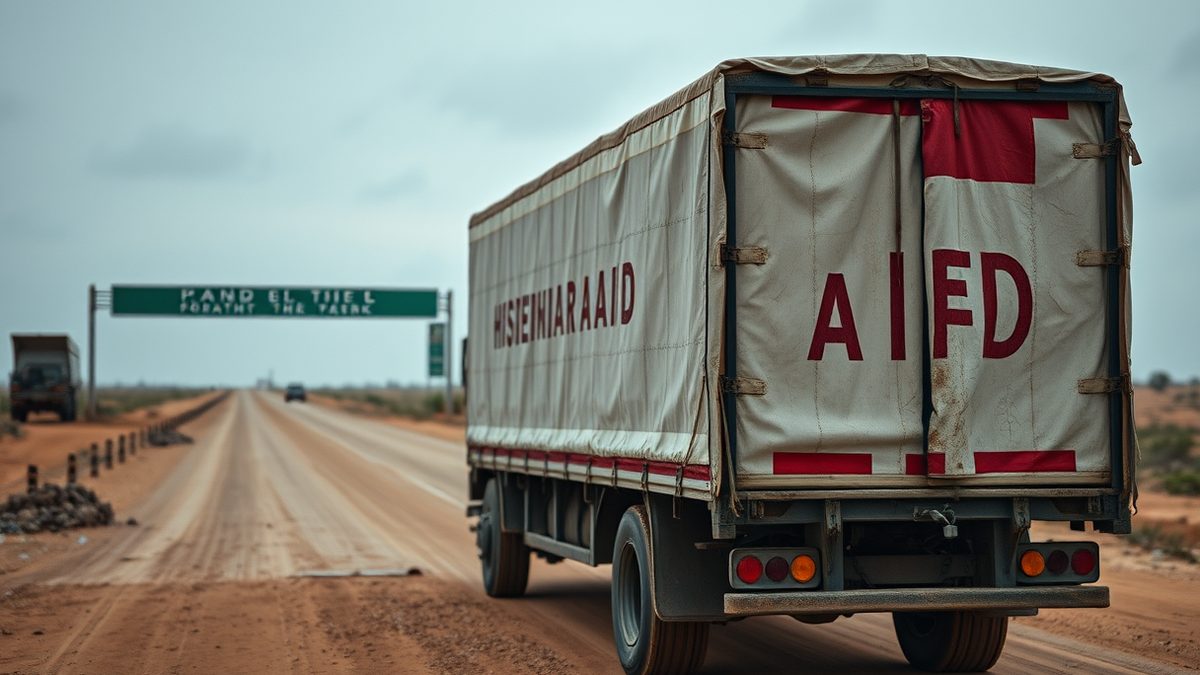
In an August report the IPC cited data showing an average of 227 trucks a day carried humanitarian and commercial supplies into Gaza from the ceasefire to the end of May, less than half the 600 minimum stipulated in the plan.
Israel says around 600 trucks a day are entering and that it is meeting its obligations. COGAT, the Israeli agency controlling access to Gaza, did not immediately respond to a request for comment on the IPC figure. Aid agencies say Israel blocks metal tent poles, engine oil and spare parts on the grounds that Hamas could use them for military purposes.
Disarmament is the hinge
Hamas has said it agreed to hand its weapons to a US-backed Palestinian technocratic government for storage, while rejecting the word disarmament.
The BBC reported in August that Israel insists Hamas fully disarm before any pullout, and wants surrendered weapons destroyed rather than stored by a Palestinian committee. Israel also objects to Turkey and Qatar taking part in verification checks.
After Kushner's talks with Netanyahu that month, Israel and the Board of Peace agreed to establish two working groups. One would cover disarmament and demilitarisation, to be completed before any reconstruction; the other sanitation, clean water and public health. Kushner said then that there could be progress in as little as 30 days on starting to take Hamas's weapons out, but that cooperation was needed from both sides.
What happens next
Israeli security officials expect Hamas to run an international public relations campaign around winter conditions in Gaza.
Officials familiar with the matter say the campaign will highlight storm damage, inadequate infrastructure and shortages of warm clothing, hoping pressure will force Israel to scale back its operations.
The technocratic Palestinian body, the National Committee for the Administration of Gaza, was appointed in January under Ali Shaath and has yet to enter Gaza.
Sources
29- 01Tony Blair meets Herzog in Israel as US pushes to revive stalled Gaza reconstruction planEN
- 02Explainer-One year on, Trump's Gaza plan has not stopped Israeli fire or disarmed HamasEN
- 03One year on, Trump's Gaza plan has not stopped Israeli fire or disarmed HamasEN
- 04One year on, Trump's Gaza plan has not stopped Israeli fire or disarmed Hamas - explainerEN
- 05Kushner hails 'very good' meeting with Netanyahu after Hamas talks on Gaza peace planEN
- 06 India targets creating homegrown GPUs within 2 years and plans to commercialize indigenous SHAKTI and VEGA processors EN
- 07Electric Buses Need a Plan for the Next Operating ContractEN
- 08Apple slashes internal AI budgets, with deeper cuts still plannedEN
- 09Hoymiles plans to establish inverter factory in OmanEN
- 10Virtual power plants can help avoid overbuilt grid if AI boom goes bustEN
- 11Singapore Reveals Five-Year Energy Plan to Feed Data Center, Semicon ProgressEN
- 12FAA Plans to Retire Floppy Disks by 2028EN
- 13Back in control: How Hyrox plans to make hybrid racing a TV and Olympic spectacleEN
- 14A Michigan utility’s iffy plan to trap CO2 from its new gas plantsEN
- 15More of the Same Expensive Dependence on Fossil Fuels in TEP and APS 2026 Energy PlansEN
- 16MA-SafeDiffuser: Safe Multi-Agent Planning with Diffusion Probabilistic ModelsEN
- 17Autonomous agents for electricity-system planningEN
- 18Kazakhstan Eyes Ambitious 2035 Goal for 2 Nuclear Power PlantsEN
- 19Launch HN: Rivet (YC W23) – Scale and Orchestrate Agents on S3EN
- 20Putting the show in showjumping: Inside the Premier Jumping League’s US$300m plan to transform equestrianEN
- 21 Planetary defense: How military and civil satellites are watching fireballs to help keep Earth safe from space rocks EN
- 22 On this day in space! Nov. 1, 1962: The Soviet Union Launches Mars 1 spacecraft to Red Planet during the Space Race EN
- 23 5 bright planets to spot in November — when and where to see them EN
- 24Xiaomi follows Li Auto with planned Sunwoda EVB investment to deepen battery tiesEN
- 25GAC's battery unit Inpow starts production at Thailand plant, its first overseas pack facilityEN
- 26A mysterious star system just 16 light-years away may be hiding habitable planetsEN
- 27VMO2 to axe 30% staff costs, halt fiber build in £800M savings planEN
- 28Speeding up planning decisions with AIEN
- 29Launch HN: Momentic (YC W24) – Agents that catch bugs by using your appEN
All figures and quotations in this text come from the sources listed below.
Content prepared by the editorial team with AI assistance.
Dr. Amara Patel
Comments
0- No comments yet — be the first.