EU AI Act enforcement: Deepfake ban targets parliament members
On 5 October, a report by Agora Digitale Transformation revealed that 50 European Parliament members were targeted by deepfake pornography, prompting a cross-party demand for strict enforcement of the EU's AI Act ban on nudifier apps, which takes effect on 2 December.
 Sofia MarchettiScience and health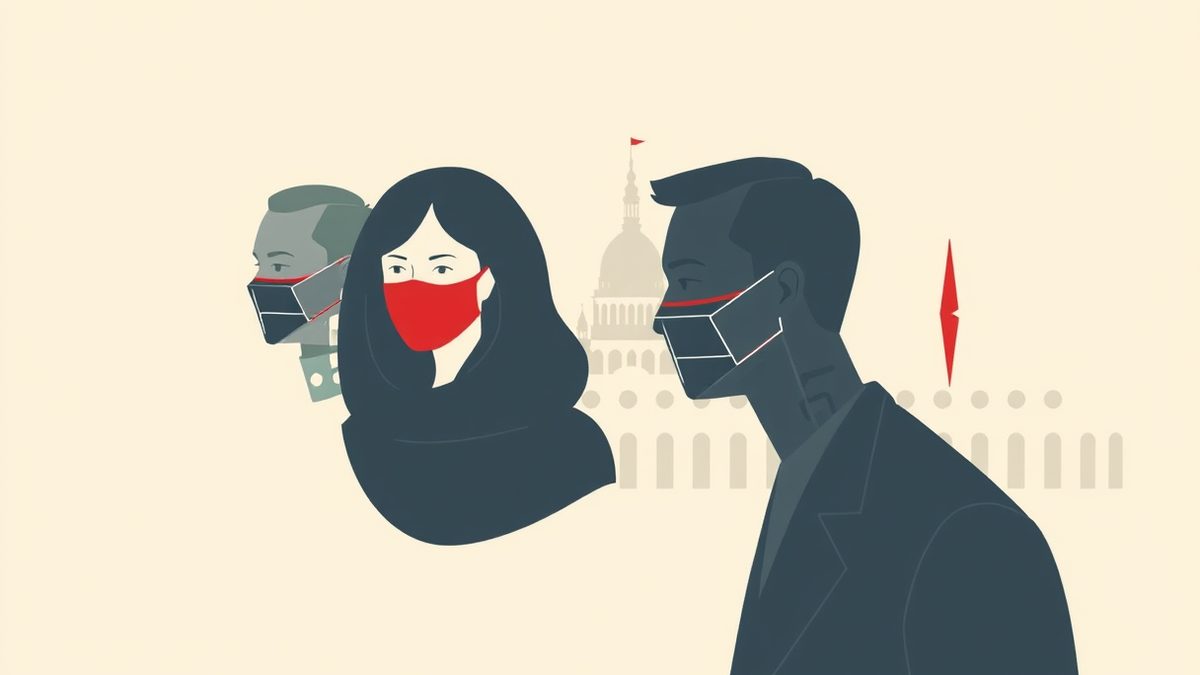
On 5 October, Agora Digitale Transformation published a new investigation. It documents a surge in non-consensual deepfake pornography targeting European lawmakers. The report identifies 50 members of the European Parliament as victims. This group includes 46 women.
According to the group's findings, this equates to roughly one in six female MEPs being affected.
The data paints a grim picture of the regulatory gap between the EU's ambitious digital laws and their actual implementation on the ground. Politico reported on 5 October that the EU is currently investigating the use of Grok on the social media platform X. This happens alongside a ban on AI-powered nudifier apps scheduled for 2 December. The urgency of this enforcement is now a political priority, not just a legal one. The situation highlights how quickly technical failures can become diplomatic crises when high-profile figures are involved in the victim pool.
On 30 September, a cross-party group of 119 MEPs sent a letter. It was addressed to Commission President Ursula von der Leyen and other EU leadership figures. They demanded effective enforcement of the ban and a prompt resolution of the Grok investigation. "There can't be any loopholes or delays," said Lena Schilling, an Austrian Greens MEP and signatory, according to Politico.
The enforcement challenge
Benjamin Shultz is a co-author of the report. He noted that politicians cannot simply opt out of having their likenesses online. This makes them vulnerable targets for AI nudifiers. Shultz argued that the Commission must hold all entities accountable. This includes payment processors and domain registrars that inadvertently enable the industry. He also suggested the Commission look into de-indexing AI nudifier websites from search engines to reduce their visibility. The technical reality of enforcing these rules is complex because the infrastructure supporting these apps is decentralized and often operated by entities outside direct EU jurisdiction.
This specific incident highlights a broader trend. EU regulators are moving from drafting frameworks to active policing.
The AI Act is often criticized as slow and bureaucratic. However, the deepfake scandal has forced a faster response. The EU is using its existing regulatory power to pressure platforms to act before the formal ban date. This is a test case for how Brussels will handle other AI-related violations. It particularly concerns generative models that are difficult to audit. The outcome will influence how future compliance mechanisms are designed and enforced across member states.
On 7 October, Tech.eu reported that DIGITALEUROPE's director-general, Cecilia Bonefeld-Dahl, argued that Europe cannot regulate its way to tech leadership. She emphasized the need for faster access to funding and less regulatory complexity. She suggested that the current pace of enforcement might be stifling innovation in areas beyond AI safety. This creates a tension between the need for strict AI governance and the desire for a competitive tech ecosystem. Industry leaders often argue that excessive compliance costs drive innovation to other jurisdictions, a claim that regulators dispute by pointing to the consumer protection benefits of strict rules.
Broader AI governance context
The focus on AI regulation in Europe is not limited to deepfakes. On 8 October, ZDNET reported on California's "No Robo Bosses Act." This law protects workers from fully automated personnel decisions. While this is a US state law, it signals a global trend. Regulators are beginning to intervene in AI's role in the workplace. The EU is watching these developments closely. The AI Act also includes provisions for high-risk AI systems. These include systems used in employment and education. The convergence of these regulatory efforts suggests a global shift toward stricter oversight of automated decision-making processes in sensitive sectors.
In the US, Peter Thiel's recent lectures in Nashville have drawn attention. They focus on the political dimensions of AI regulation. On 9 October, Gizmodo reported that Thiel has framed AI regulation as an existential threat. He has significant financial stakes in AI companies. He linked the issue to theological concepts. This rhetoric reflects a broader resistance to AI governance in parts of the US tech industry. This contrasts with the EU's more regulatory approach. The EU's actions on deepfakes may serve as a counter-narrative to this resistance. They demonstrate that the bloc is willing to enforce its rules even when they are politically unpopular with industry players who benefit from looser oversight.
As the 2 December ban approaches, the Commission faces a critical test. The ability to enforce the AI Act against powerful platforms will determine its credibility. The targeting of 50 MEPs has raised the stakes. It has turned a technical enforcement issue into a matter of political security. The outcome of the Grok investigation and the implementation of the nudifier ban will set the tone for AI governance in Europe for years to come. Regulators are no longer just writing rules. They are actively trying to protect citizens from the harms of unchecked AI systems that operate with minimal human oversight.
Sources
10- 0150 members of European Parliament targeted by deepfake porn, report saysEN
- 02DIGITALEUROPE: Europe can’t regulate its way to tech leadershipEN
- 03Regulators are trying to protect you from being fired by AI – here’s howEN
- 04Peter Thiel: You Know Who Else Wants to Regulate AI? The AntichristEN
- 05How Tesla Is Pressuring European Regulators To Approve FSDEN
- 06Tesla leaned on Dutch regulator to ease its FSD review, emails showEN
- 07European startups raise €15.8B in September, nearly five times August's totalEN
- 08Dealroom CEO says Europe’s first trillion-dollar startup may already existEN
- 09Endeavor Catalyst doubles down on Europe with $320M Fund VEN
- 10Delivery Hero alumni have built 150 startups worth €7.5BEN
All figures and quotations in this text come from the sources listed below.
Content prepared by the editorial team with AI assistance.
Sofia Marchetti
Comments
0- No comments yet — be the first.