Chipmakers chase new capacity as AI demand reshapes global supply
Rohm Semiconductor expanded its back-end manufacturing outsourcing in India on October 8, while Teradyne announced a strategic investment in Bright Machines to automate AI infrastructure production. These moves reflect a broader industry pivot toward distributed fabrication and automated assembly to meet surging demand for AI chips and power components.
 Rachel NwosuAI, models and technology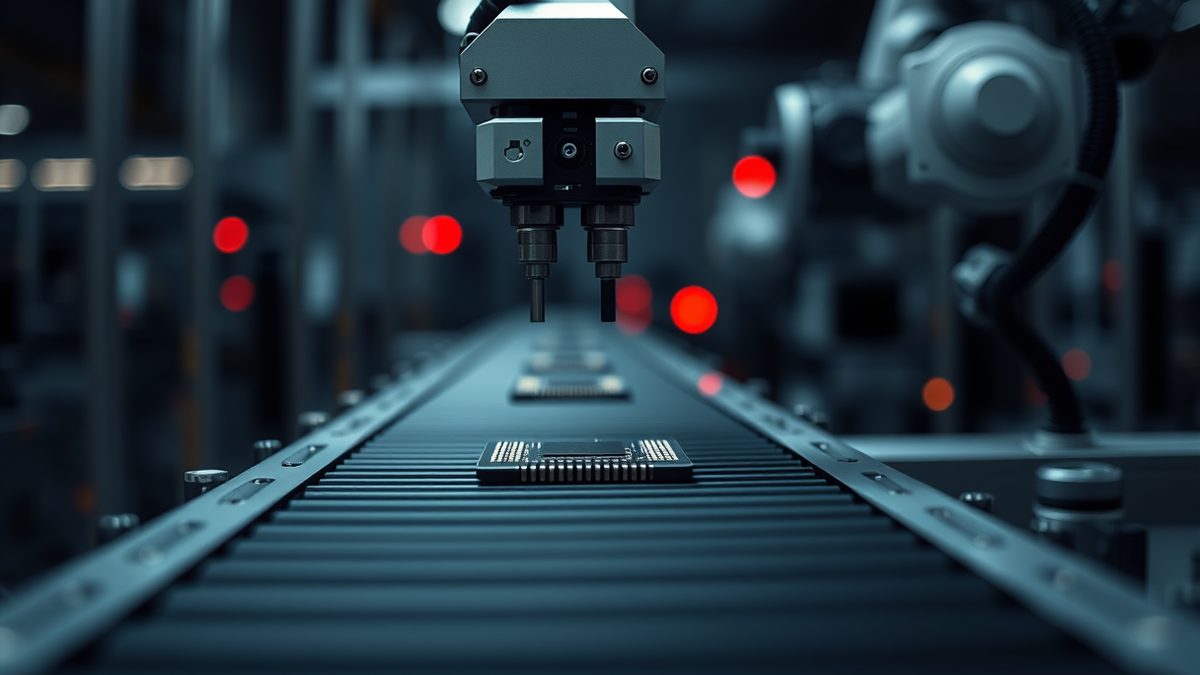
Fragmenting the supply chain
Japanese chipmaker Rohm Semiconductor is no longer content building everything under one roof. On October 8, the company announced it is expanding its use of outsourced assembly and test facilities in India. This marks a significant shift for a firm that historically relied on its own fabs for the majority of its production.
The partnership involves two distinct partners with specific roles. Tata Electronics will handle TOLL packaging, a standard in the two-wheeler market, while Suchi Semicon will manage TO-252 packaging, which serves the four-wheeler sector. Makoto Terada, managing director of Rohm Semiconductor India, explained the division of labor clearly. "Tata is for TOLL, and Suchi is for TO-252 packaging," he told EE Times. This specialization allows Rohm to test the capabilities of local suppliers before committing to larger volumes. The split is deliberate, ensuring each vendor focuses on a narrow technical niche where they already have experience. By dividing the work this way, Rohm can isolate quality issues more easily than if a single partner handled all product types. It is a low-risk way to validate the local supply chain before scaling up production volumes significantly.
Rohm is starting with legacy products rather than new designs.
The company is asking its new partners to package existing power MOSFETs to benchmark their quality and thermal management skills. Terada noted that qualification is still in its early stages. "Our quality sections are visiting them from time to time, and at the end of the process, the qualification has to be done," he said. If the trials succeed, Rohm aims to serve the local Indian market first, with potential expansion to global demand later. This phased approach minimizes the risk of disrupting existing customer relationships while the new facilities undergo rigorous testing. The focus on legacy parts provides a stable baseline for measuring the new partners' capabilities. It allows Rohm to gather data on yield rates and defect profiles without the complexity of new product introductions. Success in this initial phase will determine the speed of future expansion into more complex components.
Automation in the AI buildout
While Rohm focuses on backend packaging, other players are tackling the complexity of AI hardware assembly. Teradyne Inc. announced on October 5 that it has made a strategic investment in Bright Machines Inc. The two companies are launching a collaboration to integrate Teradyne's robotics and test technologies with Bright Machines' manufacturing platform. This move targets the rapid design changes and verification requirements inherent in AI data center infrastructure.
Bright Machines builds intelligent manufacturing platforms that connect design, automation, and data. The integration will include precision robotic assembly and autonomous movement of materials. Fiaz Mohamed, chief growth officer at Bright Machines, stated that the partnership will connect robotics and test data with assembly and inspection data. The goal is to create a pre-tested manufacturing platform that improves with every system built. Teradyne's Shantnu Sharma noted that the investment strategy focuses on solutions that accelerate time to market for customers building AI infrastructure. The system is designed to learn from each production run, refining its algorithms for assembly and inspection. This creates a feedback loop where manufacturing data directly informs design adjustments. It reduces the time spent on manual verification and rework. The result is a production line that becomes more efficient and accurate over time. This is particularly important for AI hardware, where design changes can be frequent and costly to implement manually.
This investment follows a trend of Teradyne leveraging AI as a main driver of revenue growth.
The company recently marked its fifth consecutive quarter of growth, citing AI demand. Its subsidiary, Universal Robots, also released a seventh-generation cobot arm designed to take advantage of AI advances. The collaboration with Bright Machines brings these technologies together on the production floor, linking design decisions directly to electrical performance verification. This integration allows for real-time adjustments during the manufacturing process. It ensures that every unit meets strict performance standards before it leaves the factory. The focus on automation is not just about speed, but also about consistency and quality. As AI models become more complex, the hardware requirements grow equally complex. Teradyne is positioning itself as a key enabler for this new era of AI infrastructure. The investment signals a long-term commitment to this market segment.
Market pressures and regulatory scrutiny
The drive for capacity is not limited to high-tech AI components. Regulatory bodies are also scrutinizing how manufacturing practices affect competition. On October 7, the U.S. Federal Trade Commission and the Department of Agriculture launched a joint public inquiry into agricultural equipment markets. The inquiry seeks to address complaints from farmers facing barriers to acquiring equipment and services. This follows recent settlements involving Deere & Company and Corteva Inc., which addressed repair restrictions and anticompetitive conduct in pesticides.
The FTC and USDA are seeking comments on business models, policies, and contractual terms that may restrict competition. The inquiry highlights the broader impact of manufacturing consolidation on rural economic resilience. Farmers and independent repair providers are encouraged to submit comments by December 7, 2026. This regulatory attention highlights the importance of maintaining open and competitive markets for critical industrial equipment. The inquiry is part of a broader effort to ensure that small businesses and consumers are not disadvantaged by large corporations. It aims to uncover any practices that may hinder innovation or market entry. The findings could lead to new regulations or enforcement actions. This is a significant development for the agricultural technology sector. It shows that regulatory scrutiny is expanding beyond traditional high-tech industries.
Global capacity expansion
Other manufacturers are also expanding their footprints to meet demand.
Infineon opened a new backend manufacturing hub in Thailand, adding resilient capacity for future growth. The facility in Bangkok is designed for major expansion, reflecting the region's growing role in semiconductor production. Meanwhile, VSMC started risk production at its first 300mm fab in Singapore, marking a milestone in the company's global expansion strategy. These moves are part of a broader trend of diversifying manufacturing locations. Companies are seeking to reduce their reliance on a single geographic region. This helps mitigate risks associated with geopolitical tensions or natural disasters. It also allows for closer proximity to key markets. The expansion in Thailand and Singapore is a clear indicator of this shift. It shows that manufacturers are willing to invest heavily in new facilities. The long-term goal is to build a more resilient and flexible supply chain. This is essential for meeting the growing demand for semiconductors in various industries.
In India, the government is advancing semiconductor and AI capabilities to strengthen technology leadership. The country's focus on domestic production is supported by various initiatives aimed at building a strong local supply chain. The partnership between Rohm and Indian OSATs is part of this broader national effort to reduce dependence on imported components. However, challenges remain, including the need for capital investment and skilled labor to build a competitive ecosystem. The government is offering incentives to attract foreign investment. It is also investing in education and training programs to develop a skilled workforce. These efforts are crucial for the long-term success of the Indian semiconductor industry. The country has the potential to become a major player in global semiconductor manufacturing. The recent partnerships are a step in the right direction. They show that international companies are confident in the Indian market.
Market reports indicate that AI chip demand continues to drive investment. TSMC's September sales surged more than 50% due to strong AI chip demand. AMD's CEO Lisa Su stated that the company plans to substantially increase chip supply in 2027 to meet intensifying AI demand. These announcements signal a sustained period of capacity expansion across the industry. The growth in AI is driving demand for advanced chips. This is leading to increased investment in manufacturing capacity. The industry is responding to this demand by building new fabs and expanding existing ones. This is a positive sign for the semiconductor market. It shows that the industry is healthy and growing. The continued investment in AI chips is likely to drive further innovation. This will lead to more powerful and efficient AI systems. The impact of AI on the semiconductor industry is profound. It is reshaping the way chips are designed, manufactured, and used.
Supply chain resilience
The diversification of manufacturing locations and partners is a key strategy for ensuring supply chain resilience.
By outsourcing back-end operations and investing in automated assembly, companies are reducing their exposure to single-point failures. This approach also allows for faster adaptation to changing market demands and technological shifts. It enables companies to respond more quickly to changes in demand. It also helps to reduce costs and improve efficiency. The use of automation is a key part of this strategy. It allows for more precise and consistent manufacturing. This leads to higher quality products and lower defect rates. The combination of diversification and automation is a powerful tool for improving supply chain resilience. It helps companies to navigate the complexities of the global market. This is especially important in the current environment of geopolitical uncertainty. The industry is learning from past disruptions. It is taking steps to build a more robust and flexible supply chain. This is a long-term strategy that will pay dividends in the future. It will help companies to remain competitive in a rapidly changing market.
As the industry continues to evolve, the balance between in-house control and external partnerships will remain a critical factor in competitive positioning. The recent moves by Rohm and Teradyne illustrate how manufacturers are adapting to the complex realities of global supply chains. The focus on quality, automation, and local expertise is shaping semiconductor production. This is a new paradigm for the industry. It is moving away from a centralized model to a distributed one. This change is driven by the need for greater flexibility and resilience. It is also driven by the growing complexity of semiconductor manufacturing. The industry is undergoing a fundamental transformation. This transformation is being driven by technological advances and market demands. It is reshaping the way companies operate and compete. The future of the semiconductor industry is uncertain, but it is clear that change is inevitable. Companies that adapt to this change will be the ones that succeed. Those that fail to adapt will be left behind. The industry is at a turning point. The decisions made now will shape the future of the industry for years to come. It is a time of opportunity and challenge. Companies must be agile and innovative to stay ahead. The competition is fierce, but the rewards are significant. The industry is poised for continued growth and innovation. This is an exciting time to be in the semiconductor industry. The future looks bright, but it will require hard work and dedication. Companies must be prepared to invest in the future. They must be willing to take risks and make bold moves. This is the only way to stay competitive in a rapidly changing market. The industry is evolving, and companies must evolve with it. This is the key to long-term success.
The data from these developments suggests a fragmented but growing global manufacturing structure. Companies are no longer relying on a single hub for production but are instead building a network of specialized facilities. This networked approach enhances flexibility and reduces risk, although it also increases the complexity of supply chain management. The industry is in a transition phase, with new standards and practices being established to support this distributed model. This is a complex process that requires careful planning and execution. It involves coordinating with multiple partners and suppliers. It also requires investing in new technologies and processes. The goal is to create a more efficient and resilient supply chain. This will help companies to meet the growing demand for semiconductors. It will also help to reduce costs and improve quality. The transition is not without its challenges. But the benefits are clear. The industry is moving in the right direction. It is building a more sustainable and resilient future. This is a positive development for the semiconductor industry. It will help to ensure that the industry continues to grow and innovate. The future is bright, but it will require continued effort and investment. Companies must be committed to this vision. They must be willing to work together to achieve it. This is the only way to ensure a successful future for the industry. The industry is at a crossroads. The decisions made now will determine its future. It is a time for collaboration and innovation. The industry must work together to build a better future. This is a shared responsibility. It requires the participation of all stakeholders. The industry is capable of achieving this goal. It has the resources and the expertise. It just needs the will to do so. The future is in our hands. Let us work together to build a better future for the semiconductor industry.
Sources
10- 01Rohm Semiconductor Expands Back-End Chip Manufacturing OutsourcingEN
- 02Teradyne invests in Bright Machines to bring robotics to AI infrastructure manufacturingEN
- 03FTC and USDA Seek Public Comment on Agricultural Equipment Manufacturing and Distribution Market PracticesEN
- 04Inside BESS manufacturing: Maxxen’s utility-scale storage factory in EuropeEN
- 05Bloom raises $3.6M to become the ‘Alibaba’ of American manufacturingEN
- 06UK links London deep tech with West Midlands manufacturing in new Scaleup PathwayEN
- 07Wazza Phishkit Targets Banking, Government, and Manufacturing Across the US, EU, and AustraliaEN
- 08A Geometry-Based Capacity Theory for Finite-Feature Associative MemoryEN
- 09Domain-informed Adaptive Sampling for Generalizable PINNs in Metal Additive Manufacturing via Conditional Flow MatchingEN
- 10ByteDance grabs one-fifth of China’s data centre capacity as AI drives infrastructure boomEN
All figures and quotations in this text come from the sources listed below.
Content prepared by the editorial team with AI assistance.
Rachel Nwosu
Comments
0- No comments yet — be the first.