German industrial output rises 2.0% in August, strongest since March 2025
German industrial production rose 2.0% in August from July, Destatis said on 7 October, the strongest monthly gain since March 2025 and above the 0.5% rise forecast by analysts polled by Reuters.
 Dr. Amara PatelEconomy, business and world
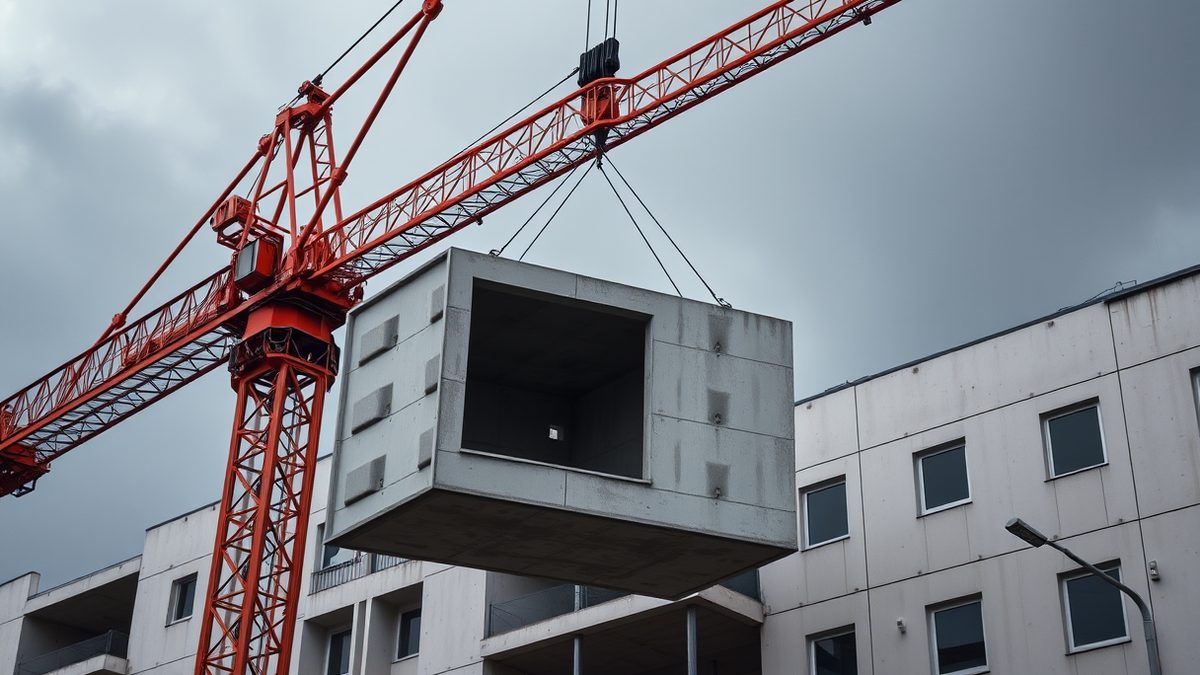
Construction did the lifting. Output there rose 9.3% on the month, led by specialised construction and finishing trades, Destatis said. Machinery and equipment production climbed 5.3%. The gain came despite disruptions to Rhine shipping from low water levels, Reuters reported.
Industrial output excluding energy and construction rose 0.6%, supported by the machinery increase. Within that 0.6% aggregate, capital goods output increased 1.2% and consumer goods 0.6%, while energy output fell 0.4%. Compared with August 2025, total production was 2.3% higher after calendar adjustment.
The statistics office revised July's decline to 1.2% from a provisional 1.1%. Calendar-adjusted July output was 1.8% below a year earlier. The less volatile three-month comparison showed production was 0.4% higher in June to August than in the previous three months.
Automotive output fell 5.4% from July. The VDA, Germany's auto industry association, partly blamed seasonal factory shutdowns that fell more heavily in August this year than in the same month of 2025.
Energy-intensive branches cut output by 0.5% on the month. Over June to August those branches produced 2.9% less than in the previous three months, and calendar-adjusted output was 2.1% below August 2025. Industry excluding energy and construction was 0.4% lower than a year earlier on the same basis.
Factory orders, a separate demand gauge, fell sharply in August, data published on Tuesday showed. The drop was driven by big-ticket orders such as planes and military vehicles, each worth more than €50 million. Those large orders had been growing recently on increased government contracts for defence equipment.
Production has mostly picked up since April, as companies stockpiled inventory over concerns about the war in the Middle East. The European Central Bank raised its key interest rate for the second time this year in September, judging the surge in oil and gas prices too strong to ignore. Brent crude hovered above $100 a barrel on the day the production figures were published. Business sentiment climbed to a more-than-three-year high in September, indicating firms were shrugging off the turbulence caused by the war.
Economists point to AI demand and a modest rebound
KfW economist Sebastian Wanke said the figures show the boom around AI and data centres has reached Germany, pointing to data-processing equipment and lasers used in semiconductor manufacturing. He said the jump in construction could be linked to AI data centre build-out but probably also involves renewing public infrastructure.
Commerzbank's Ralph Solveen said the figures offer hope that manufacturing did not decline in the third quarter. He expects only a modest pickup, with structural problems, U.S. tariffs and strong competition from China weighing on output.
Thomas Gitzel of VP Bank called the August rise "a major surprise". Low water levels on German rivers had disrupted shipping, so a decline could not have been ruled out, he said.
What happens next
Gitzel expects a September rebound in carmaking. He said catch-up effects could push industrial production into positive territory again and there is a good chance German GDP will grow by more than 1% in 2026.
Sources
33- 01Germany's industrial giants push for 40-hour week as labour costs riseEN
- 02German industrial output rises more than expected in AugustEN
- 03German Industrial Output Rebounds at Strongest Pace Since Early 2025EN
- 04Germany's industrial output rises 2% in August 2026EN
- 05German industrial output figures disappointEN
- 06Lame-duck Congress might actually do something: speed up energy projectsEN
- 07How a Blue Wave midterm might reshape the AI industryEN
- 08After the midterms, is the AI industry in for a rough two years?EN
- 09Chinese PV Industry Brief: JA, Longi, Tongwei report widening lossesEN
- 10Soluxtec resumes TOPCon solar module production in GermanyEN
- 11Fraunhofer ITWM at SC26: HPC Is Becoming Smarter and More Energy-EfficientEN
- 12Chip Industry Week In ReviewEN
- 13US government warns of ‘ongoing cyber threat’ amid mass hacks of industrial retail and military freezersEN
- 14Will PG&E’s $2B grid cutbacks derail California’s clean energy buildout?EN
- 15A new bill could change how the US builds energy infrastructure EN
- 16Europe’s Chip Industry: Perfect Storm or Perfect Timing?EN
- 17Top clean energy wins from the midterm electionsEN
- 18Germany’s EV share hits record 37% as BEVs beat gas and diesel combinedEN
- 19Blue Wave Not Climate Related, But Critical To Clean Energy & Electric VehiclesEN
- 20Singapore Reveals Five-Year Energy Plan to Feed Data Center, Semicon ProgressEN
- 21CATL, Octopus Energy and Ampace partner to explore European home energy storageEN
- 22Germany’s Hydrogen Pipeline Reached Marl. Its Market Still Needs to Add Up.EN
- 23GuidedWAM: Training-Free Energy Guidance for World Action Models in Autonomous DrivingEN
- 24Energy Measurement and Optimization of TinyML in Resource-Constrained Embedded Systems: A Systematic Mapping StudyEN
- 25Infineon’s Steve Tateosian Talks IoT, Consumer, and Industrial MCUs at OktoberTechEN
- 26Volkswagen’s affordable ID. Polo wins German Car of the Year 2027 as EVs dominateEN
- 27More of the Same Expensive Dependence on Fossil Fuels in TEP and APS 2026 Energy PlansEN
- 28As Diesel Costs Surge for Farmers & Rural Businesses, Solar Offers a LifelineEN
- 29How Some Media Shape Regional Australia’s Hostility to Renewable EnergyEN
- 30VMO2 to axe 30% staff costs, halt fiber build in £800M savings planEN
- 31Can battery swapping and energy storage power CATL’s next phase of growth?EN
- 325 ballot proposals that could drive or derail clean energyEN
- 33Here's how much Trump's Iran war has added to Americans' fuel costsEN
All figures and quotations in this text come from the sources listed below.
Content prepared by the editorial team with AI assistance.
Dr. Amara Patel
Comments
0- No comments yet — be the first.