INMO Air3 recall tests the promises of health wearables
US and Canadian regulators recalled the INMO Air3 AR glasses on 27 September after the left temple was found to overheat, with ten reports of overheating in the US but no injuries reported so far.
 Sofia MarchettiScience and health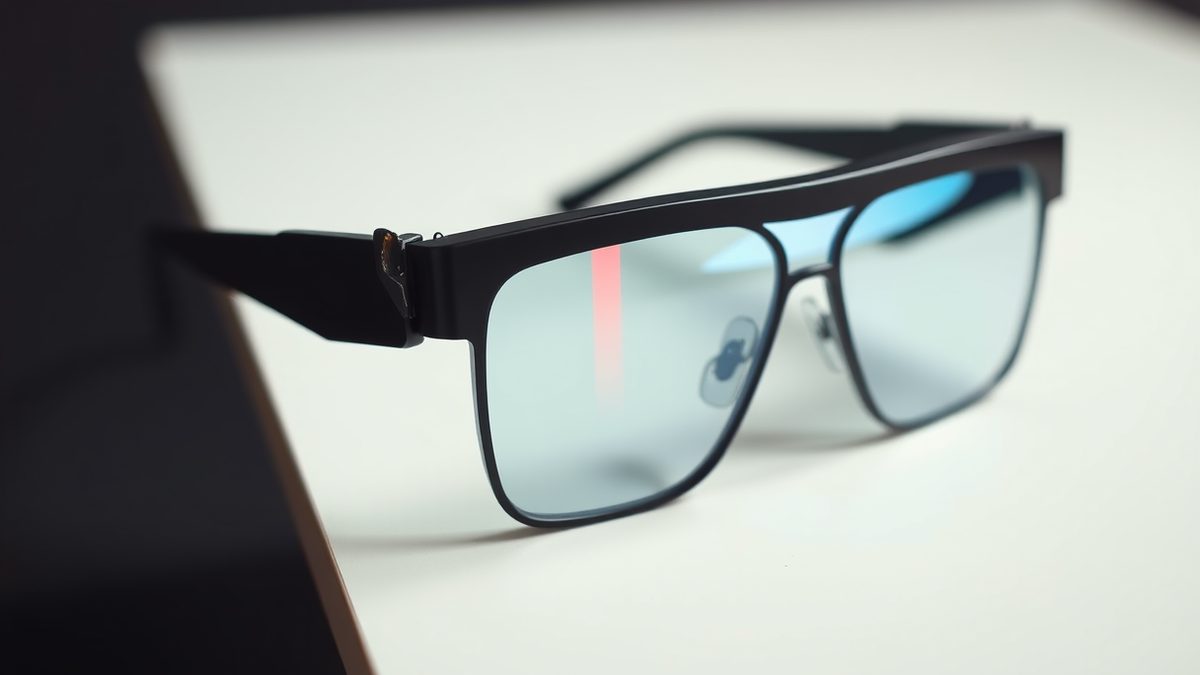
The US Consumer Product Safety Commission issued a recall for the INMO Air3 AR glasses, according to a notice published on 27 September and reported by t3n. Health Canada joined the action, warning users not to keep wearing the device in its current state. The agencies say the affected glasses were sold between December 2025 and August 2026: 1,643 units in the US and 120 in Canada.
The defect is specific and physical. The left temple, where the electronics sit, can overheat during extended use, creating a risk of serious burns. The hardware includes a 660 milliampere-hour battery. Instead of a physical replacement or a market withdrawal, INMO is asking owners to update the firmware to version 3.16 before wearing the glasses again. The device runs an Android-based system driving a micro-OLED display, so the company can throttle the processor from software. The recall notice does not explain whether that fully addresses a battery and thermal problem.
What regulators and early testers saw
The warning did not arrive out of nowhere. Futurism reported that thermal problems showed up in early tests. The hardware YouTuber known as Non-Tech Tech Guy said in a February 2026 video that the glasses became too hot to wear within minutes. He described temperatures that hurt at the ear. According to t3n, the company's first response was to ship a sleeve for the temple to prevent direct skin contact with the plastic. That did not remove the heat source inside.
"It's not a war. It's a completely one-sided blood bath," said Luke Chalker, senior vice president at the Blue Cross Blue Shield Association, according to TechCrunch.
That quote comes from a different argument about money, not heat, but it captures the mood around digital health right now. On 26 September, TechCrunch reported on a Blue Cross Blue Shield Association analysis that found hospitals' use of AI tools in insurance claims led to an additional $942 million in healthcare spending over a two-year period. The analysis found a sharp increase in patients documented as having complex conditions, but argued there is no evidence of a corresponding change in care delivered. The New York Times, cited by TechCrunch, called it the latest sign that AI is contributing to rising healthcare costs.
The comparison matters because health wearables and health AI share a structural problem: the evidence of benefit often lags the enthusiasm for adoption. A study published on 26 September by The Decoder found that access to a language model made people almost entirely unwilling to say "I don't know." Researchers ran five experiments with 3,132 participants. In the first two studies, participants withheld judgment on 36 and 44 percent of questions without AI access. With AI access, those numbers fell to 6 and 3 percent. In Study 2, confidence with AI access hit 75.9 points out of 100, against 29.6 without it. Meanwhile, the share of correct answers fell from 27.6 to 10.0 percent. Across all studies without incentives, participants with AI access got 9.2 percent of questions right, versus 27.5 percent without AI.
The tasks were deliberately obscure: fine visual details from films, such as the color of a team uniform in Bend It Like Beckham. The researchers chose these because the model used, Step 3.5 Flash, was almost always wrong on them. They say this rules out reasonable delegation to a reliable tool. Whether the effect holds beyond movie trivia is an open question, they add. Financial incentives of 10 cents per correct answer reduced how often participants sought AI advice, from 5.27 to 4.53 requests out of six in Study 3, but the effect was modest.
China's health tech push and the limits of adoption
Meanwhile, the global center of gravity in health technology is shifting. On 24 September, Rest of World published an interview with physician and consultant Ruby Wang about her upcoming book, China Cure. In China, she said, patients book appointments through WeChat or Alipay and can chat with an AI avatar of a doctor. Wang argued that in the UK and US, technology is always an add-on to a rusty machine. In China, the digital rails are enabled and society accepts them as normal. She noted that more clinical trials are conducted in China than in the US, and that China accounts for half of global drug licensing deals. This year, she said, China's share of global drug out-licensing deals could reach 60 percent.
Rest of World reports that Pfizer and other leading pharma companies have committed billions of dollars to license cancer drug candidates from Chinese companies such as 3SBio and Innovent Biologics. Wang described this as a "DeepSeek moment" in biotech. She also pointed to caveats: China is strongest in oncology but less mature in immunology. Chinese biotech firms are weak at commercializing, which is why out-licensing is so common. She warned that security-focused language around Chinese drugs has been normalized in a dangerous way. Under WTO agreements, she argued, medicines should not be subject to tariffs because access to them is a human right.
Far from the clinic and the pharmacy, another strand of health-adjacent technology is being tested where infrastructure is scarce. On 21 September, IEEE Spectrum reported on HERMES, an open-sourced digital shortwave radio set from the Philadelphia nonprofit Rhizomatica. It operates in the high-frequency band from 3 to 30 megahertz, using the ionosphere as a mirror. The 20-watt radios do 400- to 600-kilometer links. Founder Peter Bloom told IEEE Spectrum that HERMES is a software stack that can send any file over HF. That matters in emergencies for latitude and longitude, manifests, parts lists, and telemedicine.
The through line is not that health technology is good or bad. It is that adoption keeps outrunning verification. The INMO recall rests on a small number of reported overheating incidents and no confirmed injuries, but the fix is a software throttle, which is a mitigation rather than a redesign. The BCBSA analysis rests on coding patterns rather than clinical outcomes. The judgment study rests on trivia questions rather than medical decisions. And China's health tech rise rests on scale, cost, and speed, with commercialization left to Western partners. In each case, the evidence is real but partial, and the pressure to deploy is stronger than the pressure to measure.
Sources
5- 01Wenn das Wearable zur Gefahr wird: Behörden warnen vor smarter BrilleEN
- 02Insurers claim AI is already increasing healthcare costsEN
- 03AI access makes people almost entirely unwilling to say "I don't know," study findsEN
- 04China is excelling in health tech. That's good news for the worldEN
- 05This Digital Radio Gets Messages to the World's Remotest LocationsEN
All figures and quotations in this text come from the sources listed below.
Content prepared by the editorial team with AI assistance.
Sofia Marchetti
Comments
0- No comments yet — be the first.