Türkiye opens 153 km rail line to EU border as Europe debates high-speed network
Türkiye inaugurated a 153 km high-speed rail line to the Bulgarian border on Friday, cutting travel time to 1.5 hours and linking directly to the European network. The move coincides with a week of intense activity across the continent, from new cross-Channel services to billions in contracts for the continent's long-term rail expansion.
 Daniel FisherSport, cars and travel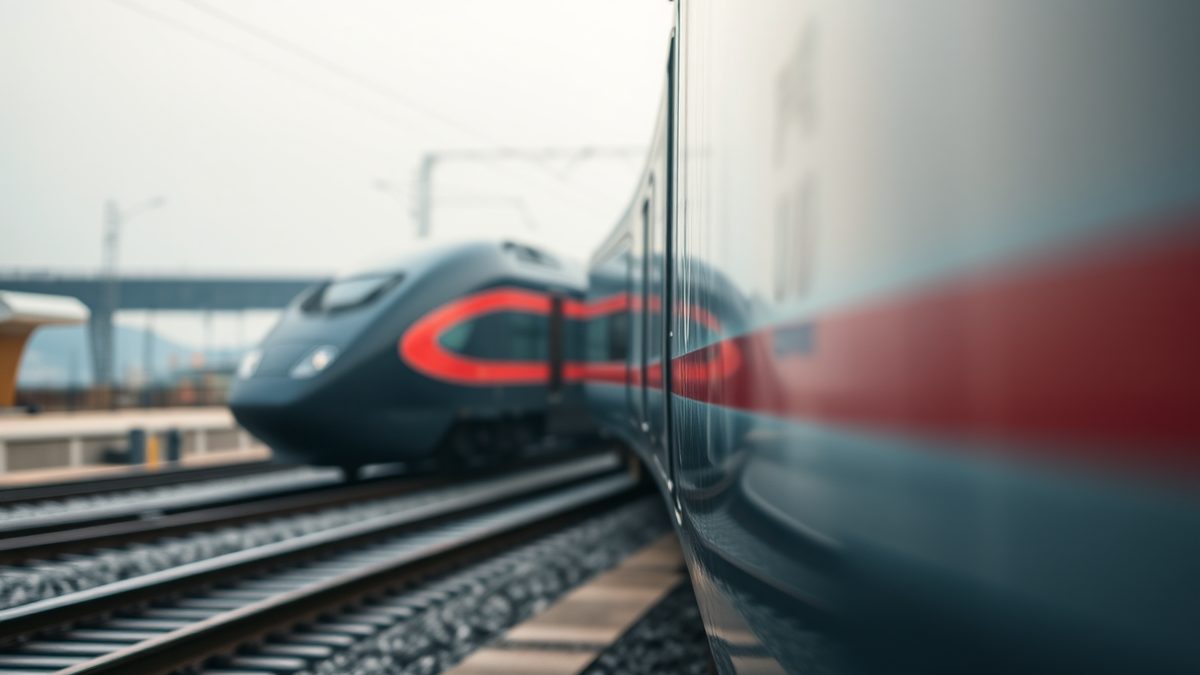
President Recep Tayyip Erdoğan opened the Halkalı-Kapıkule line on 9 October. Haberler.com reported that the leader described the 153 km stretch as a critical link. It reduces the travel time between Istanbul and the EU border to 90 minutes. The line connects directly to Bulgaria. This creates a continuous rail corridor from Ankara to Berlin and beyond. Erdoğan has long championed this specific corridor for regional integration. Daily Sabah noted that the inauguration marks a significant extension of the country's high-speed network. The network has grown rapidly over the past decade. The new infrastructure aims to streamline cross-border movement for both passengers and freight. It is a tangible step toward the broader connectivity goals Ankara has outlined in recent transport plans. The ceremony itself was a major domestic event, signaling the government's focus on infrastructure delivery.
Erdoğan’s announcement lands amid a synchronized push to modernize rail across Europe.
The European Commission and member states are continuing negotiations on the trans-European transport network, or TEN-T. Focus remains on interoperability and funding for the next decade. EU Perspectives noted that the long-awaited network looks to hit the fast track. The vision involves a fully connected high-speed rail system by 2040. Political will is evident, yet technical and financial hurdles remain substantial. The debate is no longer about whether to build, but how to fund and standardize the expansion. Member states are grappling with budget constraints while trying to meet these ambitious targets. The next phase of funding will determine which corridors get priority. Interoperability is the key technical bottleneck. Without it, trains cannot cross borders efficiently.
In the UK, Virgin Group unveiled plans to challenge Eurostar. The new cross-Channel service starts in 2030.
The Guardian reported that Virgin has partnered with Alstom to build a new fleet of high-speed trains. The layout is inspired by Virgin Atlantic lounges. This signals a competitive shift in the premium rail market. Service quality and frequency are becoming as important as speed. The new service aims to connect London to Paris, Amsterdam, and other major European cities. It directly competes with the existing Eurostar network. Virgin’s entry threatens to disrupt the current market dynamics. Passengers may see lower fares due to increased competition. The timing is deliberate, coinciding with the expansion of the European network. It also follows years of speculation about new entrants in the Channel Tunnel market. The partnership with Alstom ensures access to advanced rolling stock technology.
The European Network: Ambition Meets Reality
The core challenge for Europe's high-speed rail network is fragmented technical standards.
The European Railway Agency, or ERA, has called for a freeze on new technical rules. This is to simplify the rollout of the European Rail Traffic Management System, or ERTMS. Railway Gazette International reported that the ERA chief admitted the agency's own mistakes contributed to the fragmented rollout. The chief stated, "It’s not the fault of ERTMS, it’s our fault." This admission highlights the institutional challenges that have plagued the project for years. The delay has cost billions in potential efficiency gains. Operators in different countries face different rulebooks. This complicates cross-border operations significantly. The freeze is a rare admission of failure at the top level. It suggests a reset is needed in how the agency manages technical standards. Industry groups have long criticized the pace of rule-making. The new approach aims to reduce complexity for manufacturers and operators alike.
The cost of deploying ERTMS across the continent is staggering. A study by the European Commission, cited by The National Law Review, estimates the total deployment cost at up to €85 billion. This figure includes hardware, software, and the training of thousands of drivers. It also covers the certification of new routes. The financial burden is shared between member states and the European Union. The latter provides a significant portion of the funding through the Connecting Europe Facility. However, the pace of implementation has been slow. Only a small fraction of the network is currently fully compliant. The gap between ambition and reality is widening. Member states are under pressure to deliver results. The high cost is a major political hurdle. Funding negotiations are becoming increasingly difficult. The €85 billion estimate is a significant part of the continent's transport budget. It competes with other major infrastructure projects. The long-term benefits must justify this massive upfront investment.
Despite these challenges, some countries are making significant progress.
Hungary has completed safety testing on the Budapest-Belgrade high-speed railway. Streamlinefeed.co.ke reports that the line is expected to launch in December. This line will connect two major European capitals. It is a key part of the Southeast Europe corridor. In Serbia, train services between Niš and Leskovac have resumed. This follows railway modernization work. The step improves connectivity in the Balkans. These projects are smaller in scale than the cross-Channel or Istanbul-Berlin routes. Yet they are essential for building a cohesive pan-European network. The Balkans remain a critical gap in the European rail map. Progress here is vital for overall network integrity. The completion of these lines demonstrates that progress is possible. It also shows the value of regional cooperation. The success of these smaller projects could inspire larger ones. They provide a template for efficient implementation. The focus on safety and modernization is paying off.
Industry Moves: Contracts and Innovation
Talgo, a Spanish manufacturer, has been awarded a €105 million contract. The project is BasqTrain 35.
RAILMARKET.com reported that the contract will develop a new interoperable high-speed train. It is designed for the Basque Country and beyond. This project is a test case for the new generation of high-speed trains. They are designed to meet the latest ERTMS standards. The trains will operate on multiple national networks. Talgo is also entering the Polish market. Railway PRO reported that the company is launching a new version of its Avril high-speed train. The move signals Talgo's confidence in the European market. The company is positioning itself as a key player in the next decade. The focus on interoperability is a direct response to industry needs. It also aligns with the European Commission's goals. The Basque Country is a strategic location for testing. It has a well-developed rail infrastructure. The results of this project will be closely watched by other operators. Talgo’s involvement in Poland further expands its footprint. The company is utilizing its expertise in rolling stock design. The new trains are expected to offer higher energy efficiency. This is a key selling point for environmentally conscious operators. The industry is shifting towards greener technologies. Talgo is at the forefront of this transition. The €105 million contract is a significant win for the company.
Siemens Mobility has secured a $1.61 billion contract for a high-speed rail project.
Megaproject.com reported the news, though the specific location and scope were not detailed in the initial report. This contract is part of a broader strategy by Siemens. The company aims to expand its presence in the European rail market. It is leveraging its expertise in signaling, rolling stock, and maintenance. Siemens is also building a new service center in Poland. Railway PRO noted that the construction will be handled by Budimex. This investment reflects the growing demand for maintenance and support services. The high-speed network is expanding rapidly. Operators need reliable partners for ongoing support. Siemens is positioning itself as that partner. The $1.61 billion figure is a major deal for the company. It highlights the scale of the upcoming infrastructure projects. The lack of detail in the initial report is typical for large contracts. More information is expected to emerge in the coming weeks. The deal shows Siemens' strong position in the market. It also shows the competitive nature of the industry. Other manufacturers are likely to bid for similar projects. The race for market share is intensifying. Siemens' move is a strategic one. It aims to secure long-term revenue streams. The service center in Poland will be a key asset. It will support operations across the region. The company is investing heavily in its European base. This is a sign of confidence in the long-term outlook.
In the UK, the debate over high-speed rail is not limited to new services.
Sadiq Khan, the Mayor of London, has proposed running international trains from Stratford. My London reported that Khan wants to use the station instead of expanding Heathrow Airport. This idea is controversial. It highlights the potential for rail to play a larger role in connecting the UK to Europe. The proposal suggests that rail could offer a viable alternative to air travel. This would apply to short-haul routes. It would also reduce carbon emissions and congestion at airports. The idea has gained traction in recent years. It aligns with broader sustainability goals. The feasibility of the plan is under scrutiny. Critics point to the challenges of rerouting existing services. Supporters argue that the benefits outweigh the costs. The decision will have significant implications for London's transport network. It could reshape the city's connection to the continent. The proposal is part of a wider debate about urban planning. It touches on issues of congestion, pollution, and infrastructure investment. The outcome will depend on political and financial support. The next few months will be important for the proposal. Public opinion is divided on the issue. Some see it as a bold and necessary step. Others view it as impractical and overly ambitious. The debate is likely to continue for some time.
Financial and Political Dynamics
The financial dynamics of high-speed rail are complex. They involve public funding, private investment, and international loans.
The European Union has committed significant funds to the TEN-T. Member states are also expected to co-finance a large portion of the projects. This has led to debates over the allocation of resources. It also affects the prioritization of different routes. In Portugal, the government has questioned the case for standard gauge. International Railway Journal reported that the argument is that the existing narrow-gauge network is more suitable. The country's topography and market conditions support this view. This highlights the tension between national interests and the broader goal. The goal is a unified European network. The debate over gauge is a microcosm of larger issues. It touches on economics, geography, and politics. The outcome will influence the design of the network. Other countries may face similar dilemmas. The decision in Portugal will be closely watched. It could set a precedent for other regions. The financial implications are significant. The choice of gauge affects the cost of construction. It also impacts the type of rolling stock required. The government's position is firm. It is willing to challenge the standard approach. This is a rare move in the context of European integration. The EU is likely to engage in further discussions. The aim is to find a compromise. The final decision will have long-term consequences. It will shape the rail environment in the region. The debate is a reminder that technical decisions have political dimensions. They require careful consideration and negotiation. The process is slow but necessary. It ensures that the network meets the needs of all stakeholders. The outcome will be a balance of competing interests. It is a complex puzzle to solve.
Political support for high-speed rail is generally strong. However, it is often tempered by concerns over cost.
In Estonia, citizens are increasingly frustrated by the slow progress of Rail Baltica. LSM reported that the frustration is specifically about the section in Latvia. This is a key part of the Northern Dimension corridor. The project aims to connect the Baltic states to Poland and the rest of the EU. It has faced numerous delays and budget overruns. This frustration highlights the challenges of delivering large-scale infrastructure projects. The delays are causing significant political tension. Citizens are demanding faster progress. The government is under pressure to deliver results. The project is a symbol of regional integration. Its failure would be a major blow. The delays are attributed to various factors. These include technical complexities and funding issues. The political landscape is shifting as a result. Public opinion is turning against the project. This is a risk for the overall network. The Baltic states are critical to the northern corridor. The situation in Latvia is a warning sign. It shows the difficulties of cross-border cooperation. The project requires a high level of coordination. The current level of cooperation is insufficient. More effort is needed to overcome the obstacles. The political will is there, but the execution is lacking. The next phase of the project will be important. It will determine whether the network can be completed on time. The pressure on the governments is mounting. They need to find a way to accelerate the process. The stakeholders are all aware of the stakes. The project is more than a railway. It is a symbol of European unity. The delays are undermining that symbol. The situation needs to be addressed urgently. The next few months will be decisive. The outcome will shape the region's development. The political dynamics are complex. They involve multiple levels of government. The coordination is difficult but necessary. The project is a test of European solidarity. The results will have wide-ranging implications. The public is watching closely. The government must act decisively. The time for excuses is running out. The project must move forward. The stakes are too high to fail. The next steps are important. The political support must be maintained. The financial resources must be secured. The technical challenges must be overcome. The project is a priority for the region. It is a key part of the European network. The delays are unacceptable. The situation must be resolved. The next phase will be important. The outcome will determine the success of the project. The political will is strong. The execution must match it. The project is a symbol of hope. It must not be allowed to fail. The next few months will be decisive. The stakeholders are working together. The goal is to complete the project. The time is running out. The pressure is mounting. The situation is urgent. The next steps are important. The project must move forward. The stakes are high. The outcome will be significant.
The cross-Channel market is seeing increased competition. Trenitalia plans to launch a service on the Paris-London route in 2029. Voyages d'affaires reported the news. This move by the Italian national rail operator signals the attractiveness of the market. It also shows the potential for new entrants to disrupt the existing setup. The combination of new services, trains, and operators is likely to drive innovation. It will also improve the quality of service for passengers. The market is becoming more dynamic. Competition is increasing. This is good for consumers. They will have more choices. The prices may come down. The service quality may improve. The existing operators are feeling the pressure. They are responding with their own initiatives. The market is evolving rapidly. The next few years will be interesting. The competition will be fierce. The winners will be those who adapt. The losers will be those who do not. The market is changing. The players are responding. The outcome will be determined by the market. The competition is a good thing. It drives innovation. It improves service. It benefits consumers. The market is healthy. The competition is intense. The players are adapting. The outcome will be positive. The market is growing. The competition is increasing. The players are responding. The outcome will be determined by the market.
Looking Ahead
The next few years will be important for Europe's high-speed rail network.
The success of the Istanbul-Berlin corridor will be a major test. The launch of the Virgin cross-Channel service will be another. The expansion of ERTMS will be the final test. These projects will test the continent's ability to deliver on its promises. The political will is there. The technical and financial challenges are significant. The industry is investing heavily in new technology and infrastructure. The results are starting to show. However, the pace of change will depend on governments and regulators. They must overcome the institutional and technical barriers. These barriers have held the project back for so long. The goal of a fully connected network by 2040 is ambitious. It is not out of reach if the current momentum can be sustained. The next decade will be decisive. The projects are complex. They require careful management. The risks are high. The stakes are significant. The outcome will shape European transport. The political support is strong. The financial resources are available. The technical expertise is in place. The challenges are real. They must be overcome. The next few years will be important. The projects must be delivered. The network must be completed. The goal is within reach. The momentum is building. The next steps are important. The outcome will be determined by the next few years. The projects are complex. They require careful management. The risks are high. The stakes are significant. The outcome will shape the region. The political support is strong. The financial resources are available. The technical expertise is in place. The challenges are real. They must be overcome. The next few years will be important. The projects must be delivered. The network must be completed. The goal is within reach. The momentum is building. The next steps are important. The outcome will be determined by the next few years.
The opening of the Halkalı-Kapıkule line is a significant step. It is only one piece of a much larger puzzle.
Sources
25- 01The Fourth Law and Odd Systems launch Project Foundation to quadruple European thermal sensor productionEN
- 02E-quipment highlight: AMT’s hot-swapping battery electric rail excavatorEN
- 03Tesla’s ‘Full Self-Driving’ Becomes ‘Assisted Driving’ in EuropeEN
- 04Nik Storonsky wants Revolut to be Europe’s answer to Meta and GoogleEN
- 05Anthropic launches a free AI scanner for open-source projectsEN
- 06Vittorio Colao: Europe missed the digital wave and must not miss the nextEN
- 07Tesla renames ‘Full Self-Driving’ to ‘Tesla Assisted Driving’ in EuropeEN
- 08Tesla drops ‘Full Self-Driving’ name in Europe after Germany pushbackEN
- 09Universal Quantum raises $100M, SAP buys TechWolf, and European startups raise five times more funding in September than AugustEN
- 10Amazon overhauls aging devices lineup with higher-priced Alexa tablet, dumping the budget FireEN
- 11European storage inventories on the riseEN
- 12OpenAI projected to bring in $20bn less in revenue than expectedEN
- 13European startups raise €15.8B in September, nearly five times August's totalEN
- 14SLAC to Lead AI Catalysis Project, Partner on 8 Others Under Genesis MissionEN
- 15Anthropic Launches Free AI Vulnerability Scanner for Open-Source ProjectsEN
- 16China's highway NEV charging demand climbs over 50% during National Day holidayEN
- 17E-bikes are causing a surprising new problem in EuropeEN
- 18Endeavor Catalyst doubles down on Europe with $320M Fund V as region becomes its fastest-growing marketEN
- 19PPPL Partners on Genesis Mission Project to Build AI Digital Twin for Fusion EnergyEN
- 2050 members of European Parliament targeted by deepfake porn, report saysEN
- 21Dutch court blocks subcutaneous Keytruda in eight European countriesEN
- 22What Would Europe Do in a Taiwan Crisis?EN
- 23ESA to pursue crew transport and space stations as European launchers come onlineEN
- 24Scientists find an “earthquake gate” as California fault stress hits a 1,000-year highEN
- 25Gotion, VW plan $3.67 billion investment in European battery supply chainEN
All figures and quotations in this text come from the sources listed below.
Content prepared by the editorial team with AI assistance.
Daniel Fisher
Comments
0- No comments yet — be the first.