Speech and translation models crowd the release calendar as open weights and small models multiply
Liquid AI released d1 on 5 October, a decision model that now reads images as well as text and, the company says, answers a text question in 200 to 300 milliseconds without generating a single token.
 Grace OkonkwoAI, models and technology
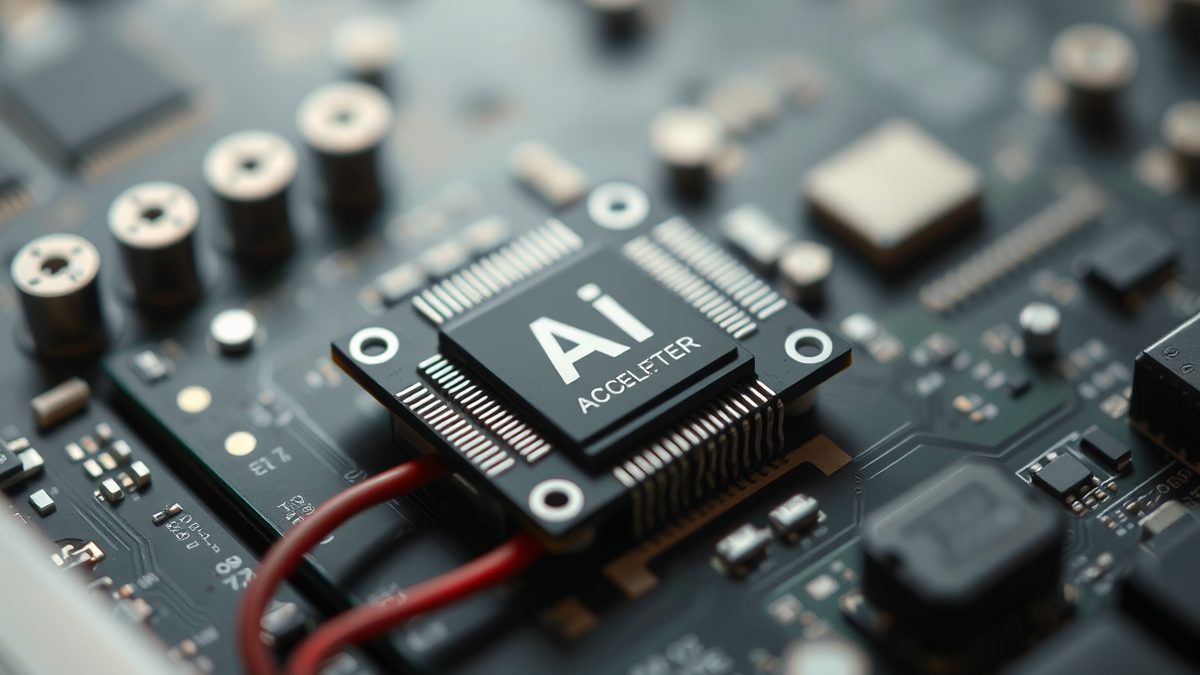
It is not a translation engine. It is a classifier that returns probabilities, and that is the point: the company says one model can take unstructured input, text or images, and answer several questions about it in a single forward pass.
Liquid AI puts d1 against GPT-6.1 Sol on six applications from filtering support tickets to inspecting circuit boards, and says it matches or beats that model on four of them at 19x to 200x lower cost. The timing is worth noting. Three other releases landed within hours of it on 5 October, and all of them touch speech, documents or multilingual text in some form. Reflection published an early look at Beam, its 501B-parameter open-weight model. Interfaze put a lite open-weight model on Hugging Face that transcribes speech and reads documents. NASA and IBM published fine-tuning code for a lunar foundation model. None of them is a translator in the consumer sense, and together they show where the release pressure sits right now: at the layer below the app.
What d1 actually does with language
The d1 model returns probabilities for yes/no questions, picks one label among many, or scores a position on a scale. Liquid AI says a request can ask several questions about the same state, which saves input tokens. That is a long way from a translation product, and the company's own demos lean on sorting and routing: a SQL-style filter that answers whether a support ticket is a cancellation request, a web agent that picks the next action on a flight-search page.
Two of its published results do sit close to the speech and document pipeline. In a context compaction demo, d1 reads each tool output in a coding agent's session and keeps, trims or drops it, removing 52% of the tokens while keeping every output the task needs. In visual inspection, it sorts good and defective parts at 85% to 97% accuracy on a public dataset, without being trained for that task.
Liquid AI is careful about the comparison. The claim is that d1 matches or beats GPT-6.1 Sol on four of six applications, not all six, and the cost figures are the company's own. No independent benchmark of d1 has been published.
The why-it-matters line is cost. If a structured decision can be answered in 200 to 300 milliseconds without token generation, teams that currently call a large language model for every routing or filtering step have a cheaper option to test. What is unknown is accuracy outside Liquid AI's chosen demos, and whether the model holds up on languages other than English. The company does not say.
The open-weight side gets a speech and document model
Interfaze's release is the closest thing in this batch to a multilingual workhorse. Interfaze 1.1 Lite is a mixture-of-architectures model, meaning one vision-language reasoning core calls specialist components for document reading, line geometry, layout, speech, speaker diarization, segmentation and forecasting. The whole thing runs on a single 80 GB GPU with no external services, according to the model card on Hugging Face.
The speech numbers are specific. A 95-minute recording transcribes in about 90 seconds, cut at pauses and decoded in batches. The model card reports a word error rate of 3.01 on VoxPopuli-Cleaned, against 2.4 for Interfaze and 4.0 for Gemini-3-Flash; other competitors are marked as not reported. It claims translation across 160+ languages and multilingual reasoning across 14+, with a 131k-token context.
Read the table carefully. On MMMLU, which measures knowledge across 14 languages, Interfaze 1.1 Lite scores 87.8, below Interfaze at 90.9 and Grok-4.3 at 89.7, and roughly level with Gemini-3-Flash at 88.7. On GPQA Diamond it scores 85.9 against 92.4 for Interfaze and 89.9 for Claude-Sonnet-4.6. The lite model wins on document OCR and on referring-expression grounding, not on general knowledge.
For anyone building a transcription or document pipeline, the single-GPU claim matters more than the benchmark spread. It means a team can run speech recognition, diarization and structured output on one machine without a hosted API. What the model card does not give is throughput under concurrent load, or how the specialist routing behaves when a request mixes audio and images.
Beam: bigger, and not out yet
Reflection's Beam is the largest item in the batch and the least available. It is a sparse mixture-of-experts model with 501 billion total parameters and 23 billion active, pretrained on 23.8 trillion tokens. Reflection says the reinforcement learning run generated over 100 million rollouts on 10.5K NVIDIA GB300 GPUs over four weeks.
The model is still in final red-teaming and evaluations. Weights, a technical report and a model card are promised later this month, and the company is taking sign-ups for early access. That should temper any reading of the benchmark table Reflection published alongside the announcement: the numbers come from the company, on a model nobody outside it can run yet.
Reflection positions Beam on efficiency rather than raw capability. It says Beam is competitive with larger open models like GLM 5.2 and approaching Qwen 3.8-Max on coding and agentic tasks, and that where frontier open models like Kimi K3 remain ahead, Beam's advantage is inference cost. On the reasoning benchmarks in the table, that claim is mixed: Beam scores 97.8 on AIME 2026 against 99.2 for GLM 5.2, and 36.2 on HLE without tools against 40.5 for GLM 5.2 and 46.9 for Kimi K3.
Beam is not a translation model. It appears here because the same release window shows the open-weight frontier splitting in two directions: very large general models that are expensive to serve, and small specialist models that are cheap to serve and narrower in scope.
Small models doing the work around the big one
The most concrete efficiency result in the batch comes from a much smaller project. Jeff-Code, a fork of the Pi coding agent by Mario Zechner and contributors, inserts a 0.8B decision model into the agent loop. Around every Qwen 3.8-27B turn, Jeff makes two decisions of about 0.2 seconds each: whether it can take the next step itself, and whether Qwen needs to think hard on this turn.
The published evaluation reports a 62.4% pass rate for Jeff-Code against 62.8% for Qwen alone, a paired difference of minus 0.2 points with a 95% interval of minus 2.6 to plus 2.1 across 1,242 paired tasks. Time per task came in at 0.68x, and total time across all tasks at 0.86x. In about three quarters of Qwen's turns, thinking ran with the decision model's threshold set at 0.6.
That gap between 0.68x per task and 0.86x overall has a cause the project states plainly: in roughly 5% of tasks, Jeff-Code runs more than 30 minutes longer than Qwen alone. The same caution applies to the headline. Turning thinking off on every turn is faster still but costs 7.6 points of pass rate, and a less cautious threshold of 0.7 costs 4.5 points.
A second project takes the opposite approach and puts the small model first. Reika is a coding agent CLI designed around local models of 8B to 35B parameters, often quantized to Q2 to Q4 on a 16 to 32k context window. Its published findings are about failure modes rather than benchmark wins: one mid-context rewrite re-processed 8,453 tokens of prompt, 7.9 minutes of prefill, where an append in the same session cost 25 tokens and 3.5 seconds. The project says 14B to 35B models handled multi-file tasks most reliably and models below 7B rarely got far.
What the release wave leaves unresolved
None of these releases is an AI translation product in the way a buyer would understand the term. The closest are Interfaze's claimed 160+ language translation with speaker-attributed transcripts, and d1's decision layer that could sit in front of a translation call to decide whether one is needed at all.
The engineering pattern is consistent across them: a small, fast component makes a routing decision, and a larger model is called only when needed. Jeff-Code measures that pattern at 32% less time per task with no pass-rate loss. d1 sells it as probabilities instead of tokens. Interfaze packages it as a reasoning core that calls specialists.
What remains unknown is whether any of it survives contact with real workloads. Reflection has not released weights. Liquid AI's cost comparisons are its own. Interfaze's lite model trails its own larger sibling on general knowledge. And the Jeff-Code numbers come with a tail of tasks that take far longer than the baseline, which is exactly the case a production team would notice first.
Sources
10- 01Introducing d1: The most capable decision model, now with visionEN
- 02Interfaze-1-lite: the first open-weight model for deterministic taskEN
- 03Beam: Reflection's 501B open-weight modelEN
- 04Jeff-Code: a 0.8B model makes Qwen 3.8-27B coding 47% faster, same pass rateEN
- 05Reika: A coding agent CLI designed around small local models firstEN
- 06NASA-IBM Lunar Foundation Model and fine-tuning codeEN
- 07Mold Linker Version 3.0.0 Release – Rewritten in RustEN
- 08Expat 2.9.0 released, fixes two vulnerabilitiesEN
- 09Precogly (The open-source alternative to commercial threat modeling platforms)EN
- 10System One models like Jev can train their own replacementsEN
All figures and quotations in this text come from the sources listed below.
Content prepared by the editorial team with AI assistance.
Grace Okonkwo
Comments
0- No comments yet — be the first.