H5N1 kills an endangered Australian sea lion on Kangaroo Island
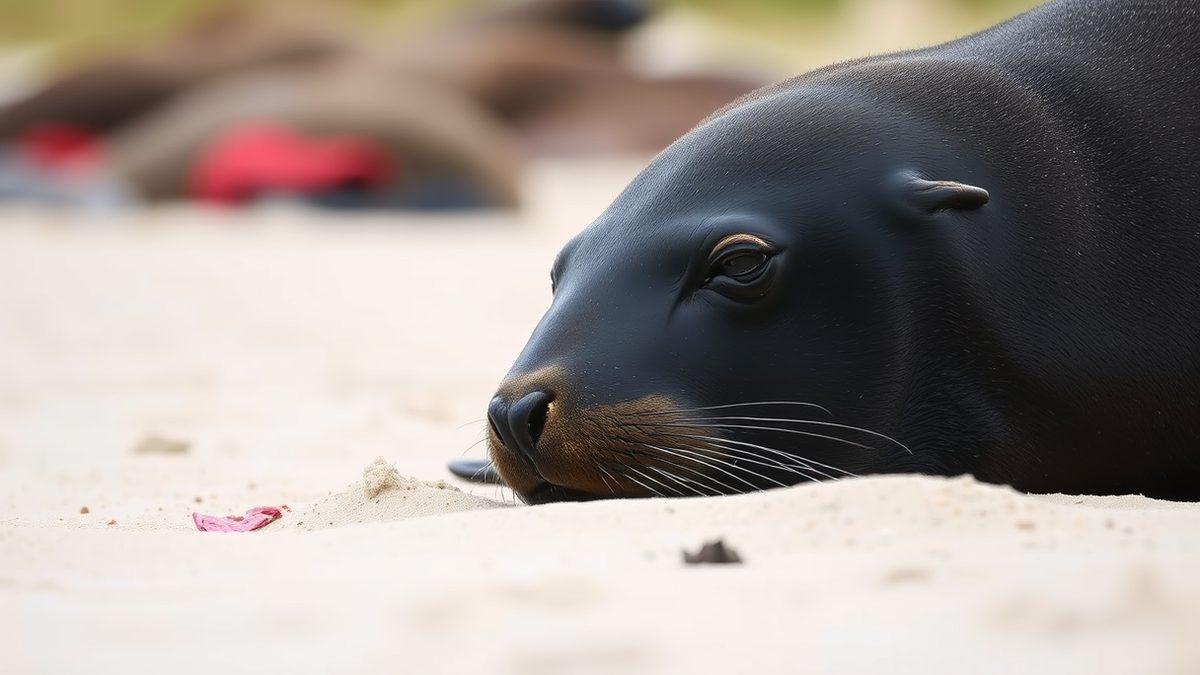
Australian authorities confirmed on 13 September that an endangered Australian sea lion at Seal Bay on Kangaroo Island had died of H5N1, the first death of the species from the virus in the country [8][5]. The animal had been recovering from a shark attack, and its death came three weeks after the virus was first confirmed in an Australian mammal [4][3].
 Sofia MarchettiScience and health
Five mammal species in a matter of weeks
The sea lion was not the first mammal. A long-nosed fur seal found dead at Beachport, about 310km south of Adelaide, was confirmed positive on 23 August, Australia's first mammalian case [3][8]. The animal had no visible injuries, and authorities said its death did not appear linked to other sick or dead marine mammals [2][3].
Then came a common dolphin at Goolwa, the first dolphin case in the country, and a red fox in metropolitan Adelaide [5][8]. A second fox was confirmed at Normanville [8].
Foxes are scavengers, and acting chief veterinary officer Cameron Bell said that while they generally do not spread the virus directly, they risk moving infected carcasses across habitats, Mongabay reported [4]. Population numbers make the sea lion case worse than it looks: the species is endangered, with fewer than 12,000 animals, and it is declining by about 2% a year [5][4]. The Kangaroo Island animal had been recovering from a shark attack when the virus killed it, South Australian Environment Minister Emily Bourke said, according to Mongabay [4]. The Beachport seal, for comparison, belonged to a population estimated at 100,000 in South Australian waters [3].
The question researchers want answered
Australian authorities report no evidence of mammal-to-mammal transmission of the virus in the country [8]. The distinction matters more than the case count does.
Michelle Wille, an avian influenza researcher at the University of Melbourne, said the priority now is detailed genomic analysis of this and any future detections [8]. Researchers need to establish whether the infections are separate spillover events from birds or evidence of transmission between seals. "That distinction will be critical to understanding the risk posed by the virus as it continues to circulate in wildlife," Wille said, in a statement circulated by the Global Virus Network [8].
For people, the official assessment has not moved. The Australian Centre for Disease Control continues to rate the risk to humans as low and reports no evidence that the virus circulating in Australia has changed to infect people more easily [8]. The World Health Organization reports no sustained person-to-person transmission [8]. Human H5N1 infections have occurred, most often after contact with infected animals or contaminated environments [8].
Globally, H5N1 has infected a growing range of mammals, including seals and other marine mammals, dairy cattle, cats and wild carnivores [8].
Counting the outbreak
Australia first detected H5N1 in wild seabirds in June 2026 [8]. The federal government put the national total at 297 confirmed cases on 21 August [3]. By 26 August the count of positive wildlife surveillance events had reached 341 [7]. As of 17 September the figure was 576 confirmed events, and an event may involve one or more animals [8].
The toll is concentrated in birds. More than 1,000 greater crested terns have died in South Australia and more than two dozen little penguins in Tasmania [1]. Greater crested terns nest in colonies of up to thousands of birds, which makes spread easy, the ABC reported [9]. There have been no detections in Australian poultry or the agricultural production system [8].
A silver gull confirmed positive at Robe in early August mattered because the species travels far inland, carrying the virus toward agricultural zones and cities that had so far escaped it [1]. Globally the numbers are of a different order: Nahid Bhadelia, director of Boston University's Biothreats Emergence, Analysis and Communications Network, put the toll at more than 633 million animals dead or culled [10]. Australia counts events rather than animals, so the two figures are not comparable line for line [8].
How the virus reaches seals and dolphins
Seals sit in the path of the virus by geography. South Australia's chief veterinary officer, Skye Fruean, said they live very near wild birds on rocky coastal outcrops [3].
Those outcrops are shared with birds already carrying the virus at high concentrations, and Fruean said the seals would be coming across high levels of it in their environment [1][3]. Bill Bateman, an associate professor of behavioural ecology at Curtin University, wrote in The Conversation that marine mammals likely pick up the virus from sick or dead seabirds, by eating them or through contact with bodily fluids or contaminated water and substrate [4]. The current strain can invade a mammal's brain and nervous system, and sea lions have been found with encephalitis before death [5].
Overseas precedent is why researchers are watching. More than 13,000 elephant seal pups died on Heard Island after the virus arrived there, and in Argentina more than 17,000 southern elephant seal pups died [3][5]. Direct mammal-to-mammal transmission is suspected in wild marine mammal die-offs but has not been conclusively proven [5]. Pinnipeds sneeze and cough, which would help the virus along [5].
What happens next
Wille's priority is genomic analysis of current and future detections, watching for mutations associated with better adaptation to mammals [8]. Bateman argued there is no real way to stop the spread now that H5N1 is in Australia, but that removing carcasses safely limits exposure by taking viral reservoirs out of the environment [4]. Australia's response has leaned on surveillance rather than containment, an approach two international experts told the ABC in July was the country's best bet [10].
Some of the monitoring is volunteer work. Along the Fleurieu Peninsula, volunteers with the Victor Harbor Dolphin Watch Group are looking for dolphins showing abnormal swimming or neurological symptoms [4]. Members of the public who find sick or dead birds should not handle them or let children and pets near them, according to official advice [7].
Julie Collins, the federal agriculture minister, said in August that once H5 bird flu is spreading in the natural environment it is not possible to avoid significant losses [2][3]. The open question remains the one Wille framed: separate spillovers from birds, or transmission between mammals [8].
Sources
12- 01Global Virus Network monitors spreading avian influenza in Australian mammalsEN
- 02How does bird flu transmit to mammals?EN
- 03H5N1 bird flu jumps to marine mammals and wildlife in AustraliaEN
- 04Australia confirms first H5N1 bird flu case in local mammalEN
- 05Australia confirms first H5N1 bird flu case in mammalEN
- 06Backyard Bird Feeders Drive H5N1 Spread After First Australian Mainland Mammal DeathEN
- 07Could your backyard bird feeder be helping spread deadly bird flu?EN
- 08Which animals have been infected by H5N1 bird flu in Australia so far?EN
- 09International experts say surveilling local birds, marine mammals a 'priority' in bird flu responseEN
- 10H5 Bird Flu Spreads to Australian Mammals: Human Risk?EN
- 11Bird flu detected in a wild goose near Germany’s border with Poland — RMF24EN
- 12Bird flu outbreak strikes Lincolnshire duck farm, triggering poultry cullEN
All figures and quotations in this text come from the sources listed below.
Content prepared by the editorial team with AI assistance.
Sofia Marchetti
Comments
0- No comments yet — be the first.