Team Group CEO warns memory shortage will worsen from late 2026 to late 2027
Team Group CEO Chen Ching-wen said on 2 November 2026 that the memory chip shortage will worsen from late 2026 to late 2027, warning that buyers could face a market where even money cannot buy goods.
 Dr. Amara PatelEconomy, business and world
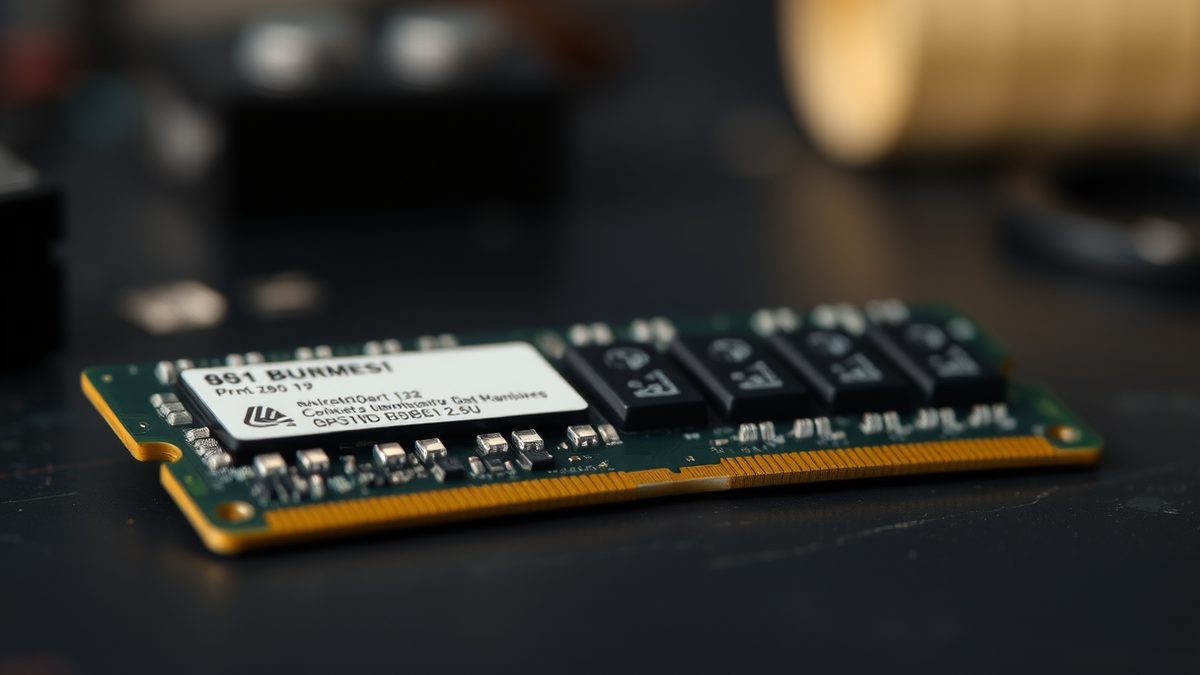
Team Group CEO Chen Ching-wen said on the company's 2 November 2026 earnings call that the memory chip shortage will get worse from the end of 2026 until the end of 2027. He said there is “no downward price trend whatsoever” and warned that some purchasers could face a situation where “even money can't buy goods”.
The spot market already shows the strain. The spread between spot and contract prices for memory chips ranges from 30% to 50%, Chen said, meaning short-term supply costs much more than long-term contracts. “We have contracts but can't get enough volume, so we have to go to the spot market and pay a premium to grab supply,” he said. Tom's Hardware reported that contract prices for 16GB DDR5 chips climbed from $8.70 in October 2025 to $48 by September 2026, an increase it described as more than 550%; the two prices imply a rise of about 452%, or roughly 5.5 times the October 2025 level.
Chen estimated that supply and demand will not balance until the latter half of 2028 or perhaps later. Team Group said pricing for budget components will not ease until 2029, while high-end chips will remain in short supply.
Device makers pass on costs
Apple has warned of an “unprecedented” rise in memory chip prices. Its shares fell 2.75% in after-hours trading on Wall Street after the warning, the Guardian reported. John Ternus, Apple's new chief executive, who began in September, said on a conference call that memory costs in the fourth quarter would be even higher than in the previous three months. He said Apple's decision to raise iPad and MacBook prices in June, followed by iPhone prices in September, had “provided some offset” for the company.
Raspberry Pi has taken the same route, with steeper increases. It raised the 16GB Pi 5 by $80 to $385, more than triple its $120 launch price in January 2025. The 16GB Compute Module 5 variants went up by $40. Earlier increases mean 16GB Pi 5 buyers now pay $265 more than at launch, a price hike of 221%. Eben Upton, Raspberry Pi's boss, blamed a lack of alternative supply for 16GB DRAM and other component shortages.
Why memory is scarce
The cause is demand from AI infrastructure, which has pulled memory capacity toward datacentres. Apple is competing with those datacentres for supplies.
Supply is concentrated. Team Group said CXMT and YMTC have lifted their market share to almost 10%, but most high-end DRAM and NAND flash chips still come from Kioxia, Micron, Samsung and SK hynix. Even chips made by the Chinese companies track market prices closely, so they are not a cheap alternative, the company said. Micron has warned that shortages could drag on into 2028 or beyond.
Conflicting forecasts on when prices ease
Acer CEO Jason Chen predicted component pricing will reverse by the latter half of 2027. He said only high-end chips such as LPDDR5X-9600 and Nvidia N1-series SoCs will remain short, while mainstream parts will fall. He expects PC price hikes of 5% to 20% until the end of this year, a plateau in the first half of 2027, then declines. That is a year or more earlier than Team Group's forecast of balance in the latter half of 2028 or later.
The gap matters for buyers planning upgrades and for device makers setting prices.
Sources
22- 01Team Group CEO warns memory crisis could reach point where 'even money can't buy goods'EN
- 02Raspberry Pi hikes prices again, barely a month after the last roundEN
- 03Microsoft improves Windows 11 performance on 8 GB PCs as RAM prices keep climbingEN
- 04Apple warns of ‘unprecedented’ rise in memory chip pricesEN
- 0516GB Raspberry Pi 5 hiked to $385, more than triple its launch priceEN
- 06Galantas CEO Mario Stifano on AI, data centres and the copper supply gapEN
- 07STATION F startups raise record €2B as campus unveils 2026 Future 40EN
- 08Nearly 1 In 3 Hyundais Sold In October Was A Hybrid As High Gas Prices Push Buyers To PivotEN
- 09Kia racks up another record month as its new $30K electric SUV hits dealersEN
- 10North Korea denies being behind record $6.3bn Binance hackEN
- 11Xpeng to report Q3 results on November 16 after record quarterly deliveriesEN
- 12AMD Q3 2026 Earnings Data Center Growth Drives Record QuarterEN
- 13Setara Launches Daily Index of On-Demand GPU List PricesEN
- 14Geely nears monthly sales record as exports remain strongEN
- 15Record Demand Catches (Some) OEMs with Their Pants Down — Europe September 2026EN
- 16Scientists confirm global warming is accelerating faster than ever recordedEN
- 17T-Mobile rolls out 5-Gig fiber, with 10-year price lockEN
- 18ESI supplying solar array components to missile defense programsEN
- 19FCC moves to knock down copper network retirement roadblocks in CaliforniaEN
- 20Power crunch drives DayOne, Nxera to separate deals with SembcorpEN
- 21Price hikes aren’t all that’s at stake in FirstEnergy Ohio’s rate caseEN
- 22Apple iPhone Duo price premiums evaporate in China’s scalper marketEN
All figures and quotations in this text come from the sources listed below.
Content prepared by the editorial team with AI assistance.
Dr. Amara Patel
Comments
0- No comments yet — be the first.