AirTrunk commits $1bn to Japan data centers as AI demand reshapes retail tech
AirTrunk announced on 7 October it will invest an additional $1 billion in its Inzai, Japan data center campus, bringing its total planned investment in the country to $9 billion over the next five years.
 Dr. Amara PatelEconomy, business and world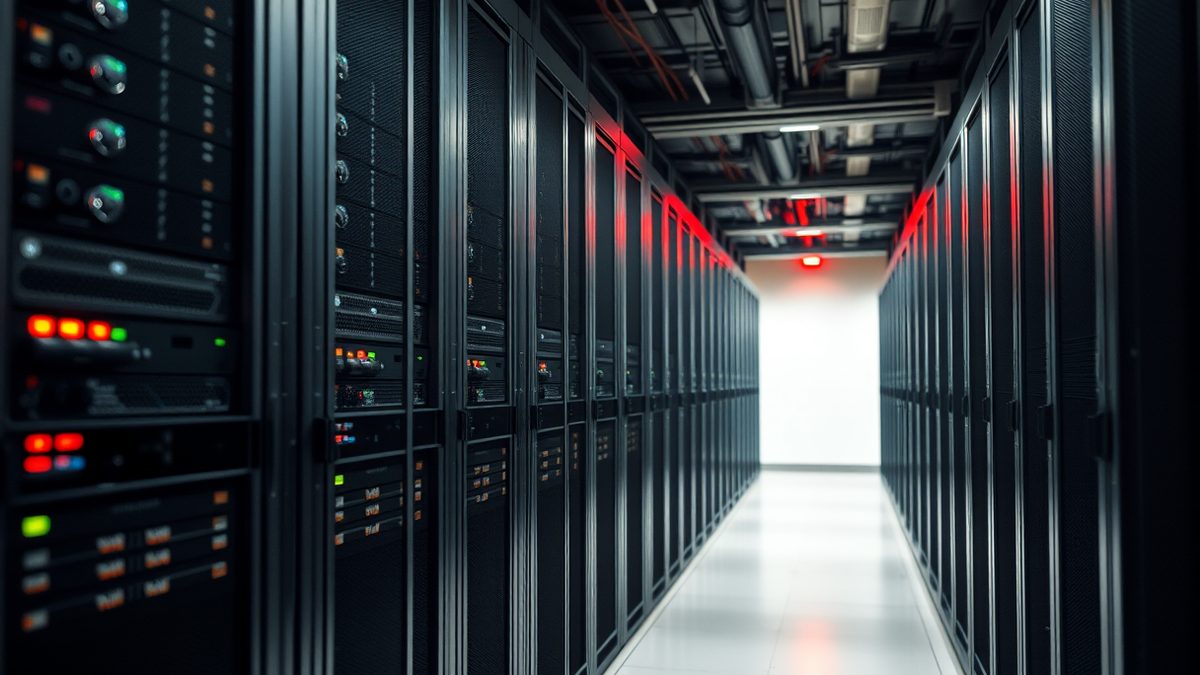
The commitment, reported by Nikkei Asia and confirmed by Data Center Dynamics, is designed to expand capacity and deploy liquid cooling technology for high-density AI workloads. The funding is secured through a $1 billion green loan led by Sumitomo Mitsui Banking Corp, MUFG Bank, and United Overseas Bank.
Robin Khuda, CEO of AirTrunk, stated that the Inzai campus, dubbed TOK1, is likely to be the first in Japan able to host large-scale AI deployments. He noted that geopolitical factors are driving more customers to look to Japan from a North Asian perspective. The company plans to increase its capacity in Japan from the current 530MW to more than 1GW.
AI infrastructure as a retail enabler
This capital expenditure is part of a broader trend where retail and e-commerce operations are becoming increasingly dependent on advanced AI infrastructure. According to an NVIDIA blog post from 1 October, AI factories are built by the megawatt, with each megawatt factory costing roughly $60 million. NVIDIA states that AI factory operators commit capital at this scale only with a clear view of return on investment, driven by earning capacity, durability, and fungibility. This efficiency allows retailers to run complex algorithms for personalization, inventory management, and customer service more cost-effectively. The blog notes that the NVIDIA A100 GPU, shipped in 2020, is still in commercial service, with CoreWeave extending bookings through 2029, demonstrating the long-term economic value of such hardware. NVIDIA data cited in the blog shows that Vera Rubin NVL72 systems deliver over 30x higher throughput per megawatt than GB300 NVL72 systems.
Robotics enters the manufacturing loop
Teradyne announced on 5 October a strategic investment in Bright Machines, a builder of AI and data center infrastructure.
The collaboration focuses on integrating Teradyne robotics and test technologies with Bright Machines' manufacturing platform. Shantnu Sharma, Teradyne's chief development officer, explained that AI data center buildouts require designs to change quickly and every unit to be verified. Bright Machines' platform connects design, automation, and data, allowing robots to assemble components, test to verify them, and use returned data to optimize the next unit. This loop is critical for the rapid deployment of AI infrastructure that underpins modern e-commerce. Fiaz Mohamed, Bright Machines' chief growth officer, said the integration will connect robotics and test data with assembly and inspection data, giving customers confidence in a pre-tested manufacturing platform.
Teradyne credited AI as a main driver of its revenue growth, marking its fifth consecutive quarter of growth. The company's subsidiary, Universal Robots, recently released its seventh-generation cobot arm, designed to take advantage of AI advances. This synergy between robotics and AI infrastructure is reshaping how retail technology is built and deployed.
Privacy and regulatory headwinds
However, the rapid adoption of AI-driven retail technology is not without regulatory friction. On 7 October, the Australian privacy regulator opened an investigation into Shenzhen Qingcheng, the app maker behind the HeyCyan app in Kmart's $89 smartglasses. The investigation follows public outrage over the covert use of the devices, which can capture images and record high-definition video. Commissioner Carly Kind announced the probe after Shenzhen Qingcheng failed to respond to inquiries. A GetUp petition has gathered more than 55,000 signatures calling for restrictions on the use of what has been labeled as "pervert glasses." Councils in Australia are looking to ban the glasses in public spaces, and the federal government is considering restrictions in government workplaces. Kind highlighted the difficulty in applying privacy law to individuals, as the Privacy Act only applies to companies and Commonwealth agencies. She noted that the entity providing the software in the device is likely the one that collects and holds information. Proposed changes to the privacy act would replace the "reasonably necessary" test with a "fair and reasonable" test, requiring entities to consider individual choice and the best interests of children.
Market signals and consumer behavior
These technological shifts occur against a backdrop of changing consumer behavior and market pressures. A study by the London School of Economics, published on 7 October, found that scientists who believe technology will largely solve climate change are 23% less likely to sign petitions or take part in protests. This "techno-optimism" may lead to reliance on unproven solutions at the expense of societal changes needed.
In the retail sector, similar optimism is driving investment in AI personalization. Very, a UK retailer, reported lifting revenue per customer by 20% after ramping up AI personalization. Meanwhile, Walmart is using light-up digital shelf labels to help shoppers and employees find items, a move that integrates physical retail with digital data streams.
However, market data suggests a cooling in some areas. CnEVPost reported on 30 September that China's NEV retail sales fell 20% year-on-year in the first 27 days of September. While NEVs accounted for 65.7% of passenger car sales, the broader market saw a 29% decline. This indicates that while technology adoption continues, consumer spending is under pressure, requiring retailers to be more efficient and targeted in their use of AI tools.
The intersection of AI infrastructure, robotics, and regulatory scrutiny is creating a complex landscape for retail technology. Companies are investing heavily in the back-end capabilities that power front-end customer experiences, but they must navigate privacy laws and market volatility. The next few years will likely see a consolidation of these technologies, with those who can balance innovation and compliance emerging as leaders.
Sources
6- 01AirTrunk plans additional $1bn investment in data center campus in Inzai, JapanEN
- 02Productive, Durable, Fungible: How NVIDIA AI Factories Maximize Return on InvestmentEN
- 03Teradyne invests in Bright Machines to bring robotics to AI infrastructure manufacturingEN
- 04Privacy watchdog launches investigation into China-based company behind Kmart ‘pervert glasses’ appEN
- 05Scientists who put faith in technology less likely to take climate actionEN
- 06China NEV retail sales fall 20% in first 27 days of September as decline deepensEN
All figures and quotations in this text come from the sources listed below.
Content prepared by the editorial team with AI assistance.
Dr. Amara Patel
Comments
0- No comments yet — be the first.