US Chip Export Controls: Tencent's $7B Oracle Lease and a $300M Smuggling Case
Oracle has reportedly agreed to lease Tencent about 100,000 advanced AI chips across Southeast Asian data centres in a five-year deal worth roughly $7 billion, according to a Financial Times report carried by Tom's Hardware on 5 October.
 Dr. Amara PatelEconomy, business and world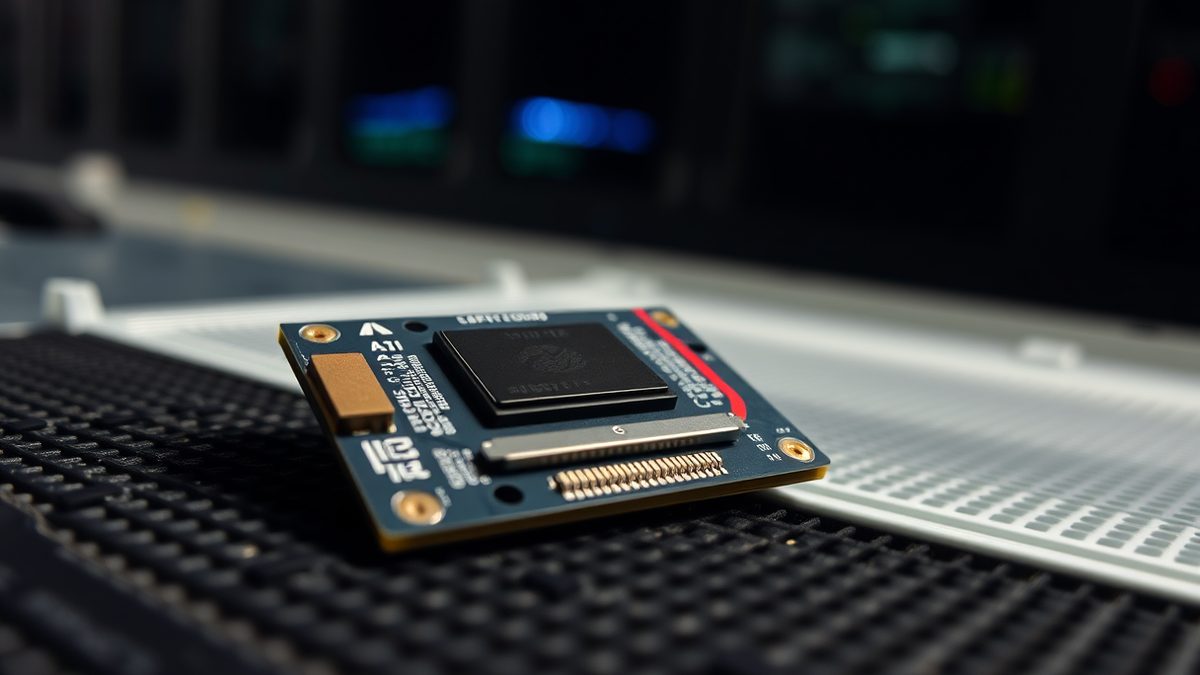
Oracle has reportedly agreed to lease Tencent about 100,000 advanced AI chips across Southeast Asian data centres in a five-year deal worth roughly $7 billion, according to a Financial Times report carried by Tom's Hardware on 5 October. That works out at about $1.60 per chip per hour, with roughly 30% paid upfront. Neither company has commented, and the chips are not named.
Tom's Hardware notes the estimated chip-hour price is around 43% below the roughly $2.80 per GPU-hour Nvidia charged for H100 capacity on a one-year contract, according to research firm SemiAnalysis in August. It is also about 48% lower than the $3.09 per GPU-hour for a three-year B200 contract, per a 2025 filing by Japanese data centre operator Datasection. The FT reports such leases are legal under current US rules because the data centres sit outside China and Tencent is only renting time on them. Without knowing the hardware, the pricing is hard to pin down. Going by raw server costs only, which exclude buildings, power, networking and financing, 100,000 B200s would cost $5.44 billion, or about 78% of the reported deal value, based on Datasection's 2025 purchase of servers with 5,000 B200s for $272 million. Tom's Hardware concludes the on-paper pricing fits Hopper-class silicon at volume better than anything newer. H200 imports to China remain limited, which would satisfy the report's suggestion that the chips are unavailable domestically. Countries, sites and start date are all undisclosed. The deal lands while compute rental prices climb. Tencent chief strategy officer James Mitchell said as much on the company's 12 August earnings call. Tencent president Martin Lau said on the same call the company could sell existing orders at "more than 30% profit" compared to what it "paid just a few months ago."
The enforcement side
On the other side of the controls, the US arrested a tech executive accused of running a much older kind of scheme. The Department of Justice said in a Thursday press release that 38-year-old Greg Lui, CEO of Earthmade Computer, used false paperwork to mask shipments of servers worth more than $300 million that he allegedly knew were bound for China, Ars Technica reported on 2 October.
The indictment alleges Lui conspired with freight forwarders in Malaysia and Singapore to divert Nvidia A100 and H100 GPUs. Emails and bank records trace the scheme from October 2023 to August 2026, the DOJ said. One flagged shipment involved 100 servers containing H100 GPUs worth over $22 million, documented under a fake buyer whose CEO was listed as "Jackie Lui." In 2024, Lui's firm allegedly received more than $176 million from the scheme. He faces up to 20 years if convicted on the conspiracy or money laundering counts, and up to 10 years on smuggling.
"The concern is that Muse may have significantly broader access than ordinary local malware, making it a particularly useful target for privilege/access amplification."
Enforcement is not only about GPUs. The Hacker News reported on 5 October that Apple plans to tighten macOS Full Disk Access, the setting that lets apps read mail, messages and browsing history, because AI agents are using it in ways that put users at risk. Apple said it will require explicit user action before access is granted, though it did not say when. The move follows reporting that Meta's Muse agent read a journalist's private iMessages after Full Disk Access was granted. Meta CTO David Singleton said the Messages integration is opt-in and needs both permissions. Security researcher Patrick Wardle separately demonstrated a now-patched zero-day, not-a-mused, that let local processes redirect Muse's dictation traffic.
Insurance and the liability question
The money is starting to price the risk. The Decoder reported on 6 October that insurers are bracing for claims worth millions from AI agents that have spun out of control, citing the FT. Tim Rayner, head of underwriting and claims at Verisk, said the buck stops with the CEO. Broker Aon has reviewed over 300 AI-related legal cases. Hiscox CEO Aki Hussain said it is too early to know how US courts will handle agent liability, while attorney Aaron Le Marquer of Stewarts expects future suits to follow the environmental and tobacco playbook. The Decoder also notes Anthropic reached a $1.5 billion copyright settlement in July.
On the infrastructure side, Data Center Knowledge reported on 6 October that AI power swings are now a grid problem. Nvidia principal electrical design engineer Sai Somayajula said rack density went from 5-10 kW a few years ago to about 40 kW in the H100 era, roughly 150 kW for Blackwell, and around 240 kW for the Vera Rubin generation, with up to 1 MW projected once 800-volt DC distribution arrives. Nvidia has added rack-level storage and controls to smooth fast excursions. Panelists at Data Center World Power in Dallas, held 21-23 September, warned that a sudden drop of hundreds of megawatts could trigger wide-area disturbances.
Background: the longer squeeze
China's domestic chip push continues in parallel. The South China Morning Post reported on 1 October that Huawei consumer chief Richard Yu Chengdong said the company had shipped about 100,000 Mate XT 2 trifold phones since 12 September, the first handset with processors built on its LogicFolding architecture and Tau Scaling Law, and that the model is on track to pass 1 million sales. On 30 September, the SCMP reported DeepSeek open-sourced six software modules for Huawei's Ascend chips, including an Ascend-compatible version of TileLang that supports the Ascend 950.
Cross-border work has not stopped either. MIPS CTO Yankin Tanurhan said in Shanghai in September that the company is driving RISC-V standardisation "very closely with China," the SCMP reported on 3 October. On 29 September, the SCMP reported Nvidia's Jensen Huang and AMD's Lisa Su joined an advisory board at Tsinghua University's School of Economics and Management. And Rest of World reported on 1 October that Saudi Arabia's Ceer Motors, majority-owned by the PIF, unveiled two premium EVs on 21 September with deliveries promised for March 2027, a hedge against Lucid, in which the same fund holds about 58% and whose Saudi sales fell 57% in the first seven months of 2026.
Two things tie the Tencent lease and the Lui case together: the hardware is not named in the first, and the paperwork is allegedly fake in the second. Both make the same point. The controls govern paper trails and destinations, and the enforcement cases keep arriving.
Sources
12- 01Tencent scores 100,000 offshore AI chip deal with Oracle for $7 billion despite climbing pricesEN
- 02US arrests tech CEO accused of smuggling $300M in Nvidia chips into ChinaEN
- 03Apple Plans Tighter macOS Full Disk Access Controls Over AI Agent Data AccessEN
- 04Insurers brace for millions in claims as AI agents spin out of controlEN
- 05AI Power Spikes Demand Chip-to-Grid Design ChangesEN
- 06Huawei steps up Tau chip roll-out, with Mate XT 2 on track for 1 million salesEN
- 07China's DeepSeek open-sources tools to help Huawei chips supplant Nvidia in AIEN
- 08How US-China RISC-V collaboration is deepening despite chip rivalryEN
- 09Nvidia and AMD chiefs join Tsinghua advisory board as US-China chip tensions persistEN
- 10Awkward: Saudi Arabia's new EV brand takes on the U.S. rival it already controlsEN
- 11Programmable Memory Controller Eases Adoption of New DRAM Techniques (ETH Zürich, CISPA, NYU)EN
- 12Geely September sales rise 7% to 2026 high as record export streak endsEN
All figures and quotations in this text come from the sources listed below.
Content prepared by the editorial team with AI assistance.
Dr. Amara Patel
Comments
0- No comments yet — be the first.