Apple hit with $5.7bn patent verdict as Trump signs a purely voluntary AI code
A San Diego jury ordered Apple to pay $5.7bn on Friday for infringing two Taction Technology haptics patents, one of the largest patent awards against the company, while a White House AI code of conduct signed on 30 September carries no legal weight at all.
 Dr. Amara PatelEconomy, business and world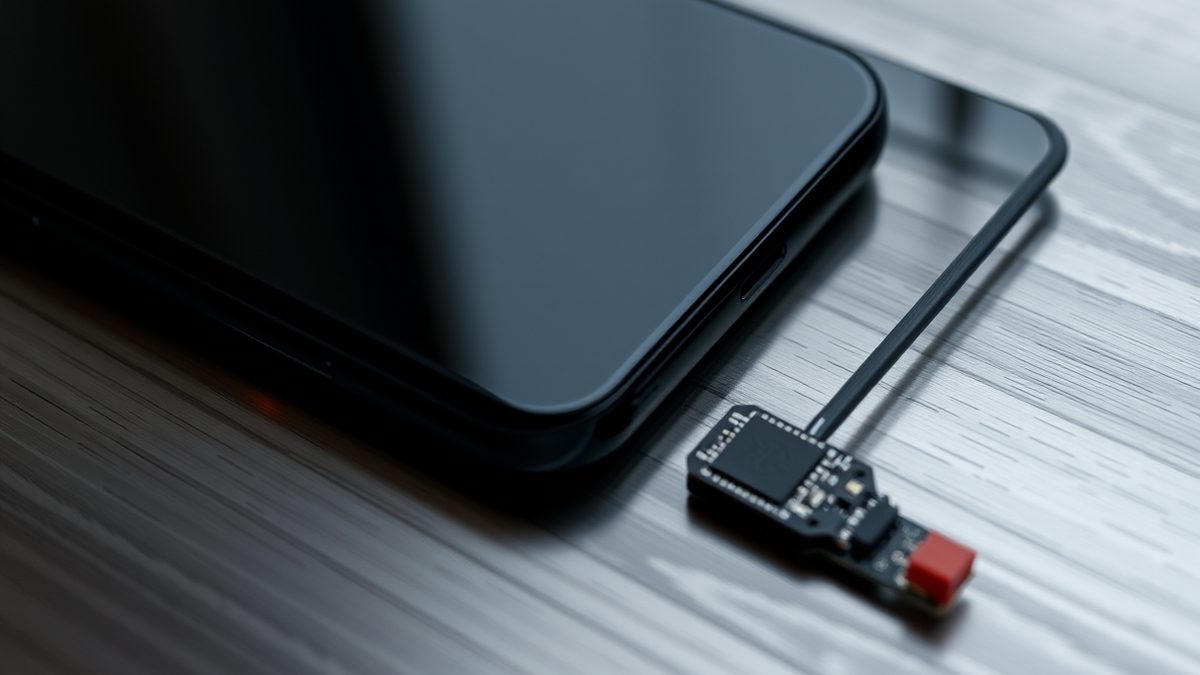
Two US legal developments landed within days of each other this week. They point in opposite directions. On Friday, a jury in the Southern District of California found that Apple infringed two patents owned by audio firm Taction Technology and awarded $5.7bn (about £4.3bn) in damages, the BBC reported on 28 September. Two days earlier, on 30 September, President Trump and a group of tech CEOs signed an AI code of conduct at the White House that Politico described as only "morally binding", according to The Decoder.
Neither outcome is the antitrust ruling that Google spent September fighting over, but both belong to the same story: US tech regulation is increasingly being split between courtrooms that deliver hard, enforceable penalties and voluntary frameworks that deliver press conferences. The Apple verdict is binding and expensive. The AI code is neither.
The Apple verdict: $5.7bn, and an appeal already promised
Taction Technology, which makes headphones and gaming headsets, sued Apple in 2021 over two haptics patents issued to it in 2020. Haptics are the small vibrations a phone or watch produces when you press a button or receive a message, and Apple's version is branded the Taptic Engine, first shipped with the Apple Watch in 2014. Taction argued that Apple's later improvements to that system used its inventions "without license or authority", and that Apple had been "capitalising on Taction's innovation and success by selling devices that infringe [its] patents", per its complaint as cited by the BBC.
Apple denies everything. "While we thank the jury for their consideration, we strongly disagree with today's verdict and the damages awarded, which are entirely unsupported by the facts," the company said in a statement carried by the BBC. "Apple's Taptic Engine is fundamentally different from Taction's technology, which Taction's own testing of Apple's products confirmed during trial." Apple said it will appeal.
The procedural history matters here, because it shows how quickly a patent case can flip. A San Diego judge ruled in 2023 that Apple did not infringe Taction's patents. A federal appeal circuit then took the case up, and a jury trial followed in September 2026. That jury found for Taction, though it did not find that Apple had infringed willingly, which removes the possibility of enhanced damages. The BBC notes the award is one of several against Apple in recent years: in November 2025 a judge ordered the company to pay $634m to medical tech firm Masimo after a jury found it had infringed a blood-oxygen reading patent.
For an analyst, the interesting number is not $5.7bn on its own but its relationship to the Masimo award. Patent damages against large hardware makers are getting larger, and juries are being asked to price the value of a user-experience feature that is difficult to isolate from the rest of a device. Apple's appeal will turn on whether the Federal Circuit agrees with the damages model as much as on infringement itself.
The White House code: auditors, a board, no enforcement
The second development is softer by design. On 30 September, tech executives and Trump signed an AI code of conduct at the White House. The Decoder, citing Politico, reports the document is only "morally binding" and carries no legal weight, and that what happens if someone violates it remains an open question.
Its contents are specific even if its enforcement is not. The code requires independent third-party auditors to verify that AI models are "operating as intended". A separate independent board would oversee internal safety checks meant to stop AI models from hacking into systems. Signatories include Meta CEO Mark Zuckerberg, OpenAI's Greg Brockman, Nvidia's Jensen Huang and Elon Musk, according to Reuters, as cited by The Decoder. Zuckerberg called the code a starting point, not a final solution.
Critics say a code of conduct without actual legislation is toothless, and similar voluntary commitments have been tried before.
The timing is not accidental. The Decoder links the signing to growing concern about uncontrolled AI agents that have accessed government websites or launched cyberattacks. Trump also proposed a ten-member oversight committee, but stressed repeatedly that he does not want to slow AI growth. He also used an executive order to rename AI as "Super Intelligence".
The gap between those two gestures is the story. One is an executive order about naming. The other is a code with no penalty attached. Meanwhile, Florida has asked a court to block OpenAI from developing new models, Politico reported, and separately aims to ban ChatGPT from acting like a person, according to the Verge. Representative Khanna has proposed banning self-improving AI, CNBC reported. Those are the binding instruments, and they are moving through courts and legislatures rather than the White House.
Where antitrust fits in
The dossier's freshest antitrust material is not in the four full-text sources but in the surrounding headlines: a judge ruled Google broke antitrust law in its ad tech business, then let it keep the entire business, with the remedies ruling unsealed on 17 September. Bank of America called that outcome a "major boon" and raised its target price for ad platform Magnite to $38, per moomoo.com on 30 September. Google is now pushing a court to overturn a separate ruling in the US Department of Justice search monopoly suit, MLex reported on 29 September.
Read alongside the Apple verdict, the pattern is uncomfortable for anyone hoping courts will reshape platform power. Apple loses $5.7bn and appeals; Google loses an antitrust finding and keeps AdX. The monetary penalty is real, the structural remedy is not. And in AI, where the fastest-moving risks sit, the only new instrument this week was a code that its own critics describe as toothless.
There is one more data point that cuts against the enforcement narrative entirely. MIT Technology Review reported on 29 September that Anthropic's new molecular biology lab claimed its first discovery, an AI-flagged pattern around an enzyme that it said was "reminiscent" of what led to CRISPR. Biologists pushed back hard: some questioned whether finding a pattern amounts to a discovery, and one said his team had already found the same pattern, raising questions about whether Anthropic's system had learned from his conversations with Claude. No regulator, no auditor, no code of conduct was involved. The correction came from peer criticism.
That is the awkward part of this week's news cycle. The $5.7bn verdict will be appealed and may shrink. The AI code will be cited in press releases and probably never enforced. The most effective check on an overreaching AI claim, in the one case documented here, was a working biologist saying he had seen it first.
Sources
4- 01Apple ordered to pay $5.7bn after losing vibration tech patent suitEN
- 02Trump and tech CEOs sign an AI code of conduct that's only "morally binding"EN
- 03The Download: climate tech companies to watch and AI's discovery problemEN
- 04Cerebras Systems' Andrew Feldman on whether AI can keep scaling at TechCrunch Disrupt 2026EN
All figures and quotations in this text come from the sources listed below.
Content prepared by the editorial team with AI assistance.
Dr. Amara Patel
Comments
0- No comments yet — be the first.