Bennu's glycine may have formed in frozen, radiation-bathed ice, Penn State isotope study finds
Glycine in asteroid Bennu dust may have formed in frozen, radiation-exposed ice, not warm water, a Penn State-led study reported on 9 February, adding a cold route to a protein building block.
 Sofia MarchettiScience and health
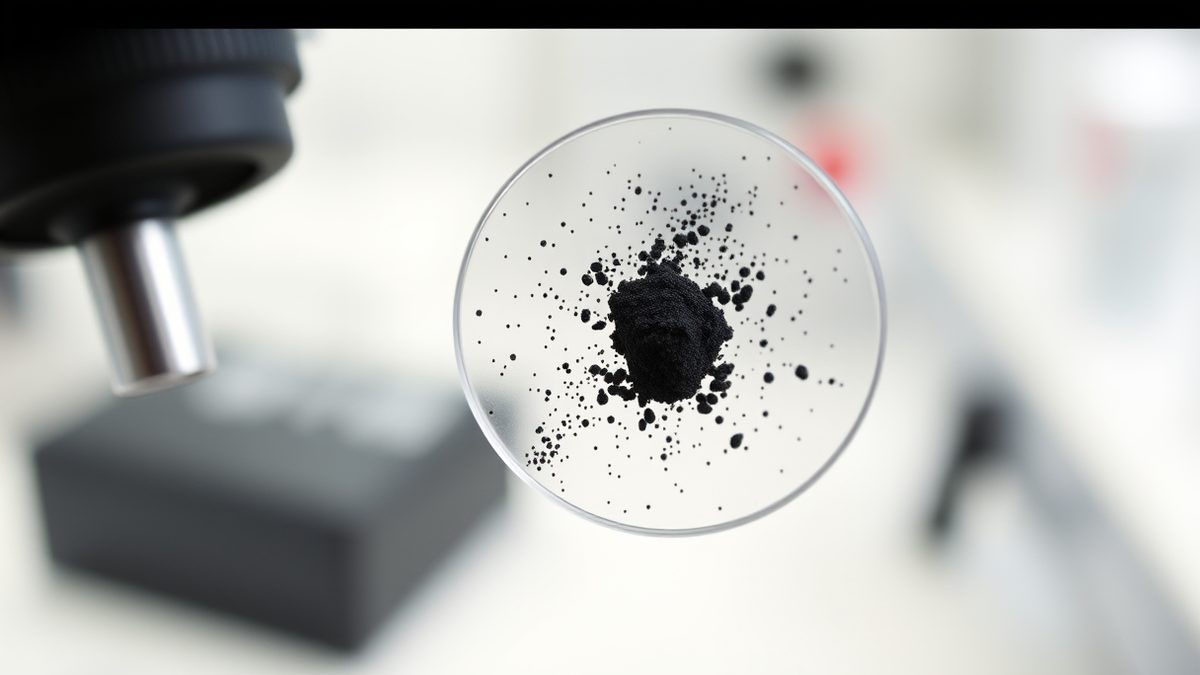
The study analyzed a speck of Bennu dust no bigger than a teaspoon and focused on glycine, the simplest amino acid and a two-carbon molecule. The team used custom instruments at Penn State to measure isotopes, slight variations in atomic mass that act as chemical fingerprints, in organic compounds at abundances down to picomoles.
The researchers said some amino acids in Bennu likely formed differently than previously thought. "Our results flip the script on how we have typically thought amino acids formed in asteroids," said Allison Baczynski, assistant research professor of geosciences at Penn State and co-lead author. "It now looks like there are many conditions where these building blocks of life can form, not just when there's warm liquid water."
A colder route for glycine
Previously, the main hypothesis for glycine formation was Strecker synthesis, in which hydrogen cyanide, ammonia and aldehydes or ketones react in liquid water. The new results hint that Bennu's glycine may not have formed in warm water at all, but instead in frozen ice exposed to radiation in the outer reaches of the early solar system, Baczynski said.
The paper reports that Bennu's glycine did not match the Strecker story cleanly. The team measured glycine's two carbon positions separately. In Bennu, those two carbons looked similar within error; in Murchison, they looked very different. The team also measured certain aldehydes and ketones in another Bennu extract. Those compounds were more depleted in carbon-13 than Bennu's glycine, a mismatch that made a Strecker-only explanation less likely for Bennu.
Isotopes and Murchison
In a powdered Bennu sample labeled OREX-800107-183, the team identified 19 amino acids, several of them in left and right mirror forms. Many carried carbon and nitrogen isotope values above typical Earth values, which supports a space origin.
Bennu's glycine had a carbon isotope value of +21 plus or minus 6 per mil and a nitrogen value of +185 plus or minus 10 per mil. Murchison's glycine nitrogen value was +78 plus or minus 6 per mil, so Bennu's was more than double. Carbon values for the two meteorites were similar within uncertainty. Bennu's beta-alanine measured +12 plus or minus 6 per mil for carbon and +170 plus or minus 4 per mil for nitrogen. Murchison's beta-alanine value was +63 plus or minus 4 per mil.
The comparison case was the Murchison meteorite, which fell in Australia in 1969. Murchison's amino acids appear to have formed in liquid water at mild temperatures, conditions that could have existed on the parent bodies of such meteorites and on early Earth. Ophélie McIntosh, a postdoctoral researcher at Penn State and co-lead author, said the amino acids in Bennu show a much different isotopic pattern than those in Murchison. She said the results suggest the two parent bodies originated in chemically distinct regions of the solar system.
Bennu's two mirror-image forms of glutamic acid carry drastically different nitrogen values, contradicting the expectation that such pairs share an isotopic signature.
Why the route matters
Amino acids link together to form proteins, which carry out nearly every biological function, from building cells to catalyzing chemical reactions. Finding glycine in asteroids or comets suggests that some of life's fundamental ingredients may have formed in space and been delivered to early Earth, Baczynski said.
The Bennu sample avoided much of the contamination risk that affects meteorites. It came back sealed and was curated under high-purity nitrogen at NASA's Johnson Space Center. Meteorites fall through a reactive atmosphere and then sit on a wet, living planet.
What the team wants next
Baczynski said the team hopes to analyze a range of different meteorites to look at their amino acids. The aim is to determine whether there is even more diversity in the conditions and pathways that can create the building blocks of life. "We have more questions now than answers," she said.
Sources
18- 01This asteroid is spilling secrets about the origin of life on EarthEN
- 02Scientists Find Extraterrestrial Bio-Essential Sugars in Samples from Asteroid BennuEN
- 03Scientists Have Found New Origin Of 'Building Blocks Of Life' Discovered In Asteroid BennuEN
- 04Asteroid Bennu sample finds life's building blocks formed in space iceEN
- 05Asteroid Bennu samples reveal ancient water offering new clues about the origin of life on EarthEN
- 06Building blocks of life discovered in Bennu asteroid rewrite origin storyEN
- 07Samples from the asteroid Bennu force us to rethink the origin of life: NASA finds key compounds in rocks over 4.5 billion years oldEN
- 08Bennu asteroid sample reveals a cold pathway for amino acid formationEN
- 09Bennu asteroid reveals new origins for life's amino acidsEN
- 10 SpaceX's plan to build more data center compute than Google's entire lifetime capacity in just 1.5 years is possible, say analysts EN
- 11Comets probably didn’t deliver life’s building blocks to EarthEN
- 12Gene editing could replace a lifetime of medication, but there's a catchEN
- 13Building a Culture for a Kubernetes-Based Platform in a BankEN
- 14ViBench 2.0: A Benchmark for Long-Horizon Software BuildingEN
- 15Comets Probably Didn't Bring Life's Building Blocks to EarthEN
- 16The Future of Buildings in Illinois Is ElectricEN
- 17We Were Totally Wrong About How Life on Earth Started, Study Suggests - FuturismEN
- 18Apple Watch Ultra 4 review: longer battery life but still awaiting new featuresEN
All figures and quotations in this text come from the sources listed below.
Content prepared by the editorial team with AI assistance.
Sofia Marchetti
Comments
0- No comments yet — be the first.