Proxima signs Fujikura and Kyoto Fusioneering memoranda on HTS tape and fusion equipment
Proxima Fusion signed memoranda with Fujikura and Kyoto Fusioneering in Tokyo on 28 October 2026 to study an industrial-scale HTS tape plant in Lower Saxony and expand gyrotron and tritium work, aiming to cut reliance on Asian tape suppliers.
 Sofia MarchettiScience and health
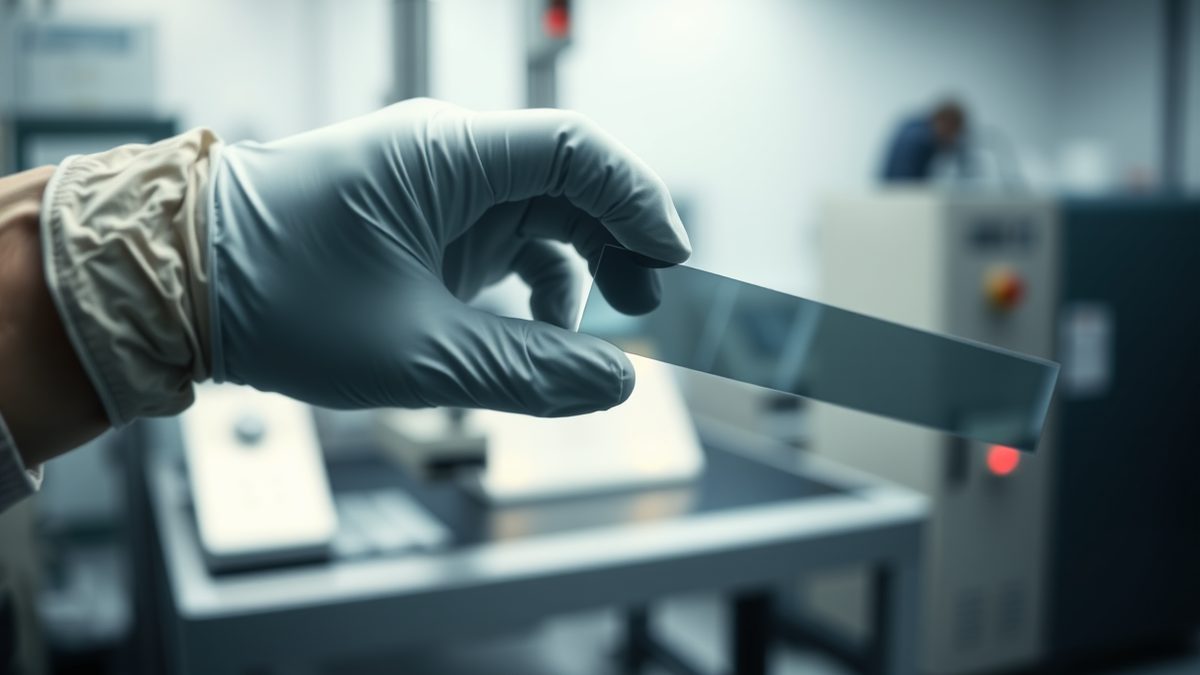
Proxima Fusion signed memoranda with Fujikura and Kyoto Fusioneering in Tokyo on 28 October 2026, during German Chancellor Friedrich Merz's visit to Japan. The Fujikura agreement covers HTS tape manufacturing and a joint study of whether an industrial-scale tape site in Lower Saxony is technically and commercially feasible. The Kyoto Fusioneering agreement expands existing work on next-generation gyrotrons, the high-power microwave sources that heat plasma, and on fuel-cycle technology for handling tritium.
Kyoto Fusioneering said the work would also feed into Germany's national Fusion Hubs initiative, run by the Federal Ministry of Research, Technology and Space. Xenospectrum reported that the agreements do not guarantee product orders or deliveries, or the operation of a power plant.
The proposed Lower Saxony plant would be the first of its kind in Germany and Europe. It is meant to supply Proxima's Alpha demonstrator, its planned Stellaris power plant and, ultimately, stellarator production at scale. World Nuclear News reported that Stellaris is planned for the site of the former Gundremmingen nuclear power plant in Bavaria. Reuters reported that RWE signed an agreement to partner on a first stellarator plant there. The same HTS capacity would serve high-performance electricity grids, medical imaging and treatment, advanced propulsion and other high-field magnet technologies.
Under current plans, Proxima will require about 20,000 kilometres of HTS tape for Alpha and a further 40,000 kilometres for Stellaris. Long-term purchase volumes will be critical to scaling production, retaining manufacturing expertise and reducing cost per metre, the company said.
The Lower Saxony agreement
The tape plan predates the Tokyo trip. On 9 September 2026 Proxima signed a memorandum with Lower Saxony covering site assessment, a milestone-based support and funding structure, permitting and partnerships with companies, municipalities and research institutions.
Around €140 million is planned for the first two project phases, which run until the end of 2029. Proxima aims to finance the total investment equally through private capital and public funding. Lower Saxony is providing €21 million toward the proposed public funding contribution.
The €140 million plan is smaller than the €411 million Proxima raised in July. The round valued the company at €2.4 billion, with Google and RWE joining as strategic investors, Reuters reported. XTX Ventures and East X Ventures led the round. RWE contributed €25 million.
The tape supply gap
HTS tape becomes superconducting at relatively high temperatures and carries current with virtually no resistive losses. That makes powerful, compact electromagnets possible, and stellarators rely on those magnets to confine plasma. Proxima was spun out of the Max Planck Institute for Plasma Physics and is developing a stellarator, which uses a twisted magnetic field to hold plasma steady rather than the pulsed operation of a tokamak.
Most HTS tape is made in Asia. TechCrunch reported that the vast majority comes from China and Japan, and World Nuclear News said industrial-scale production is primarily in Asia. The material emerged a little over a decade ago as one of the breakthroughs behind the current generation of fusion startups, TechCrunch reported.
Proxima plans to complete Alpha in the early 2030s and the commercial Stellaris facility later in the same decade.
What happens next
No final investment decision on the tape factory has been announced, and no annual production capacity has been confirmed. The Lower Saxony memorandum sets out a milestone-based support and funding structure rather than a schedule of payments.
Proxima said it is in discussions with several international technology partners about bringing HTS manufacturing expertise to Lower Saxony. Fujikura is now one of them. Proxima said the two companies will first evaluate the technical requirements for manufacturing and its commercial and economic feasibility.
Sources
25- 01Fusion research to get major boost with new high-temperature superconducting tape manufacturingEN
- 02Google, RWE back Proxima Fusion in €411 million financing roundEN
- 03Proxima Fusion bets €140M on a critical fusion ingredient dominated by Asian suppliersEN
- 04Proxima Fusion Plans the Alpha Stellarator for the Early 2030SEN
- 05Proxima announces plan for German HTS production facilityEN
- 06Proxima Fusion Eyes Giant HTS Tape Plant With Fujikura, Citing 40,000 km Per ReactorEN
- 07Proxima Fusion Japan Deals: €140M HTS Plan [2026]EN
- 08Private Investors Pour Billions Into Fusion Energy as Startups Build Commercial Reactors - Mezha.netEN
- 09Insurer Guardian hands 1 million dental calls a year to Sierra’s AI agentsEN
- 10Thea Energy und MIT testen planare HTS-Magnete für mögliches FusionskraftwerkEN
- 11Elon Musk Threw Away $474 Million (Or More) … But May Benefit From FailingEN
- 12AI PACs spent millions trying to shape Congress — here’s how they faredEN
- 13STAT+: Pharma critic Bernie Sanders is set to hold major sway over FDA funding billEN
- 14Supa raises £21M in seed funding to transform UK residential block managementEN
- 15CesiumAstro Secures $730 Million in Janus Henderson-Led Series D at a Valuation Above $4.5 Billion; Unveils Synchronicity Satellite Constellation Following FullEN
- 16Nearly 1.5 million exposed secrets targeted in new revocation programEN
- 17Quint Computing raises €9.1 million for development of fault tolerant quantum computing architectureEN
- 18 Certified Android TV manufacturer put unauthorized backdoor in 1.3 million set-top boxes, Google reveals EN
- 19Lazzaro One lands pre-seed funding to advance maritime intelligence technologyEN
- 20Text-Only Domain Adaptation for Low-Resource Medical ASR: Shallow Fusion and Density Ratio Rescoring for HausaEN
- 21Short-Term Forecasting of Heterogeneous Wind Power Fleets: Global Temporal Fusion Transformer Leveraging Static CovariatesEN
- 22Google Disrupts 1.3 Million-Device Android Botnet, Says TV Box Maker Sold Criminal AccessEN
- 23Is There Anything Left in the Dream of Cold Fusion?EN
- 24Hackers Steal About $2.7 Million From Polymarket Traders via Hijacked DebugBear ScriptEN
- 25How AI Is Changing the Pace of Discovery for Millions Living With DementiaEN
All figures and quotations in this text come from the sources listed below.
Content prepared by the editorial team with AI assistance.
Sofia Marchetti
Comments
0- No comments yet — be the first.