NASA Awards Three Ka-Band Relay Concept Contracts Worth Up to $1.0656 Billion
NASA awarded three Ka-band space relay concept contracts to Viasat, SES Space & Defense and Astranis on 4 November 2026. The awards carry maximum potential values totaling $1.0656 billion, including options NASA may never exercise.
 Sofia MarchettiScience and health
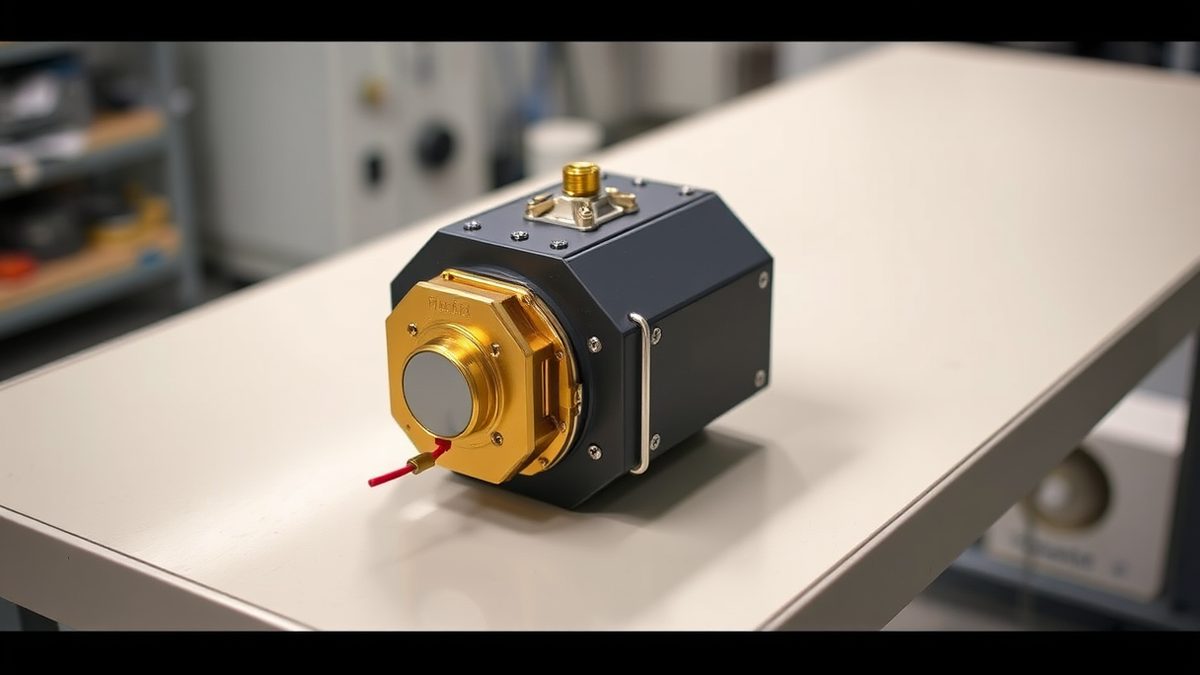
NASA selected Viasat, SES Space & Defense and Astranis Space Technologies on 4 November 2026. It contracted the second under its legal name, Global Enterprise Solutions Inc. The work sits under the NextSTEP-3 Broad Agency Announcement, Appendix E. It runs through the agency's SCaN program and its Communications Services Project. Viasat holds the largest maximum potential value at $460.9 million. SES Space & Defense holds $340.4 million and Astranis $264.3 million. All three are firm-fixed-price awards. Each company must show it can serve existing spacecraft without forcing NASA to modify onboard systems.
Why NASA is buying instead of building
NASA is buying a relay service rather than owning relay satellites. Under firm-fixed-price terms, the three companies absorb cost overruns on the base work. Designs must also work with spacecraft already in orbit.
The program exists because NASA is retiring its Tracking and Data Relay Satellite fleet. It is moving future missions onto commercial services. TDRS relays data for the International Space Station, the Hubble Space Telescope and other missions. Via Satellite reported the fleet stopped onboarding new missions in late 2024. NASA's solicitation says the agency intends to acquire an end-to-end Ka-band relay service. It must stay backward-compatible with legacy TDRSS users for at least 15 years. It wants solutions covering space, ground, launch, operations and integration. It wants to buy them as one of many customers in the commercial marketplace.
NASA says Ka-band services are needed for select in-orbit missions that cannot feasibly modify flight hardware or move to non-compatible commercial services.
What the money actually buys
The initial period of performance runs from 4 November 2026 through 3 May 2027. It is a six-month concept maturation and risk reduction phase. NASA holds priced options to fund system integration, flight demonstration and verification, and further work through 2029. The Broad Agency Announcement sets out three phases. The first is concept maturation. An option covers up to two years of integration and flight demonstration. A further option covers up to six months for anomaly resolution and service validation. The published values are maximum potential values. They include options the agency may never exercise.
The spread between the bids
Viasat's ceiling is 1.74 times Astranis's, a gap of $196.6 million. SES Space & Defense sits $120.5 million below Viasat and $76.1 million above Astranis. The three awards also map to different orbital regimes, according to SatNews. Viasat maps to geostationary orbit. SES Space & Defense maps to medium Earth orbit using its O3b mPOWER constellation. Astranis maps to its MicroGEO architecture.
What happens next
The concept phase closes on 3 May 2027. NASA then decides whether to exercise options toward a flight demonstration. NASA has given no hard retirement date for the TDRS fleet.
The TDRS fleet keeps flying in the meantime. NASA expects it to support current missions into the mid-2030s.
Sources
30- 01Viasat, SES, and Astranis Win NASA Ka-band Relay Contracts - Via SatelliteEN
- 02NASA Awards Ka-Band Satellite Relay Contracts for Space CommunicationsEN
- 03NASA Awards $1.07B in Ka-Band Space Relay Contracts to Viasat, SES and AstranisEN
- 04NASA Ka-Band Relay Awards Hit $1.07B for 3 Firms [2026]EN
- 05NASA Ka-Band Relay Awards: $1.07B Across 3 Firms [2026]EN
- 06Rocket Lab Sets Another Spacecraft Milestone As Viasat Advances $81M NASA ProgramEN
- 07Viasat Advances NASA Communications Services Project Demonstration with Successful LaunchEN
- 08Texas Satellite Maker Raises $730 Million to Launch New NetworkEN
- 09 On this day in space! Nov. 5, 2002: NASA's Galileo spacecraft flies by Jupiter moon Amalthea only to find it's a 'pile of icy rubble less dense than water' EN
- 10Electric Buses Need a Plan for the Next Operating ContractEN
- 11 NASA's Voyager 1 probe bounces back from communications glitch in interstellar space EN
- 12 NASA announces experimental X-70 Fractal aircraft: A 'new beginning for aeronautics' EN
- 13 China lays out plans to land astronauts on the moon 'before 2030.' Can NASA still win this race? EN
- 14NASA-Weltraumteleskop Swift über Indonesien verglühtEN
- 15NASA kündigt neues Experimentalflugzeug X-70 Fractal anEN
- 16 On this day in space! Nov. 4, 2015: A rail-launched Super Strypi rocket carrying 13 baby satellites failed during its debut launch for the US Air Force EN
- 17 NASA's Swift space telescope crashes back to Earth after failed rescue attempt EN
- 18 Drone warfare in space: Swarms of autonomous, laser-shooting cubesats could defend Western satellites in orbit EN
- 19CesiumAstro Secures $730 Million in Janus Henderson-Led Series D at a Valuation Above $4.5 Billion; Unveils Synchronicity Satellite Constellation Following FullEN
- 20NASA is racing against time to save the Hubble Space TelescopeEN
- 21 NASA asks industry for ideas about saving Hubble Space Telescope EN
- 22 Do we know how many Starship launches SpaceX will need to get NASA astronauts to the moon? No. Will its refuelling plan be simple? Also no. EN
- 23NASA smashed into an asteroid. Now Hera is closing in to see what happenedEN
- 24NASA reveals a haunting skull hidden in Antarctica’s iceEN
- 25How Far Can You Steer? Behavior-Capability Frontiers in Contrastive Activation AdditionEN
- 26 What is Starshield? A look at SpaceX's military satellite network EN
- 27 Rocket Lab launches Japanese Earth-observing satellite on 99th mission to date (video) EN
- 28NASA's Hubble and Webb discover ancient worlds that remember their pastEN
- 29Il satellite russo che fa il gatto con il topoEN
- 30 Planetary defense: How military and civil satellites are watching fireballs to help keep Earth safe from space rocks EN
All figures and quotations in this text come from the sources listed below.
Content prepared by the editorial team with AI assistance.
Sofia Marchetti
Comments
0- No comments yet — be the first.