DOE's INFUSE fusion voucher program adds lab consortia and pilot-plant design reviews
DOE's INFUSE fusion voucher program now accepts applications from companies partnering with consortia of national laboratories and universities and supports reviews of early pilot-plant designs, expanding who can use lab expertise. The fiscal 2027 round closes on 13 December.
 Sofia MarchettiScience and health
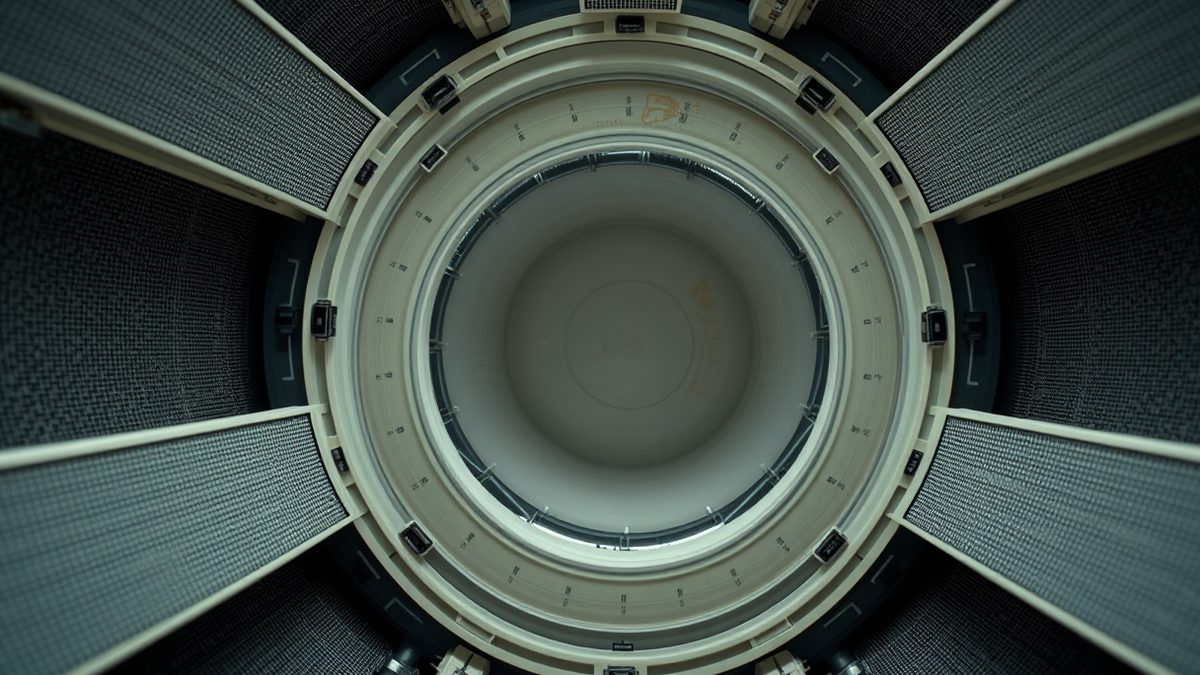
The changes follow DOE's Nov. 2 announcement of $8.5 million in fiscal 2026 funding for 28 INFUSE projects, R&D World reported. The program also has an incoming director, Arturo Dominguez, and Lawrence Livermore National Laboratory joined Oak Ridge and Princeton Plasma Physics Laboratory in running it.
What changed for applicants
The fiscal 2027 call allows companies to partner with consortia of national laboratories and universities and adds a review topic for pilot-plant designs. Applications close on Dec. 13, two days after the continuing resolution expires on Dec. 11.
INFUSE pays national laboratories and universities to work with private fusion companies, so the money goes to the lab or university partner rather than the company. Company partners cover at least 20% of total project costs, and the fiscal 2027 call strongly encourages a cost share of 50% or more for design reviews. The $8.5 million compares with more than $10 billion raised by fusion startups as of early 2026, according to ARPA-E.
Dominguez said in Oak Ridge's release: "Through INFUSE, companies can access capabilities that would be difficult or time-consuming to build on their own, while the public institutions gain a clearer view of the technical barriers most critical to commercialization."
This year's awards
DOE selected 17 lab-led and 11 university-led projects, working with 22 companies, for awards of $100,000 to $500,000 each over one to two years. The round rose from $6.1 million for 20 projects last year and $4.6 million across 17 projects in 2024, bringing INFUSE to more than 150 projects since 2019. Ten awards went to nine first-time INFUSE companies. Project topics include high-temperature superconducting magnets, reactor materials, diagnostics and work on producing and handling fusion fuel. DOE will negotiate the awards before issuing funding.
Why pilot-plant reviews matter
DOE's Milestone-Based Fusion Development Program pays companies only as they hit agreed technical and business milestones toward a fusion pilot plant. R&D World reported that the new review topic could give companies outside that program a route to lab review of pilot-plant designs.
R&D World described two awards. Oak Ridge and the Electric Power Research Institute will gather records on irradiated samples from the High Flux Isotope Reactor into one searchable catalog, pulling data now scattered across experiment files, inventory systems and old reports. SuperPower, which Oak Ridge calls one of the few U.S. makers of rare-earth barium copper oxide superconducting wire, will work with the lab on the laser deposition targets it needs to scale production.
What happens next
In its fiscal 2027 budget request, DOE asked for $135 million for fusion public-private partnerships, up from $100 million. DOE said the increase would go toward the Milestone program, research at private companies' fusion facilities and the new Fusion BRIDGE program, which would fund regional consortia building test stands. The request remains subject to congressional appropriations.
Sources
20- 01DOE's fusion voucher program opens to consortia and pilot-plant reviews - R&D WorldEN
- 02U.S. DOE Finalizes Roadmap to Accelerate Commercial FusionEN
- 03Accelerating the Path to U.S. Fusion Power: An Evaluation of the DOE's Milestone-Based Fusion Development ProgramEN
- 04DOE approval of Xcimer fusion power plant preconceptual designEN
- 05Raven-Flint U conversion plans land on NRC docket, in Launch Pad - American Nuclear SocietyEN
- 062025: The year in nuclear -- ANS / Nuclear Newswire - American Nuclear SocietyEN
- 07Thea Energy und MIT testen planare HTS-Magnete für mögliches FusionskraftwerkEN
- 08Virtual power plants can help avoid overbuilt grid if AI boom goes bustEN
- 09Nearly 1.5 million exposed secrets targeted in new revocation programEN
- 10Human cell programming company bit.bio closes $25M Series DEN
- 11A Michigan utility’s iffy plan to trap CO2 from its new gas plantsEN
- 12 OpenAI introduces program to reduce AI data center energy demand during peak hours EN
- 13Text-Only Domain Adaptation for Low-Resource Medical ASR: Shallow Fusion and Density Ratio Rescoring for HausaEN
- 14Short-Term Forecasting of Heterogeneous Wind Power Fleets: Global Temporal Fusion Transformer Leveraging Static CovariatesEN
- 15Kazakhstan Eyes Ambitious 2035 Goal for 2 Nuclear Power PlantsEN
- 16AbbVie bets up to $1.47B on Nxera's gut-targeting IBD programEN
- 17Is There Anything Left in the Dream of Cold Fusion?EN
- 18Introducing the Grid Protectors ProgramEN
- 19ESI supplying solar array components to missile defense programsEN
- 20Credit Saison achieves 954% ROI in a ChatGPT Enterprise pilotEN
All figures and quotations in this text come from the sources listed below.
Content prepared by the editorial team with AI assistance.
Sofia Marchetti
Comments
0- No comments yet — be the first.