Chang'e-6 far-side soil records faster solar wind than Earth-shielded near side
Chang'e-6 far-side regolith records faster, more deeply implanted solar wind than near-side soil, the first direct comparison of the two hemispheres, the Chinese Academy of Sciences said on 15 July 2026, announcing a Nature Geoscience study.
 Sofia MarchettiScience and health
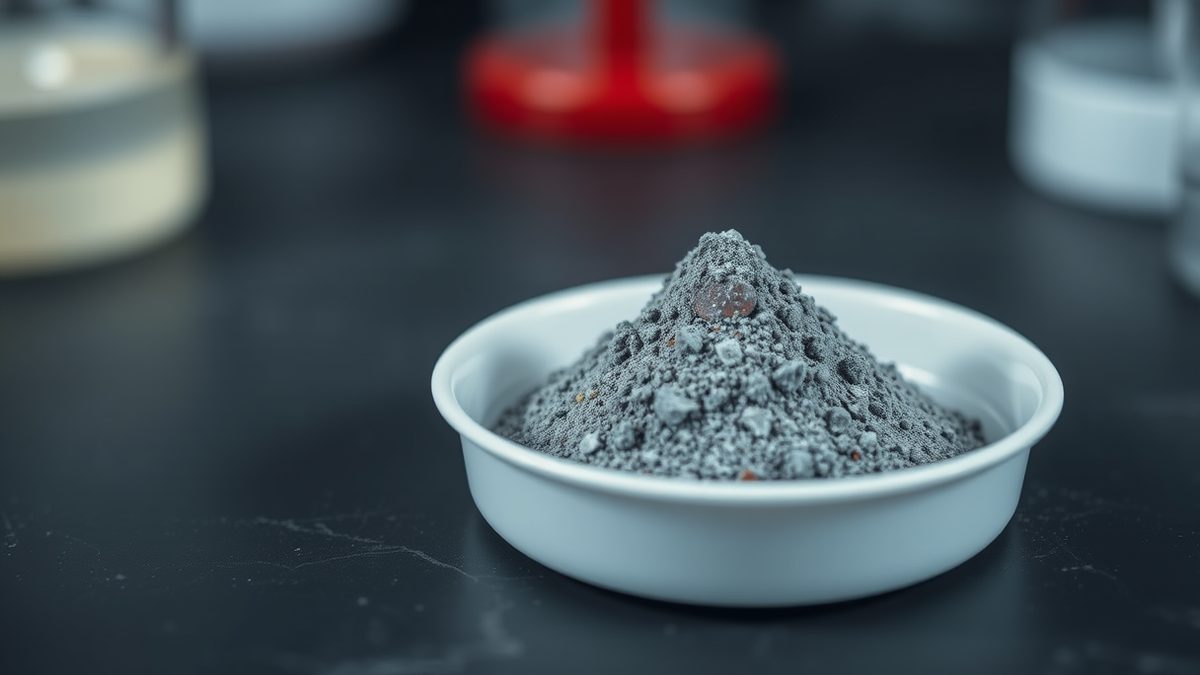
Until Chang'e-6, every returned lunar sample came from the near side. That left one question untested in a laboratory: whether Earth shields one hemisphere from the solar wind more than the other. Far-side soil carries a more deeply implanted record of particle exposure than the soil the Apollo crews brought back, the study in Nature Geoscience found.
What the far-side soil recorded
Chang'e-6 returned 1,935 grams of regolith from the South Pole-Aitken basin, the first samples ever lifted from the lunar far side. The team analyzed seven small portions by stepwise heating and total-fusion laser extraction, measuring helium, neon, argon, krypton and xenon.
The material came from Apollo crater, a smaller structure nested inside the South Pole-Aitken basin, the largest and oldest known impact basin on the Moon.
The clearest anomaly was neon. The average neon-20/neon-22 ratio came out at 11.34, with an uncertainty of 0.22.
That is close to the theoretical value of 11.2 expected for strongly fractionated solar wind, according to the Chinese Academy of Sciences. It is also below the ratios reported for all previously studied near-side soils. In plain terms, the far-side material holds a larger share of the heavier isotope, neon-22.
Krypton and xenon told a second story. Solar-wind xenon in the Chang'e-6 soil emerged mainly at high temperatures, as a single peak, while Chang'e-5 near-side samples produced a double-peaked release pattern. Gas released under stronger heating generally sits deeper inside mineral grains, so the far-side record points to deeper implantation.
Earth as the speed governor
The explanation the team gives is Earth's magnetosphere. As the Moon orbits, it passes periodically through the magnetosheath, where the ambient solar wind is slowed from a typical 400 km/s to about 200 km/s.
The Moon is tidally locked, so the same hemisphere always faces Earth and the other never does. The researchers attribute the contrast to that geometry: the near side faces Earth and the magnetosheath, the far side does not.
That slower wind reaches mainly the near side. The far side, permanently turned away from Earth, meets undisturbed solar wind.
The paper puts a number on the near-side effect. The researchers suggest that roughly 25% of the total solar-wind exposure at the Chang'e-5 landing site was influenced by the magnetosheath, while the Chang'e-6 site saw no such shielding. Chang'e-5 returned near-side soil, and it shows the shallower implantation the slower wind would produce.
Ruling out other explanations
The researchers checked alternatives before settling on that reading. Average krypton-to-xenon ratios were almost identical in Chang'e-5 and Chang'e-6 soils, which argues against extra meteorite or comet material as the source of the contrast. The Chang'e-6 soils also recorded relatively recent solar-wind exposure, making long-term shifts in solar activity an unlikely cause. No noble-gas depletion was large enough for diffusion, erosion or preferential sputtering to explain the neon ratios on its own.
A fossil record of the old magnetosphere
Noble gases are chemically inert. Their concentrations, isotopic ratios and release temperatures therefore preserve physical details of how the particles arrived, rather than being rewritten by chemistry.
The researchers said the heavy gases may act as fossil records of past interactions between Earth's magnetosphere and the solar wind, offering a way to reconstruct the ancient magnetosphere when combined with paleomagnetic records. The paper also concludes that more than one fractionation process may be involved.
Zhang Xuhang, a postdoctoral researcher at the Institute of Geology and Geophysics of the Chinese Academy of Sciences, carried out the analysis under He Huaiyu. Collaborators came from the University of Science and Technology of China and the Chang'e-7 volatile payload team.
Sources
23- 01Chang'e-6 Samples Reveal How Earth Slows Solar Wind Striking Moon's Near SideEN
- 02Chang'e-6 samples reveal how Earth slows solar wind striking Moon's near sideEN
- 03Chang'e-6 samples reveal how Earth's magnetosphere changed the solar wind reaching the MoonEN
- 04Chang'e-6 samples reveal how Earth's magnetosphere changed the solar wind reaching the MoonEN
- 05Chang'e-6 Samples Reveal How Earth Slows Solar Wind Striking Moon's Near SideEN
- 06New Research Says the "Dark Side" of the Moon is Also the Cold SideEN
- 07Chang'e-6 samples reveal a form of magnetic iron never before found on the MoonEN
- 08Analysis of Chang'e-6 Samples Addresses Mysteries About the Far Side of the Moon. - Universe TodayEN
- 09Chang’e-6 lunar samples reveal a giant impact reshaped the Moon’s interior - Science DailyEN
- 10Chang’e-6 farside samples unlock secret behind the Moon’s ‘two faces’ - Global TimesEN
- 11China discovers something never seen before on the Moon’s far side - Earth.comEN
- 12China donates Chang'e-6 lunar far-side samples to UN for permanent display in ViennaEN
- 13China donates Chang'e-6 lunar samples from Moon's far side to UNEN
- 14Permanent daylight saving time has a dark side, scientists warnEN
- 15Reasoning-Trace Overflow in Code Generation: An Empirical Study of Explicit Reasoning ModelsEN
- 16A Comparative Study of Importance Attribution to Columns in Deep Learning over Relational DatabasesEN
- 17‘The ticket is the gateway’: How destination events, sprint races and greater accessibility are changing the modern F1 fanEN
- 18Liquid Cooling Is Changing What Data Centers Need to MeasureEN
- 19mSecure Warns Users to Change Passwords, Reset 2FA and Passkeys After Suspicious ActivityEN
- 20AI Is Changing How Semiconductor Fabs Work — and Engineers Are Moving Faster Because of ItEN
- 21US or China? Why Kazakhstan refuses to pick sides as it eyes AI revolutionEN
- 22China aims for manned moon landing before 2030, with two taikonauts set to touch down on lunar surface - Global TimesEN
- 23Studying Fraudulent North Korean IT WorkersEN
All figures and quotations in this text come from the sources listed below.
Content prepared by the editorial team with AI assistance.
Sofia Marchetti
Comments
0- No comments yet — be the first.