Europe's Battery Supply Meets Demand, But Midstream Is Still the Weak Link
Europe will have enough battery cells to meet the demand of its Industrial Accelerator Act by 2030, but it still cannot make enough cathode active materials to build those cells, according to analysis by Transport & Environment published on 30 September.
 Dr. Amara PatelEconomy, business and world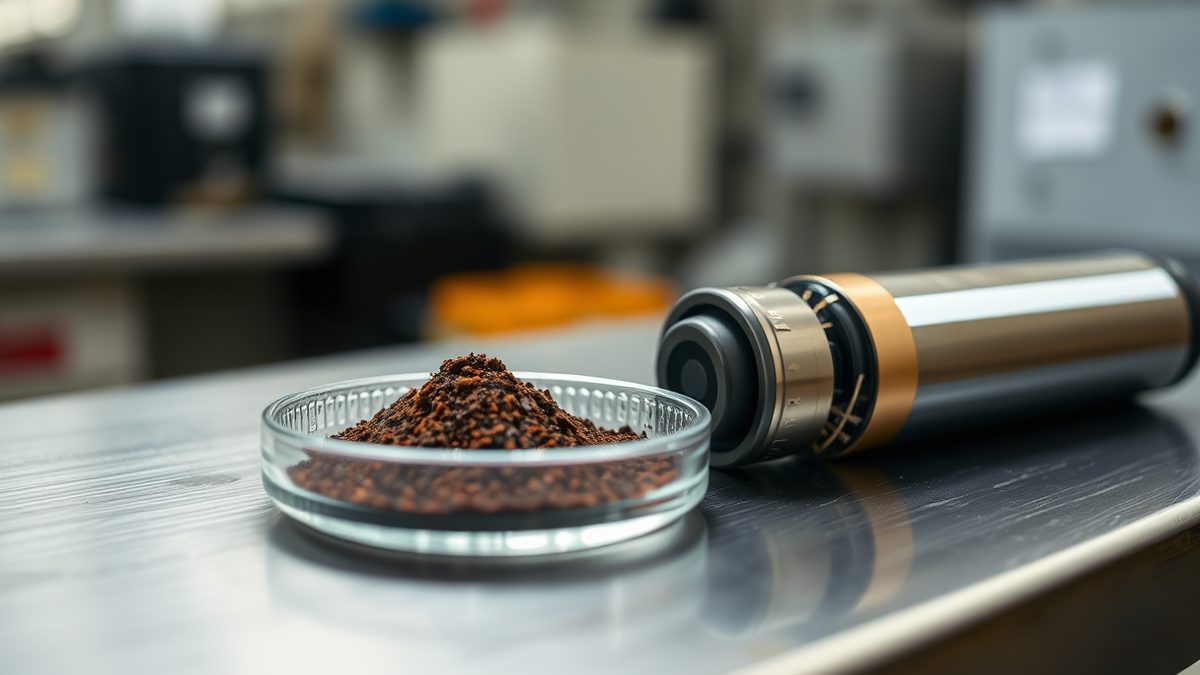
Transport & Environment (T&E) published a map and an analysis on 30 September that tracks cell and cathode production capacity across Europe. The finding is narrow but consequential: cell supply is not the problem. Cathode active materials (CAM) and their precursors (pCAM) are. Those are the components that get assembled into cells, and China controls up to 90% of global production capacity for them, depending on the chemistry. For LFP, that figure reaches 95%, T&E says.
CleanTechnica, reporting on the analysis, frames it as a direct answer to carmakers who argue that local content criteria are too ambitious. T&E says the opposite. If every announced project, including those it classes as medium confidence, comes through, the EU can supply cells for all EU-built battery electric vehicles covered by the IAA. That covers corporate and private cars receiving public support. The analysis assumes the IAA applies to light-duty EVs, including vans, and that the ratio between private and corporate channels stays as it is today.
Xavier Sol, T&E's director of sustainable investments and batteries, put the political stakes bluntly in the analysis: "The future of European industrial competitiveness hinges on a simple question: will high value clean tech jobs come to Europe or remain in Asia?" He added that a strong local value chain could deliver strategic independence, but only if the IAA sends what he called a powerful political signal.
The midstream gap and the numbers behind it
The numbers T&E cites are specific. Local content requirements for cells and CAM could mean an additional 34% in EU battery demand compared to the current baseline in 2027. CAM requirements for corporate vehicles under the IAA are feasible, but more capacity would be needed to cover private vehicles as well. T&E recommends adding a minimum Made-in-EU threshold for pCAM, to be met with trusted partners, calling it the most vulnerable segment of the value chain.
Europe's first credibility test comes in January, when local content rules for EVs under the EU-UK Trade and Cooperation Agreement are due to enter force. CleanTechnica reports that carmakers are lobbying for a last-minute delay. That argument runs parallel to the IAA negotiations, which T&E describes as reaching a critical stage. The timing matters because the same carmakers pushing back on the EU-UK rules have a direct interest in the IAA's local content provisions.
The demand side of Europe's battery problem runs through the same industrial policy debate that ASML, Europe's largest company by market capitalisation at around $660 billion, raised on 25 September. Frank Heemskerk, ASML's executive vice president of public affairs, told a panel at De Balie in Amsterdam that the company sold "absolutely nothing" in Europe in 2026. Europe accounted for 0% of ASML's revenue in the first two quarters of 2026, according to its earnings reports, down from 1% in 2025 and 5% in 2024. Tom's Hardware reported the remarks.
Heemskerk's argument is that Europe subsidises supply, meaning fabs, without organising demand for the chips those fabs would produce. "There simply is no demand here for these kinds of highly specialized machines," he said, calling for European governments to aggregate and guarantee demand for European-made chips. The logic maps directly onto batteries: T&E says cell and pCAM facilities require large, stable offtake agreements with European cell producers, which in turn depend on a predictable EV market.
Capital is moving, demand policy is not
Venture capital is still being raised against European industrial and infrastructure themes. On 1 October, Tech.eu reported that DIG Ventures closed its third fund at $120 million to back European pre-seed and seed-stage companies building AI-native enterprise and cloud infrastructure. The same outlet reported that Headline closed its eighth early-stage European fund at $400 million, targeting Seed and Series A companies with a focus on AI. Headline's early-stage European investments include Mistral and Black Forest Labs.
That is software and AI capital, not battery midstream. The two funding rounds illustrate where private money is comfortable, and the T&E analysis shows where it is not. CAM and pCAM plants need long-term contracts before they get built. T&E notes the EU battery industry still struggles with clear offtake commitments and additional investment in those facilities.
Energy storage is getting attention elsewhere in Europe, but not at the scale the battery supply chain needs. EnergyPathways, listed on London's AIM market, is developing the Marram Energy Storage Hub in salt caverns under the East Irish Sea, about 18 km off Lancashire. Its first phase is a 300 MW/55.2 GWh compressed air plant, which pv magazine reported on 30 September is the largest such project under development in the UK. CEO Ben Clube told pv magazine the company is targeting a final investment decision in 2028 and operations by the end of 2031, subject to consents and Ofgem cap-and-floor support.
Clube's criticism of the UK's first long-duration storage round is pointed: 16 projects totalling 7.6 GW and 136.9 GWh, selected provisionally by Ofgem in June, deliver an average duration of about 18 hours. He argues surplus wind events are typically longer than 12 hours and often last days, and that annual surpluses could reach 70 TWh. That is a storage argument, not a battery manufacturing one, but it points at the same underlying problem: Europe is building projects while the industrial base that would supply them remains thin.
The IAA negotiations are where this gets decided. T&E's position is that without demand-side rules for locally produced battery components, Europe risks losing its place in clean tech manufacturing. Carmakers are arguing the targets are too ambitious. Both sides are working from the same capacity data, and the analysis published on 30 September says the cells will be there. The cathodes are another matter.
Sources
5- 01Ready to Scale: Europe Will Have Enough Cells to Meet Demand and Grow Its Domestic Battery Value Chain IndustryEN
- 02ASML says it sold 'absolutely nothing' in Europe in 2026EN
- 03DIG Ventures closes $120M Fund III to back Europe's AI infrastructure startupsEN
- 04Mistral and Black Forest Labs backer Headline closes $400M European fundEN
- 05The rationale behind the UK's largest compressed air energy storage planEN
All figures and quotations in this text come from the sources listed below.
Content prepared by the editorial team with AI assistance.
Dr. Amara Patel
Comments
0- No comments yet — be the first.