Europe's Energy Bill Is Reshaping Its Industrial Policy
The EU's energy import bill jumped by about €100 billion during the US-Iran conflict, and on 1 October 2026 the industrial fallout dominated Brussels: fleet operators, space engineers and grid planners all pushed back on the same problem.
 Dr. Amara PatelEconomy, business and world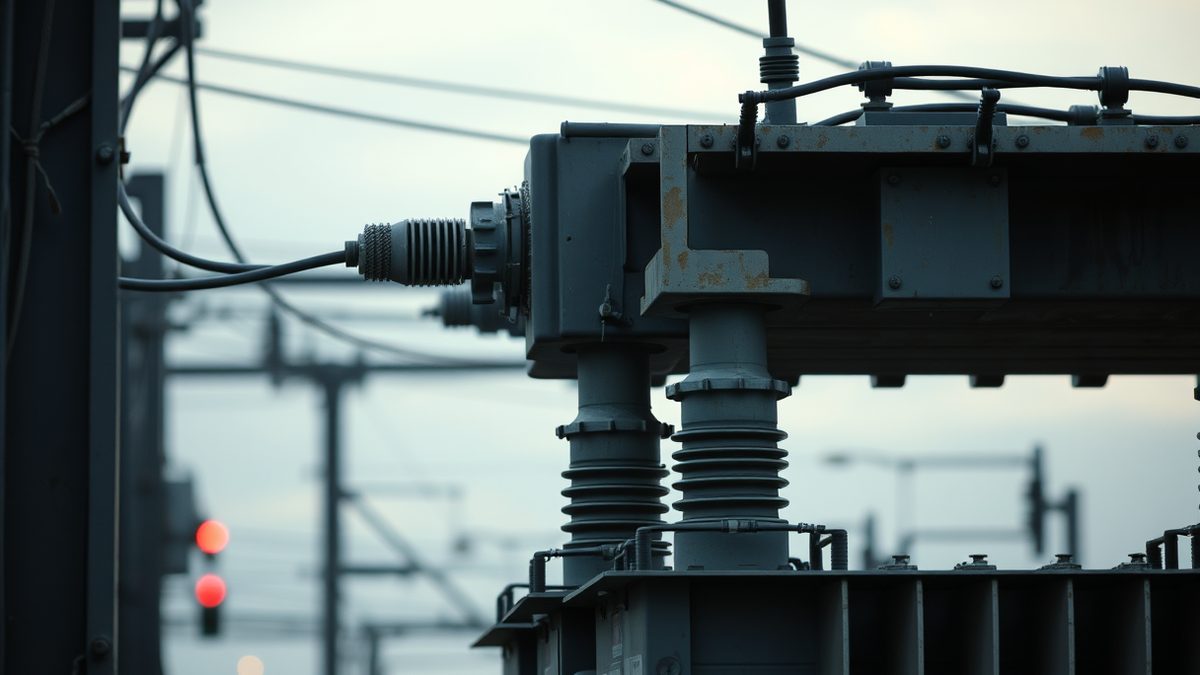
On 1 October 2026, a coalition of European fleet operators including IKEA, EDF, Geopost and DFDS wrote to European Commission president Ursula von der Leyen urging her not to weaken heavy truck emissions standards, according to CleanTechnica. The letter argues that stable CO2 rules are what make investment in electric freight possible. The framing matters: the appeal is about cost, not climate.
The same day, at the Pretzl Connect 2026 press event in Budapest, the European Space Agency's Kate Underhill told EE Times that Europe's reliance on foreign semiconductors and components is now a strategic problem for launch systems and orbital infrastructure. "If there is any U.S. component on your satellite, then you have to comply with U.S. regulations," she said, referring to ITAR export controls. She also described how ESA once tried to order 20 laser diodes from a German supplier and was told the minimum order was 10,000 units. That anecdote, brief as it is, captures the mismatch between European procurement habits and the scale at which component suppliers now operate.
Old rules, new costs
These complaints are not new. What is new is the price environment. Outside the dossier, headlines from the last 72 hours have tracked an EU energy bill inflated by roughly €100 billion, rising gas and power prices entering the fourth quarter, and steel output at historic lows. The dossier itself does not carry those market figures, so treat the direction as context rather than a measured number. Inside the dossier, the concrete data points are smaller and more specific.
Transport & Environment published an analysis on 30 September arguing that Europe will have enough battery cells to meet demand from corporate and private EVs covered by the Industrial Accelerator Act, provided all projects materialise. The bottleneck, T&E says, is midstream: cathode active materials and their precursors, where China controls up to 90% of global production capacity depending on chemistry and 95% for LFP. "The future of European industrial competitiveness hinges on a simple question: will high value clean tech jobs come to Europe or remain in Asia?" said Xavier Sol, T&E's director of sustainable investments and batteries.
On 1 October, the same organisation published a second analysis claiming that electric cars retain their value better than the leasing industry admits. T&E puts the depreciation gap between combustion and electric cars at 12.9 percentage points based on 2025 used-car data in Germany, France, Italy and Spain, then says adjusting for five omitted variables reduces it by 80% to 2.6 points. Leasing companies, carmakers and governments should accelerate the shift, the group argues.
"Businesses are already taking action to electrify their heavy duty fleets, and EDF is helping them make it possible, while energy systems are investing in the infrastructure to support them," said Marion Labatut of EDF in the statement carried by CleanTechnica.
Supply chains as the new energy bill
The EU's own IT infrastructure is being rebuilt around the same logic. On 29 September, Light Reading reported that Orange Business won the contract to run TESTA-EIRIS, the private backbone connecting EU institutions, agencies and national administrations. The network is specified across at least 12 points of presence in five European regions with 99.999% availability, replacing dedicated hardware with software-based virtual services. Sovereignty, in this case, is a procurement category.
Private capital is moving in the same direction. On 1 October, Tech.eu reported that Headline closed its eighth European early-stage fund at $400 million, focused on AI, after backing Mistral and Black Forest Labs. DIG Ventures closed a $120 million third fund the same day for AI-native enterprise and cloud infrastructure, targeting roughly 30 pre-seed and seed companies. Inbolt, a Paris industrial robotics firm, raised €11 million on 30 September, bringing total funding to €30 million. Voltaback raised €2.8 million on 1 October for EV charging reimbursement software.
None of these rounds is large by global standards. Their significance is directional: European venture is funding the software layer of industrial and energy systems rather than the physical plant that consumes electricity.
What Washington is doing to the grid
On 26 August 2026, President Trump signed an executive order declaring a national emergency over high-risk foreign equipment in the US electric grid, according to Semiconductor Engineering. The order covers hardware, software and firmware in generation, transmission and control facilities at 69 kilovolts and above, including large transformers, grid-tied inverters, circuit breakers, battery storage and SCADA systems. Implementing rules from the Department of Energy are due by 24 December 2026.
The order's logic is that provenance alone no longer settles compliance: a US or European manufacturer sourcing chips or communications modules from a covered jurisdiction can still see its finished product restricted. "Compliance is no longer about proving where a device was built. The concern now is how the product works," the article states. No vendor has been named yet.
On the US side of the same ledger, the Senate's permitting bill unveiled on 30 September could streamline high-voltage transmission buildout, with analysis commissioned by the Center for Climate and Energy Solutions estimating roughly $7 billion in reduced delivery costs by 2035 and about $1.1 billion in residential bill savings, Canary Media reported.
The demand problem
Europe's weakest link may not be supply at all. At a panel at De Balie in the Netherlands, reported by Tom's Hardware on 25 September, ASML executive vice president Frank Heemskerk said the company sold "absolutely nothing" in Europe in 2026. Europe was 1% of ASML's revenue in 2025, 5% in 2024 and 0% in the first two quarters of 2026, per the company's earnings reports. "There simply is no demand here for these kinds of highly specialized machines," he said.
That is the uncomfortable symmetry running through this week's announcements. European companies and regulators are spending heavily to secure supply chains, build sovereign networks and electrify fleets, while the industrial demand that would justify the investment at home keeps leaking elsewhere. The €100 billion energy shock makes the case for action louder, and the cost of acting without demand harder to hide.
Sources
12- 01European Fleet Operators Urge EU Commission Not To Weaken Truck Emissions PolicyEN
- 02Europe's Space Industry Seeks Greater Supply Chain ControlEN
- 03US Executive Order On Energy Grid Supply Chain SecurityEN
- 04ASML says it sold 'absolutely nothing' in Europe in 2026EN
- 05Orange Business to provide European Union's backbone network for trusted data exchangeEN
- 06Ready to Scale: Europe Will Have Enough Cells to Meet Demand and Grow Its Domestic Battery Value Chain IndustryEN
- 07Second-Hand EVs Retain Their Value Better Than Industry Claims — New StudyEN
- 08Senate permitting bill could greatly expand power lines and clean energyEN
- 09Mistral and Black Forest Labs backer Headline closes $400M European fundEN
- 10DIG Ventures closes $120M Fund III to back Europe's AI infrastructure startupsEN
- 11Inbolt raises €11M to bring real-time vision and intelligence to industrial robotsEN
- 12Voltaback raises €2.8M to scale EV charging reimbursement across EuropeEN
All figures and quotations in this text come from the sources listed below.
Content prepared by the editorial team with AI assistance.
Dr. Amara Patel
Comments
0- No comments yet — be the first.