CSC data show $230,000 median revenue share for power-conference quarterbacks
The College Sports Commission's first compensation tables show a median $230,000 revenue-share payment for power-conference quarterbacks with a revenue-share agreement for calendar year 2026, the first official position-by-position look at college athlete pay.
 Daniel FisherSport, cars and travel
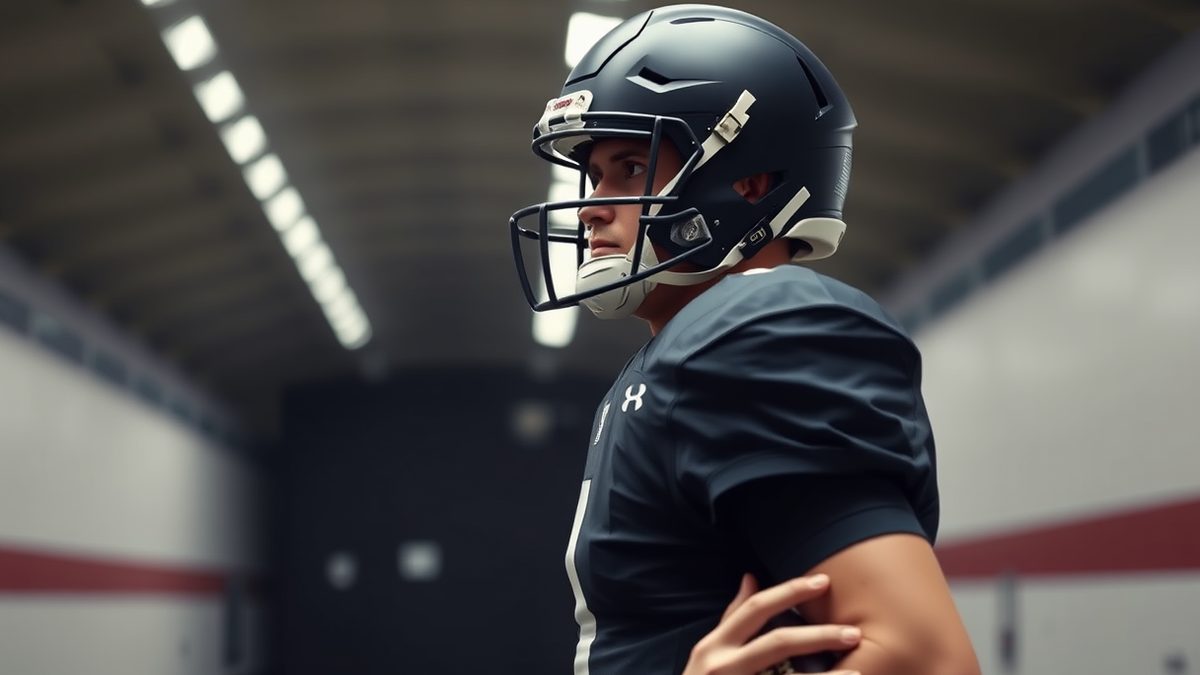
The College Sports Commission, the body created under the House settlement, published tables that report percentiles rather than averages for each sport, split between the four power conferences and everyone else. The data cover institutional revenue-share payments and third-party NIL deals, with separate revenue-share figures for every rostered athlete and for only those paid or scheduled to be paid. NIL figures cover only athletes with at least one cleared deal and reflect full contract value, not annualized.
Among power-conference quarterbacks with a revenue-share agreement, the median payment for calendar year 2026 is $230,000, the 75th percentile is $675,000 and the 90th percentile is $1,611,000, according to the CSC tables. Defensive linemen had a $150,000 median, offensive linemen $133,000 and long snappers $30,000. Youth Sports Business Report calculated from the tables that 70% to 83% of power-conference players at skill and line positions held a revenue-share deal. The CSC cautions that during the football season its payment system counts contingent performance incentives as scheduled payments, so the 2026 figures assume every bonus is earned.
Schools paid $1.77 billion in revenue share through the College Athlete Payment System during the 2025-26 academic year, the commission said. The money went to just under 35,000 athletes at 307 institutions across 45 sports. The total recorded distribution came to nearly $1.9 billion and included $42 million in Alston awards and $163 million in new and incremental scholarship spending. It excludes third-party NIL money.
How the cap works
The first-year cap was $20.5 million per school, equal to 22% of average athletic revenue across the top 68 schools. For 2026-27 the ceiling rose to $21.58 million and became available on July 1. Scholarships, academic and athletic awards, educational benefits and medical coverage count toward the total value, which can reach about 50% of revenue at the top 68 schools. That 50% share is meant to emulate what professional male athletes receive in the NFL, NBA, NHL and MLB.
On3 reported, citing Yahoo Sports, that roughly 60 to 65 schools distributed at least $17.9 million each, with many believed to have met or exceeded last year's $20.5 million cap. Deals above $600 go through NIL Go review for fair-market value.
Outside the power four
At most non-power-conference positions, only about 30% of rostered football players receive any revenue-share payment, and kickers come in at 16%, according to Youth Sports Business Report's calculation from the CSC tables. Medians among those paid run $14,000 to $18,000, with quarterbacks at $31,000 against the $230,000 power-conference figure. The 90th percentile for non-power-conference quarterbacks is $260,000. The CSC put the median cleared NIL contract for a power-conference quarterback at $65,550, a figure that reflects full contract value and is not annualized.
Olympic sports
According to the CSC tables, across lacrosse, rowing, cross country, fencing and other Olympic sports, the median revenue-share payment to athletes who are paid at all is $500. In baseball, softball and women's volleyball at power-conference schools, fewer than half of rostered athletes get paid, and medians run $6,000 to $12,000.
Sources
26- 01What the First College Athlete Compensation Data Says About Who Actually Gets Paid - $1.6 Million Quarterbacks and $500 RowersEN
- 02Week in review: College athletes earned $1.8B through revenue sharing in first yearEN
- 03College student-athletes received $1.8 billion in direct rev-share payments in 2025-26EN
- 04The Evolving Economics of College SportsEN
- 05Senate Passes Biggest College Sports Bill in History: What It Means for Your InstitutionEN
- 06A new lawsuit could change how much colleges can pay athletesEN
- 07Iowa State NIL Deals in 2026: Revenue Sharing, Learfield and Local PartnersEN
- 08University of Tennessee NIL 2026: Revenue Sharing ExplainedEN
- 09‘Loopholes have won the day’: Cap? What cap? Spending on players growing even after NCAA settlement - WRALEN
- 10Bridge to Excellence Funds - University of San Francisco AthleticsEN
- 11The Student-Athlete Compensation Shift — Where are the Federal Guidelines? - Cornell Law SchoolEN
- 12The New Era of College Athletics Has Gone a Bridge Too Far - The Sport JournalEN
- 13heise+ | Daten mit dem Data Sharing Advisor bewertenEN
- 14IonQ’s revenue quadruples to $173.8M as it lifts its 2026 forecast to $515MEN
- 15Neocloud IREN says $4 billion in annualized revenue being delayed due to customer requestEN
- 16Zilch sees revenues uplift but losses increaseEN
- 17Uber beats on revenue, CEO tells CNBC the company is 'investing significantly' to add driversEN
- 18Erling Haaland, Ilona Maher and Lewis Hamilton among winners of inaugural Meta x SportsPro Athlete HonoursEN
- 19Harmonic revenues break beyond Comcast and SpectrumEN
- 20Cloud Revenue Hits $168B as AI Capacity ExpandsEN
- 21Beyond the follower count: What the world’s most marketable athletes have in commonEN
- 22Aryna Sabalenka named world’s most marketable athlete in 2026EN
- 23How we compiled the 50 Most Marketable Athletes of 2026EN
- 24Five things to know about this year’s 50 Most Marketable AthletesEN
- 25Aryna Sabalenka’s rise from undervalued talent to most marketable athleteEN
- 26Unitree reports 70% surge in quarterly revenue, though AI investment weighs on net profitEN
All figures and quotations in this text come from the sources listed below.
Content prepared by the editorial team with AI assistance.
Daniel Fisher
Comments
0- No comments yet — be the first.