German industrial output rises 0.7% in September on carmaking rebound
German industrial production rose 0.7% in September from August, the Federal Statistical Office said on 6 November, as carmaking jumped 17.1%, though third-quarter output was still 0.4% lower than in the second.
 Dr. Amara PatelEconomy, business and world
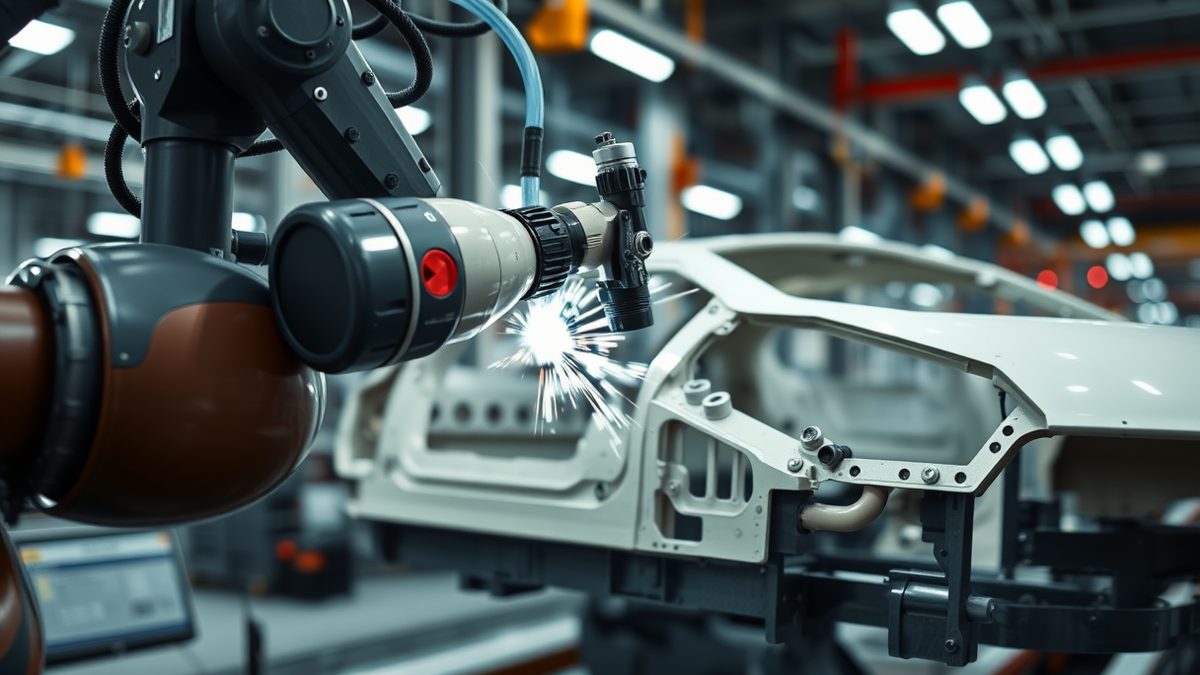
The gain was narrow. Pharmaceutical output rose 8% after two weaker months, while machinery and equipment production fell 6.5%, and carmaking's 17.1% jump followed falls of 9.2% in July and 5.4% in August that Destatis linked partly to factory holidays and production changeovers.
Carsten Brzeski, global head of macro at ING Research, said the rebound should not be mistaken for a sustained improvement. "September's strength is therefore better seen as a post-holiday bounce rather than evidence of a lasting improvement in German industry," he said. Third-quarter output was still 0.4% lower than in the second quarter, Destatis said.
Orders rebound after a 10.1% August fall
New orders rose 4.4% in September from August, Destatis reported on 5 November, after a revised 10.1% fall the month before. Excluding large-scale orders they were 5.1% higher, and over the third quarter total orders were 0.2% above the second quarter.
Automotive orders climbed 10.5% and machinery and equipment 8.3%, the latter helped by a large contract in engines and turbines. Orders for other transport equipment, which covers aircraft, ships, trains and military vehicles, fell 10.4%. Domestic orders rose 6.6% and foreign orders 2.8%, with the euro area up 4.5% and orders from outside it up 1.6%. Year on year, orders were 3.3% higher.
The 4.4% rise fell slightly short of the 4.6% consensus reported by Anadolu Agency.
The hole July left
September's gain followed a poor summer. Industrial production fell 1.1% in July against a Reuters poll forecast of a 0.1% rise, with automotive output down 9.2% after what the VDA, the German automotive industry association, called a multi-week production shutdown. Energy production rose 4.7% on wind and solar generation, and construction added 0.9%.
Machinery orders up 14% on a weak base
The machinery association VDMA said its members' orders were 14% higher year on year in September, with domestic orders up 22% and overseas orders up 11%. The comparison rests on a weak base: VDMA recalled that orders fell 19% in September 2025. Over the first nine months of 2026, orders were up 5%, with eurozone business down 5% and non-eurozone orders up 13%.
VDMA chief economist Johannes Gernandt said the orders gave "reason to be optimistic that we can indeed achieve the hoped-for 3% increase in production next year", though the association still expects production to fall for a fourth consecutive year in 2026. He called the upturn "a fragile little plant" that must not be trampled by new burdens, pointing to metal and electrical industry wage talks where IG Metall is demanding a 5% rise and organising strikes.
Outlook
The Federal Ministry for Economic Affairs and Energy said it expected industrial activity to recover by the end of the year, citing improved business sentiment and strong order backlogs. It warned that the recovery remained at risk from a challenging geopolitical environment and recent sharp increases in global energy prices.
Nils Jannsen, head of German economic forecasting at the Kiel Institute for the World Economy, said prospects for a return to moderate growth had improved, though leading indicators had yet to signal strong momentum. Machinery and automotive manufacturing had yet to show signs of a sustained recovery, he said, while sectors tied to the AI build-out and rising defence spending were doing better.
Survey data have run ahead of output. The S&P Global/BME manufacturing PMI rose to 54.3 in August from 52.2 in July, a 51-month high, with responses collected between 10 and 21 August. Surveyed firms cited defence spending, data centre build-outs and stockpiling as supports for demand.
Sources
19- 01German industrial output up in September as economists warn of fragile recoveryEN
- 02New orders in manufacturing in September 2026: +4.4% on the previous month. New orders excluding large-scale orders +5.1%EN
- 03German industrial orders rise 4.4% in SeptemberEN
- 04German industrial output falls unexpectedly in JulyEN
- 05Germany Industrial Output Fell 1.1% in July: Defense Orders Hid 1.4% Civilian DeclineEN
- 06More orders for Germany's machinery manufacturersEN
- 07Germany PMI climbs to 54.3 in August as factory output acceleratesEN
- 08German factory orders rose by 4.4% in SeptemberEN
- 09German Factory Orders Rebound, Nudging Outlook HigherEN
- 10Neue Gallium- und Germanium-Materialien für Leistungshalbleiter reifen heranEN
- 11Onodrim Industries hits $1.3B valuation with $300M Series A to strengthen European defenceEN
- 12Beyond LLMs? China forges new path for AI with focus on industrial systemsEN
- 13Kuken Industries searches 70 years of drawings in minutesEN
- 14Korea Advances Physical AI Across Industries With NVIDIAEN
- 15Solar Industry Shows Hope After US Election, Focuses On Key MessageEN
- 16 On this day in space! Nov. 6, 1572: A German astronomer discovers the Tycho supernova with the naked eye, but everyone thought the cosmic explosion was a 'new EN
- 17Industry experts discuss China blocking SoftBank acquisition of ABB RoboticsEN
- 18Chip Industry Week In ReviewEN
- 19Launch HN: Rivet (YC W23) – Scale and Orchestrate Agents on S3EN
All figures and quotations in this text come from the sources listed below.
Content prepared by the editorial team with AI assistance.
Dr. Amara Patel
Comments
0- No comments yet — be the first.