CSIS imagery analysis finds U.S. raid in Caracas was limited and not shock-and-awe
A CSIS satellite-imagery analysis of the 3 January 2026 U.S. operation that captured Nicolás Maduro found a narrow strike on four assessed sites, with additional attacks confirmed elsewhere and about 75 people killed.
 Dr. Amara PatelEconomy, business and world
What CSIS assessed
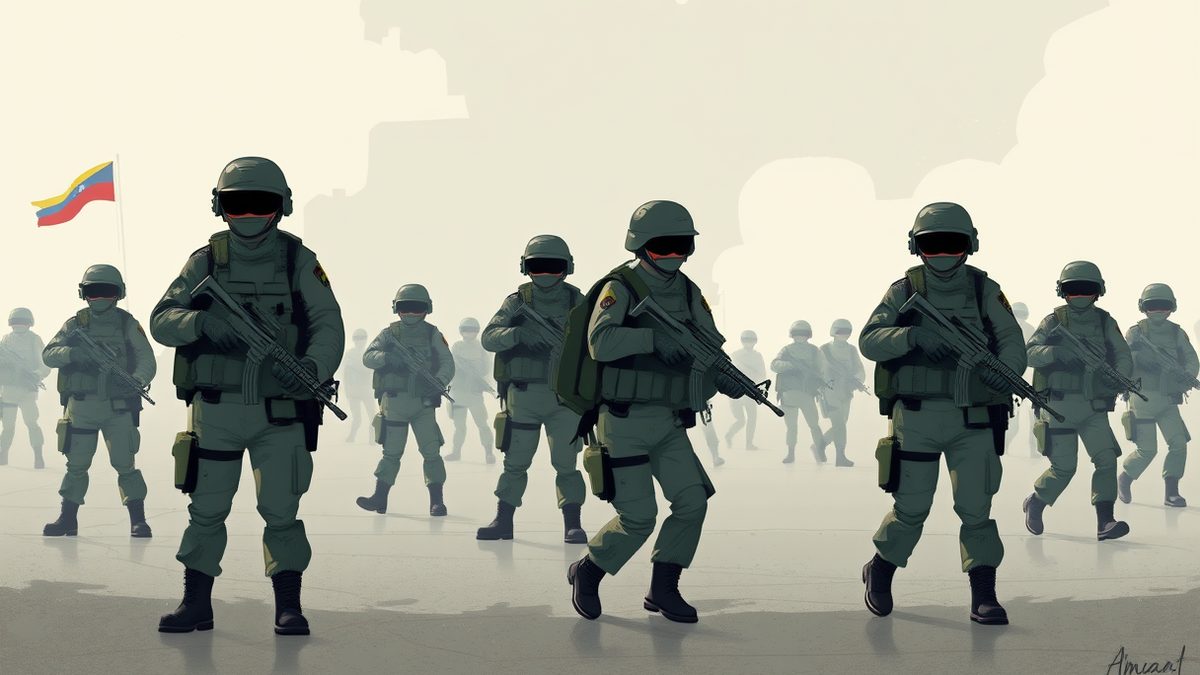
More than 200 U.S. special operations forces entered Caracas in the early hours of 3 January 2026 to capture Nicolás Maduro and Cilia Flores in Operation Absolute Resolve, CSIS said. The operation lasted less than 30 minutes, and at least seven explosions were heard across the capital, the Associated Press reported. CSIS said no U.S. personnel were killed.
Using satellite imagery and details that emerged after the operation, CSIS assessed military activity and battle damage at four sites: the Fort Tiuna Military Complex, La Carlota Air Base, La Guaira Port and El Higuerote Airport. It described the operation as one in furtherance of a law enforcement mission, focused on capturing Maduro with minimal collateral damage, not a shock-and-awe campaign intended to bring the entire Venezuelan security apparatus to heel.
CSIS said open-source reporting confirmed additional strikes beyond those four sites, at a minimum against communications infrastructure in El Volcán and air defenses in Catia La Mar and Fort Guaicaipuro. Those smaller sites were not covered in its analysis.
What was hit and what was not
U.S. forces focused on a limited number of targets, primarily Fort Tiuna, where Maduro was known to have several bunkers, CSIS said. Air defense batteries and radars were attacked to create a corridor for helicopters to reach the target. Many air defense sites remained untouched, however, because U.S. doctrine prescribes corridors and it was not necessary to take out the entire air defense system, CSIS said.
Venezuela's regular military forces and their headquarters were not struck, CSIS said. An air defense unit was hit at the Port of La Guaira, but nearby Venezuelan navy ships were not. None of the buildings at La Carlota Air Base, reported to be part of the Venezuelan air force headquarters, were struck.
CSIS said the narrow target set may reflect a desire to reduce military and civilian casualties. It may also reflect a deliberate signal to the armed forces and Maduro's inner circle of limited U.S. objectives. The Trump administration could have decided to work through the existing Venezuelan structure and did not want to destabilize or decapitate the military because it would be needed to keep order, CSIS said.
Casualties and a degraded force
Current estimates report that about 75 people were killed, including 32 Cuban special forces who served as bodyguards for Maduro, CSIS said. Two civilian deaths have been identified, and residential buildings across Caracas were damaged. CSIS cited a Bellingcat investigation that found one woman was killed when an AGM-88 anti-radiation missile detonated near an apartment block in Catia La Mar. Another civilian was reportedly killed when U.S. forces struck a communications array near El Volcán.
CSIS said the FANB's force posture before the operation facilitated the U.S. strikes. Air defenses were caught undisguised and in the open, making them easy targets. Venezuelan command and control, heavily degraded by electronic warfare and possibly cyber, failed to react until it was too late, allowing U.S. forces to enter Caracas. Years of neglect, corruption, low morale and cronyism had significantly eroded the FANB's operational capabilities, CSIS said.
Sources
20- 01Imagery from Venezuela Shows a Surgical Strike, Not Shock and Awe - CSISEN
- 02The U.S. Military Campaign Targeting Venezuela and Nicolás Maduro: What to Know - Council on Foreign RelationsEN
- 03Trump says U.S. will 'run' Venezuela after capturing Maduro in surprise military strike - PBSEN
- 04How U.S. forces captured Venezuelan leader Nicolás Maduro in Caracas - PBSEN
- 05The global implications of the US military operation in Venezuela - BrookingsEN
- 06US strikes Venezuela, says Nicolás Maduro has been captured - Defense NewsEN
- 07US conducting military strikes against Venezuela: US official tells Reuters - The Daily StarEN
- 08What you need to know about the U.S. attack on Venezuela - American Friends Service CommitteeEN
- 09Pentagon defends boat strikes, says US has 'contingency plan' if Maduro leaves Venezuela - TRT WorldEN
- 10'Mixed emotions': U.S. strikes in Venezuela, capture of Maduro leave Philly region conflicted - WHYYEN
- 11A Guide to Trump’s Second-Term Military Strikes and Actions - Council on Foreign RelationsEN
- 12U.S. capture of Maduro divides Latin America, thrilling Trump's allies and threatening his foes - PBSEN
- 13Trump says US 'captured' Venezuela's President Maduro and his wifeEN
- 14STAT+: Trump administration removes WuXi AppTec from its Chinese military listEN
- 15US government removes WuXi AppTec from Chinese military list EN
- 16French carmaker Renault wants to get into the military robot businessEN
- 17 Pocket-sized Ukrainian receiver intercepts Russian strike drone video feeds up to six miles away EN
- 18Maduro reads the Quran in prison - TodayPress.tvEN
- 19What future holds for Nicolás Maduro in US custody? Panama’s Noriega trial offers possible roadmapEN
- 20Maduro declares ‘state of emergency’ after US strikes in Venezuela’s CaracasEN
All figures and quotations in this text come from the sources listed below.
Content prepared by the editorial team with AI assistance.
Dr. Amara Patel
Comments
0- No comments yet — be the first.