Second wave of fridge hacks hits European supermarkets as Brussels convenes task force
The European Commission convened an EU interinstitutional Task Force meeting with ENISA and Europol on 3 November to investigate cyberattacks that raised fridge and freezer temperatures in supermarkets across Europe a day earlier. Around 40 Delhaize stores in Belgium and Luxembourg were among those hit, the BBC reported.
 Dr. Amara PatelEconomy, business and world
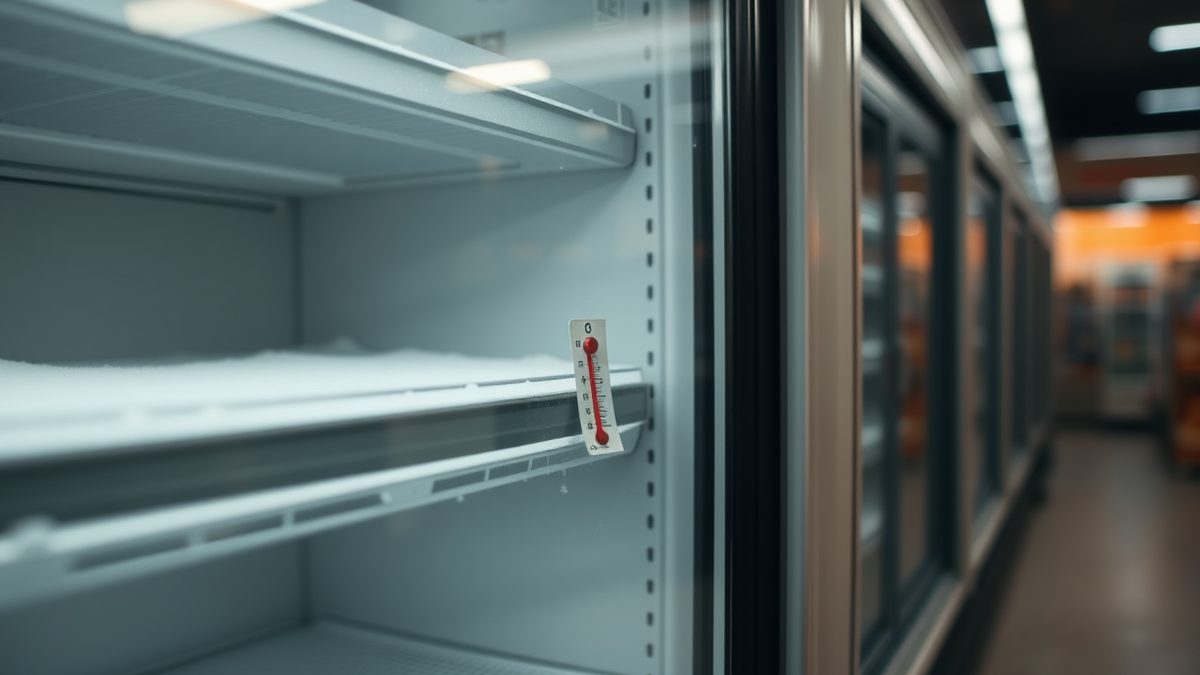
A second wave hits European supermarkets
On Monday 2 November, supermarkets in Ireland, Sweden, Estonia and Belgium reported fridges and freezers being hiked in temperature.
For retailers the exposure is stock, not data. A remote change to a cooling setpoint can spoil food worth hundreds of thousands of euros in a single store.
Ahold Delhaize told CNBC that dozens of its Delhaize stores in Belgium and Luxembourg had refrigeration problems and threw food away. Colruyt Group said five Spar stores in Belgium were targeted. Carrefour said 15 of its Belgian stores were attacked, and Intermarché said 15 of its 153 Belgian stores were impacted. IKEA said a cyber incident affected refrigerators and freezers at its Mons store in Belgium between Sunday and Monday. Some stores reported temperatures as high as 50C (122F). The incidents followed attacks on supermarkets and food suppliers across France in early October.
ICA, Sweden's largest grocery retailer, said a limited number of stores on networks outside its central systems were affected. Finnish grocer Kesko, Irish chain Supervalu and Estonian retailer One Selver also reported disruptions to their refrigeration systems.
Why food loss matters
The October wave in France was larger. Hundreds of French supermarkets were targeted, spoiling fresh and frozen food estimated to be worth millions of euros.
Intermarché owner Les Mousquetaires told CNBC at the time that it expected damages of several million euros. The damage reached the UK supply chain too. The British Association of Independent Meat Suppliers has more than 300 members. Two of them saw fridges begin to defrost and another saw cold units rise to up to 100C, the association said. AIMS said the affected devices were empty at the time, so no produce was lost. At Langridge Organic, a London fruit and vegetable wholesaler, staff pulled the internet connection to stop the attack.
UK fallout and official response
The NCSC said it was aware of "a couple of instances where vulnerable technology had been exploited in the UK".
Its chief executive, Richard Horne, told BBC Radio Four that the agency had worked through the night to alert potentially affected organisations. Paul Chichester, the NCSC's director of operations, said the UK impact was minimal and that no UK grocery chain had been directly affected so far. Speaking at the launch of the NCSC's annual review on Tuesday, he said the agency would keep monitoring the situation. Chichester said the attacks were not AI-enabled and used vulnerabilities that had been "out there for a long period of time".
Legacy controls and what comes next
The French attack involved legacy technology connected to the internet with default passwords, the Guardian reported.
The hacks exploited vulnerabilities in systems used to remotely control and manage cold refrigeration units that cyber-security researchers had surfaced months earlier. Sabcobel, a Belgian refrigeration contractor that manages systems for Delhaize, said the units were switched to defrost mode. Horne said many firms had extended systems beyond their end of life, failed to upgrade them and left them connected to the internet. He said the technology base society relies on "has not been invested on to the extent it needs to be". Horne described the fridge attacks as the "foothills" of a larger cyberthreat, as AI systems expose flaws owners have not patched.
Horne said it was still too early to say who was behind the hacks.
Sources
28- 01UK meat industry hit by cyber-attack which targeted European supermarket freezersEN
- 02Food suppliers in UK hit by cyber-attacks after freezers targeted in EuropeEN
- 03Supermarket fridges hit with cyberattacks across Europe — here's what's happeningEN
- 04New Wave of Refrigeration Cyberattacks Hits Supermarkets Across Europe, Forcing Stores to Pull FoodEN
- 05Germany and Italy Clash Over Gas Storage as Europe's Energy Prices Return to Crisis Levels - EU TodayEN
- 06How Is Your Glass Supplier Adapting To Europe's Energy Crisis? - Pharmaceutical OnlineEN
- 07What Europe Can Learn From China If It Wants To Save Its IndustryEN
- 08 Dimorphos in sight: Europe's Hera probe gets its 1st look at battered space rock (photo) EN
- 09Tesla cuts FSD’s speed margin from 50% to 10% over the limit in EuropeEN
- 10Hanwha Q-Cells shifts focus to research and development in EuropeEN
- 11Key takeaways from All Energy Australia 2026EN
- 12Rethinking Nuclear Energy in Korea and Europe - CEPSEN
- 13Mercedes-Benz Is Giving Up On Its EV Charging Network In EuropeEN
- 14Apple warns of ‘unprecedented’ rise in memory chip pricesEN
- 15Chip Industry Technical Paper Roundup: Nov. 3EN
- 16Portuguese AI startup Granter bags €1.6M to expand across EuropeEN
- 17More of the Same Expensive Dependence on Fossil Fuels in TEP and APS 2026 Energy PlansEN
- 18The ETS Investment Engine: Scaling Europe’s Strategic E-fuel Market for Shipping & AviationEN
- 19Mistral CEO: Europe faces ‘complete trap’ without frontier AIEN
- 20OpenAI deepens Abu Dhabi foothold as Sam Altman inks deals spanning energy, government and investmentEN
- 21European tech weekly recap: Over €1.3B invested across 60+ dealsEN
- 22DOE Announces $8.5M for Fusion Energy Public-Private PartnershipsEN
- 23Bull and Schwarz Digits Sign MOU to Develop European AI InfrastructureEN
- 24Sanofi may seek higher European drug prices, not withhold launches, under Trump dealEN
- 25How Europe’s battery passport could have a big impact on US e-bikesEN
- 2630,000-year-old DNA reveals Ice Age Europeans were far more connected than we thoughtEN
- 27How AI Can Change the Economics of Reshoring Manufacturing to Europe - https://economy.ac/EN
- 28Record Demand Catches (Some) OEMs with Their Pants Down — Europe September 2026EN
All figures and quotations in this text come from the sources listed below.
Content prepared by the editorial team with AI assistance.
Dr. Amara Patel
Comments
0- No comments yet — be the first.