Europe's truck makers want softer CO2 rules. Fleet operators say no
IKEA, EDF, Geopost and DFDS signed a letter to European Commission president Ursula von der Leyen on 1 October urging Brussels to keep existing heavy truck CO2 standards, as truck manufacturers push for weaker targets.
 Daniel FisherSport, cars and travel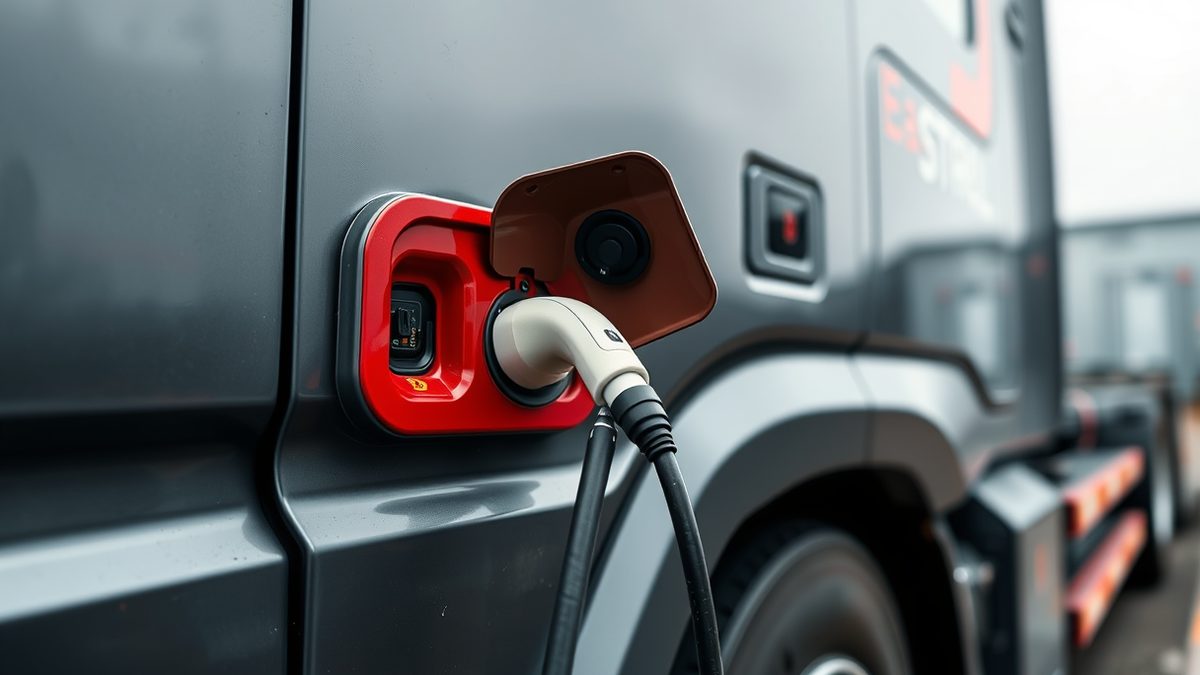
The letter, dated 1 October 2026, comes from members of the Climate Group's EV100 coalition. CleanTechnica reported the companies include IKEA, the French utility EDF, Geopost (owned by France's postal service) and Copenhagen-based DFDS.
Their argument is commercial, not environmental: they have already ordered electric trucks and want the rules to stay fixed. Current EU rules require a 43 percent cut in CO2 from 2019 levels by 2030, 64 percent by 2035 and 90 percent by 2040. Those targets are impossible without a much larger fleet of electric medium and heavy duty trucks, and the signatories say weakening them would strand investments they have already made. "Set the rules, stick to them, and then get out of the way," is how CleanTechnica summarised the letter's message. Marion Labatut of EDF said in a statement that "businesses are already taking action to electrify their heavy duty fleets" and that "maintaining ambitious and stable CO2 standards will give companies the confidence to continue investing at scale."
The timing matters. The same week, Transport & Environment published analysis arguing Europe will have enough battery cells to meet demand from corporate and private EVs covered by the Industrial Accelerator Act by 2030, provided all announced projects materialise. T&E also warned that China controls up to 90 percent of global cathode active material capacity, and as much as 95 percent for LFP chemistry. The bottleneck is midstream, not cells.
Charging is the binding constraint
The EV100 letter names charging infrastructure for heavy duty vehicles as its main concern. That gap is being attacked from several directions. On 1 October, French fleet software startup Voltaback raised 2.8 million euros from Serena and business angels including Electra co-founder Aurélien de Meaux, according to Tech.eu. Voltaback calculates home charging reimbursement for company EVs using data from electricity bills, meters and connected vehicles, a method it says is patented and validated by Bureau Veritas.
The numbers behind that pitch are stark. Tech.eu reported that employees who are not reimbursed for home charging lose 600 euros a year, while the same charges cost their employer up to 2,000 euros a year. In the first half of 2026, 241,565 new electric cars were registered in France, 28.2 percent of the passenger car market.
Money is moving at the top of the stack too. Headline closed a 400 million dollar European fund on 1 October to back Seed and Series A companies, with AI as the focus, Tech.eu reported. DIG Ventures closed its third fund at 120 million dollars the same day, targeting AI-native enterprise and cloud infrastructure across roughly 30 pre-seed and seed deals.
Public infrastructure keeps expanding
On the public side, Orange Business was selected as network partner for TESTA-EIRIS, the EU's private backbone for public administrations, Light Reading reported on 29 September. The design covers at least 12 points of presence across five European regions and claims 99.999 percent availability. It is not a charging network, but it is the kind of sovereign infrastructure argument that the EV100 letter leans on.
Europe's space industry is making a parallel case. At the Pretzl Connect 2026 event in Budapest, ESA's Kate Underhill told EE Times that launch systems now depend as much on onboard computing and connectivity as on propulsion, and that the sector remains exposed to semiconductor and raw material supply chains. She said space systems typically run "at least 10 years behind consumer electronics."
Not every development this week points the same way. A genomic study published in Nature and covered by ScienceDaily on 30 September traced bats back to Europe around 65 to 60 million years ago, based on 103 bat genomes and 44 fossils. The relevance to freight is zero. The methodological point is not: large-scale sequencing worked because researchers pooled data across 64 countries, which is roughly what the truck standards debate is about.
One caution. The truck makers' counter-argument does not appear in the dossier, so it cannot be weighed here. What is on the record is a letter from buyers asking Brussels not to move the target. For fleet operators who have already bought electric trucks, the regulatory signal is the asset.
Sources
15- 01European Fleet Operators Urge EU Commission Not To Weaken Truck Emissions PolicyEN
- 02Ready to Scale: Europe Will Have Enough Cells to Meet Demand and Grow Its Domestic Battery Value Chain IndustryEN
- 03Voltaback raises €2.8M to scale EV charging reimbursement across EuropeEN
- 04Mistral and Black Forest Labs backer Headline closes $400M European fundEN
- 05DIG Ventures closes $120M Fund III to back Europe's AI infrastructure startupsEN
- 06Orange Business to provide European Union's backbone network for trusted data exchangeEN
- 07Europe's Space Industry Seeks Greater Supply Chain ControlEN
- 08Bats may have first evolved in Europe 65 million years agoEN
- 09Developer trains a small AI on a single RTX 3080 Ti gaming GPU to 'play' Pokémon RedEN
- 10Netanyahu says pilot arrested after stabbing fellow pilot and apparently trying to crash Israel-bound plane – as it happenedEN
- 11Europe's Read of the Trump-Xi SummitEN
- 12Why Europe has been absent from the great AI safety debateEN
- 13Tencent rolls out payment app for foreign travellers ahead of Apec summitEN
- 14Federal Reserve Board issues enforcement actions with former employee of Northstar Bank, former employee of American Express Travel Related Services Company, InEN
- 15Terran Orbital Promotes Margherita Cardi to Vice President of European Operations & Head of Strategic ProgramsEN
All figures and quotations in this text come from the sources listed below.
Content prepared by the editorial team with AI assistance.
Daniel Fisher
Comments
0- No comments yet — be the first.