Night trains return to the north
European Sleeper's first Nordic route, announced on 29 September, extends the night train map north as the EU opens free rail passes to 18-year-olds.
 Peter LindqvistSport, cars and travel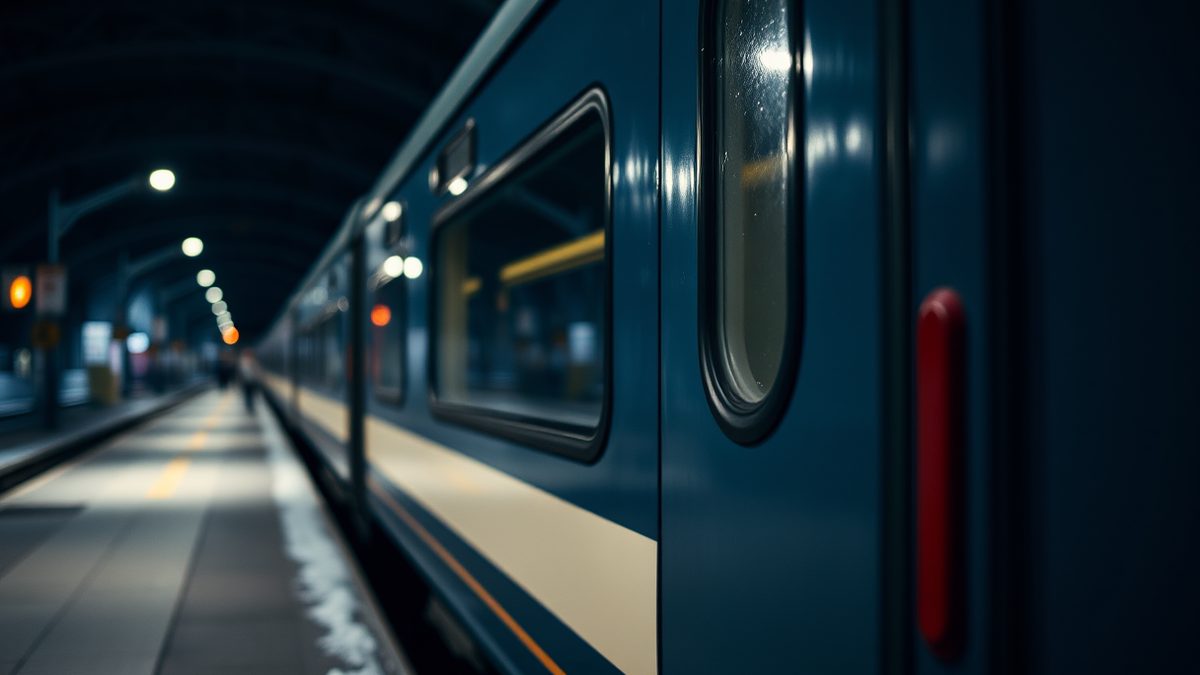
European Sleeper announced on 29 September that it will run its first route to the Nordic region, according to Business Travel News Europe. The Brussels-based night train operator is extending a network that has been quietly rebuilding since its first service launched in 2023.
The company has not yet published a start date, timetable or ticket prices for the Nordic service. Travelling for Business, which also reported the plan on 29 September, gave no launch window either. So the announcement is a route confirmation, not a schedule: anyone hoping to book a sleeper north of Copenhagen still has no date to circle.
What is clear is that the direction of travel runs north, not south. The existing night train map already covers the classic corridors, from the Nightjet sleepers through Austria and Italy to the Paris to Nice route and the revived Brussels to Vienna service. The Nordic extension pushes that map into territory where the distances are long, the population is thin and the aviation alternative is cheap.
Free passes versus full sleepers
On the same day, EUbusiness.com reported that applications have opened for the EU's free rail travel scheme for 18-year-olds. The programme gives young Europeans a pass to travel by train across the continent, and it has become one of the more visible pieces of Brussels' mobility policy.
The two stories sit awkwardly together. A free pass is only useful if there is a train to board, and a night train is only viable if enough passengers pay for berths and couchettes rather than seats. The demographic most likely to use a free pass, 18-year-olds, is also the least likely to book a sleeper supplement. Operators have to fill beds, not just carriages.
That tension is not new. Interrail, the pass scheme that predates the EU programme, has been running a flash sale with 50% off passes to 33 European countries, reported by Metro.co.uk on 30 September and by The Independent the same day. Discounted passes increase demand for seats on trains that are already busy in summer. They do not, on their own, pay for the rolling stock.
European Sleeper heads north as the EU opens free rail travel to 18-year-olds.
The supply side is where the numbers get harder. Railway Gazette International reported on 29 September that Västtrafik, the Swedish regional transport authority, ordered 35 Avelia Stream Nordic trainsets. Those are day trains for regional services, not sleepers, but the order shows that Nordic operators are still buying new stock while cross-border night services remain a patchwork of small operators and leased carriages.
Infrastructure and the long game
Rail capacity is not the only constraint. On 1 October, CleanTechnica reported that European fleet operators including IKEA, EDF, Geopost and DFDS wrote to European Commission president Ursula von der Leyen urging Brussels not to weaken heavy truck emissions standards. The letter, dated 1 October, argues that stable CO2 rules give companies confidence to invest in electric fleets. The current rules require a 43% cut in carbon dioxide from 2019 levels by 2030, 64% by 2035 and 90% by 2040.
The relevance to night trains is indirect but real. Freight and passenger rail share tracks, and both compete with road haulage for the same decarbonisation argument. If truck standards are loosened, the relative pressure on rail to electrify and expand eases. If they are held, the case for shifting long-distance journeys from road and air to rail gets stronger.
There is also a technology layer. EE Times reported on 1 October from Budapest that the European Space Agency is worried about semiconductor supply chains, with ESA's Kate Underhill noting that space systems typically run "at least 10 years behind consumer electronics." That is a space story, but the same dependency runs through rail signalling, ticketing and train control systems. A night train crossing four borders needs interoperable signalling, and Europe's suppliers are not immune to the same geopolitical pressures.
None of this makes the Nordic route a bad bet. It makes it a bet on patience. European Sleeper has to find carriages, paths and night-time slots across at least three countries before it can sell a bed. The EU's free passes and Interrail's discounts will fill seats. Whether they fill sleepers is the question the company has not yet answered.
Sources
15- 01Orange Business to provide European Union's backbone network for trusted data exchangeEN
- 02Europe's Space Industry Seeks Greater Supply Chain ControlEN
- 03European Fleet Operators Urge EU Commission Not To Weaken Truck Emissions PolicyEN
- 04Voltaback raises €2.8M to scale EV charging reimbursement across EuropeEN
- 05Mistral and Black Forest Labs backer Headline closes $400M European fundEN
- 06DIG Ventures closes $120M Fund III to back Europe's AI infrastructure startupsEN
- 07Ready to Scale: Europe Will Have Enough Cells to Meet Demand and Grow Its Domestic Battery Value Chain IndustryEN
- 08Ford's CEO says it is too late for Europe to fend off Chinese carmakersEN
- 09Developer trains a small AI on a single RTX 3080 Ti gaming GPU to 'play' Pokémon RedEN
- 10Bats may have first evolved in Europe 65 million years agoEN
- 11Pilot arrested after stabbing another pilot and trying to crash Israel-bound planeEN
- 12Europe's Read of the Trump-Xi SummitEN
- 13Tencent rolls out payment app for foreign travellers ahead of Apec summitEN
- 14Federal Reserve Board issues enforcement actionsEN
- 15Terran Orbital Promotes Margherita Cardi to Vice President of European Operations & Head of Strategic ProgramsEN
All figures and quotations in this text come from the sources listed below.
Content prepared by the editorial team with AI assistance.
Peter Lindqvist
Comments
0- No comments yet — be the first.