Unconventional AI agrees to acquire inference-chip maker NeuReality
Unconventional AI announced on 26 October 2026 that it would acquire Israeli inference-chip company NeuReality in an undisclosed cash-and-stock deal, adding about 40 engineers as the research-stage startup moves toward production.
 Rachel NwosuAI, models and technology
Market estimates put the price at $150 million to $200 million in cash and shares, Globes reported. Both boards approved the transaction, and the companies expect it to close in the fourth quarter of 2026, CTech reported.
About 40 NeuReality employees in Caesarea and Tel Aviv will join a similar number of staff in California to jointly manage the company, Globes reported. Reuters reported that Unconventional plans to keep an engineering presence in Israel. Globes reported that founder Moshe Tanach and most management and R&D staff will move across, while some sales, marketing and finance staff will be laid off.
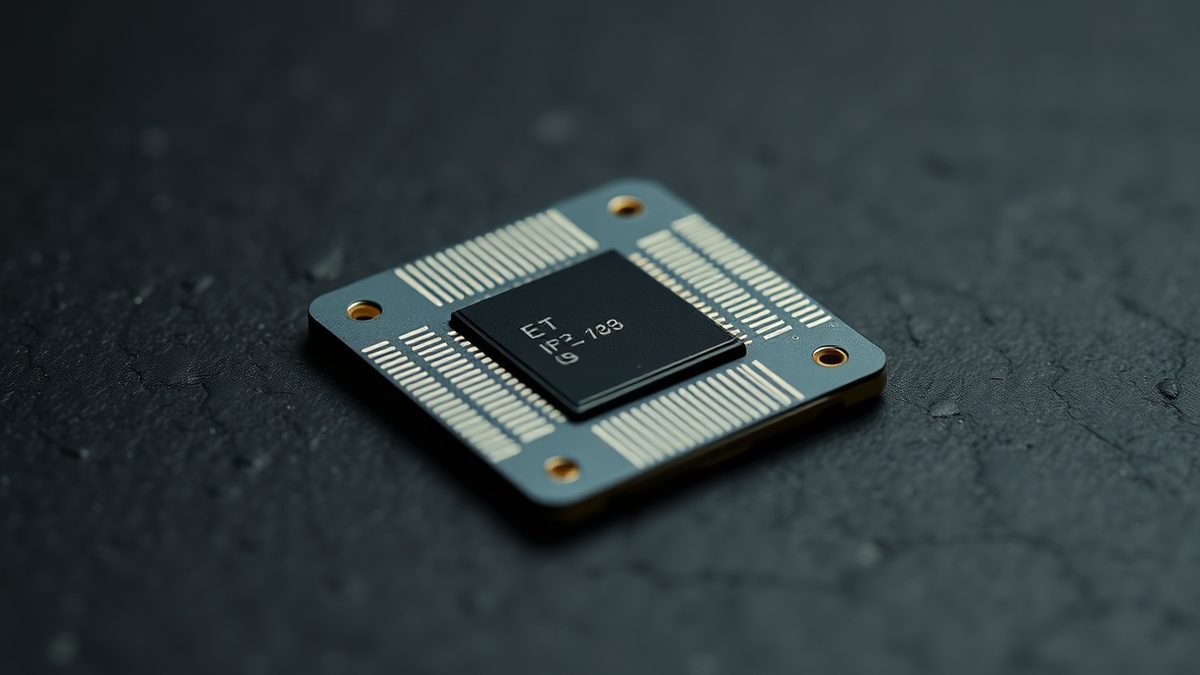
NeuReality was founded in 2019 by Tanach, Zvika Shmueli and Yossi Kasus, all veterans of Intel, Marvell, Mellanox and Habana Labs, Globes reported. BigGo reported its work focused on AI inference infrastructure, the silicon and systems that run trained models.
Why Unconventional is buying
Chief executive Naveen Rao said Unconventional had budgeted three years of research and development and five years to a product when it raised its war chest, but AI-assisted design work moved faster than planned. The company has completed a first test chip and is close to finishing a second, pushing it to look outside for engineers who can take a design into volume production, BigGo reported.
"We need people who can go execute and build products and scale them," Rao said. "We built up the research bones and now we've got to build up the production bones."
The buyer's backing and Rao's record
Unconventional launched in December 2025 with a $475 million seed round at a $4.5 billion valuation, BigGo reported. Globes reported the round was raised within two months of the company's founding and was one of the largest seed rounds ever. The round was co-led by Andreessen Horowitz and Lightspeed, with Sequoia, Lux Capital, DCVC and Amazon founder Jeff Bezos also participating, and Rao invested personally, according to BigGo. Coinpaper reported Unconventional raised the money before releasing a commercial product.
Rao founded Nervana Systems, which Intel acquired in 2016 for a reported $408 million, and cofounded MosaicML, which Databricks acquired in 2023 for $1.3 billion, Coinpaper reported. Globes reported Rao was an early NeuReality investor; BigGo reported he sat on its board.
The 1,000x target
Unconventional says it is pursuing an architecture it calls a "4-dimensional compute substrate," aimed at making AI computation 1,000 times more energy efficient than conventional designs. BigGo reported the 1,000x gain remains a target rather than a demonstrated outcome. Globes reported the approach relies on analog circuits that have not been deployed commercially and were previously confined to academic laboratory experiments.
"We are chasing a 1,000x improvement in AI compute efficiency, and that is a systems problem as much as a physics problem," Rao said.
Exit math for NeuReality's backers
Globes said the estimated price provides a reasonable return for NeuReality's investors but falls far short of what they had aimed to achieve, and cited PitchBook data showing NeuReality reached a $220 million valuation in a $37 million round in July 2023 led by Cardumen, XT and Varana. Part of the consideration is in shares of private Unconventional, BigGo reported. CTech reported the company had raised about $105 million before the transaction.
Varana Capital, the Colorado private equity fund founded by Ezra Gardner, was NeuReality's first investor and largest shareholder and is the biggest winner, Globes reported. Cardumen Capital, OurCrowd and Rao backed the company as early as 2020 at a $12 million valuation.
BigGo reported the transaction is expected to return more than the capital NeuReality's backers committed. Other investors include Samsung Ventures and Arm, Globes reported, and Cleveland Avenue, according to BigGo.
"We built NeuReality because we believed the economics of AI inference were fundamentally broken, and that the answer had to come from rethinking the system rather than tuning it," Tanach said.
Sources
32- 01Energy efficient chip co Unconventional AI buys Israel's NeuRealityEN
- 02Unconventional AI Agrees to Acquire NeuRealityEN
- 03Unconventional AI Acquires NeuReality to Accelerate 1,000x Efficiency Chip RoadmapEN
- 04Intel Bought His Startup and Databricks Bought His Next One: Now He's Building a $4.5 Billion AI CompanyEN
- 05Meta buys AI coding startup Conductor as big tech races to lock in developersEN
- 06Mit Diamanten in den Chip schauen: Wie ein Münchener Startup Fehler in KI-Chips aufspürtEN
- 07Künstliche Intelligenz: EU will Chips aus Europa mit halber Milliarde Euro fördernEN
- 08Food delivery startup Wonder files for IPO as it explores its next big biteEN
- 09Five UK startups secure eight patents from Panasonic, Nokia, NEC and DENSOEN
- 10Großspeicher mit ungewöhnlicher Technik: Startup aus Franken stellt Batterien ohne Lithium herEN
- 11 Apple MacBook Pro (14-inch, M6) review: Speedy M6 chip slips into comfortable shoes EN
- 12Finding New Drugs Is Laborious. This AI Startup Is Skipping The Lab WorkEN
- 13German aerospace startup VÆRIDION raises €30M for zero-emission regional fightsEN
- 14Mit Rechentrick aus Quake 3 gegen Nvidia: Wie das Startup Tensordyne KI-Chips sparsamer machen willEN
- 15Donnerstag: Millionen für europäische Chipdesigns, OpenAI mit GitHub-AlternativeEN
- 16Inside the chip talent war: Trade secrets and rising Chinese rivalsEN
- 17Meta acquires AI coding startup ConductorEN
- 18 Nintendo ROM chip supplier Macronix quits to focus on chips for AI data centers, reports indicate EN
- 19Robotics Startup Radar 2026EN
- 20 Nvidia can only fulfill 1% of China’s massive $70 billion GPU order for AI chips, report claims EN
- 21STATION F startups raise record €2B as campus unveils 2026 Future 40EN
- 22Ellipsis Health buys Kouper Health to act on AI voice callsEN
- 23Chinese chipmaker Hua Hong bets big on silicon photonics amid AI boomEN
- 24Accelerating Plug-And-Play Prototyping In Chiplet-Based DesignsEN
- 25Chiplets: Meta-Scale Chiplet Velocity Accelerating AI SoC Development to Match the Rapid Evolution of AI ModelEN
- 26China’s CXMT defends bet on risky new DRAM architecture to circumvent US chip curbsEN
- 27From six-person startups to a $6.3 billion take-private: October's extraordinary month for Israeli tech exits - CTechEN
- 28As AI cyber risks grow, Chinese chip expert urges shared ethics standards with US rivalsEN
- 29AI, fuelled by advanced chips, set to power semiconductor manufacturing: industry veteranEN
- 30Empresa estadounidense adquiere una compañía israelí especializada en chips de IA por hasta US$ 200 millonesEN
- 31Chinese AI chipmaker Iluvatar CoreX says new GPU matches Nvidia’s H200 as chip gap closesEN
- 32Oracle Cloud to Offer Google TPUs and New AI ChipsEN
All figures and quotations in this text come from the sources listed below.
Content prepared by the editorial team with AI assistance.
Rachel Nwosu
Comments
0- No comments yet — be the first.