US and EU deploy micro-drones and digital screening to secure borders
The US is expanding the use of canoe-sized drones to deter migrant crossings, while the EU adds €130 million to drone funding, according to reports from October 2, 2026.
 Dr. Amara PatelEconomy, business and world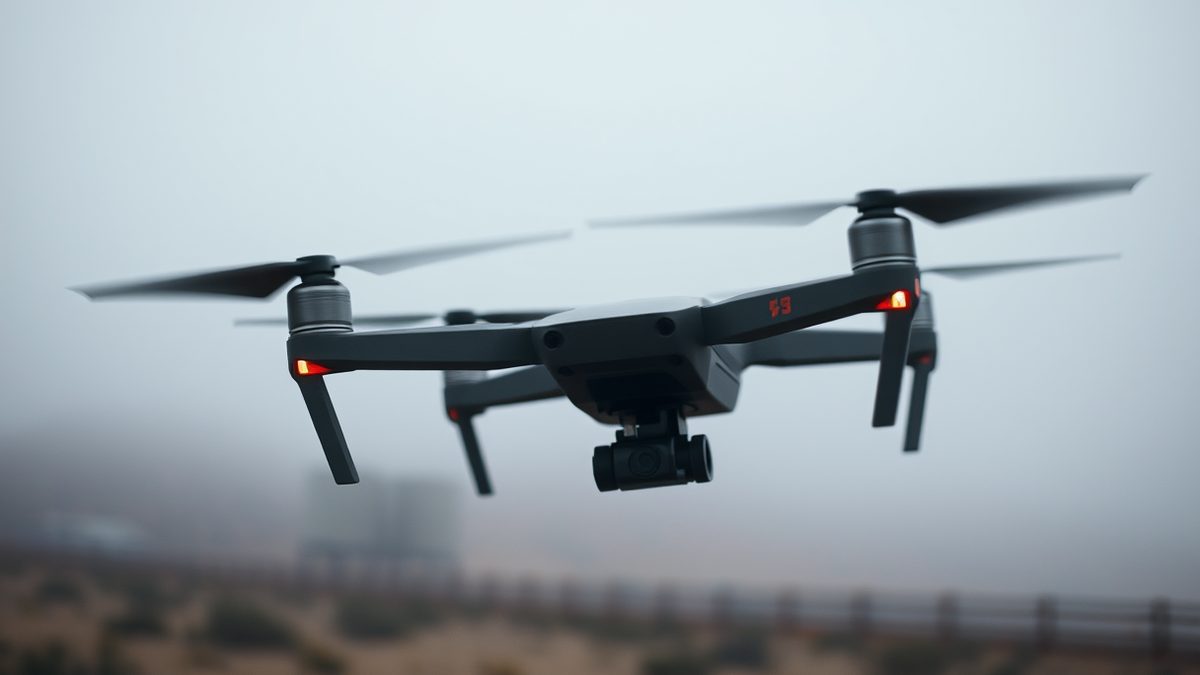
On October 2, Reuters reported that the US plans to expand the use of canoe-sized drones to deter migrant crossings. Yahoo News UK noted the same day that the EU is adding €130 million to drone funding in a border security push.
These parallel moves signal a coordinated reliance on small, agile hardware to manage migration flows. The hardware is small enough to be overlooked in open terrain but persistent enough to disrupt traditional crossing attempts. Reuters describes the assets as canoe-sized, implying a low profile and high maneuverability. The expansion suggests that ground patrols and fixed surveillance are no longer sufficient for agencies managing porous borders.
In Europe, the financial commitment is explicit. The €130 million figure cited by Yahoo News UK is not a pilot budget but a significant injection into existing security frameworks. This funding is part of a broader push to modernize border infrastructure. The EU’s approach complements the US strategy by ensuring that member states have the capital to deploy similar technologies at their own external and internal borders.
Drone technology is only one layer of the modern border stack. Digital identity and screening systems form the other half. The Global Filipino Magazine reported on October 3 that Philippine immigration’s passenger screening system was praised at an international meeting. This praise highlights a global trend toward biometric and data-driven verification at points of entry. If a traveler cannot be verified digitally, physical interception by drones becomes the fallback mechanism.
Indonesia is also investing in similar digital tools. According to a report from October 3, Indonesian immigration is expanding tech-driven services to tighten border oversight. The focus is on efficiency and data integrity. By digitizing the screening process, agencies reduce the time each traveler spends at a checkpoint, allowing for higher throughput without a proportional increase in staff. This efficiency is a prerequisite for the kind of high-volume border management that drone enforcement supports.
Singapore offers a different model, one focused on support rather than deployment. A report from September 27 noted that Singapore offers technology support for border and immigration security. This role as a vendor and advisor is significant. It suggests that border tech is a commercial sector with established players who export their expertise to nations with less developed digital infrastructure. The technology does not stay in one place; it flows from advanced economies to those seeking to replicate their controls.
The legal and political context for these technologies is shifting. The Guardian reported on October 3 about the limits of special educational needs tech, a story that is tangential but illustrative of how access and exclusion are managed through technology. In the border context, the exclusion is deliberate. The technology is designed to create a barrier that is difficult to cross and even harder to document. The lack of transparency in these systems raises questions about accountability and oversight.
Italy provides a case study in the failure of open borders. In July, a report noted that the migrant crisis pushed Italy to restore border checks with Spain. This reversal of policy was driven by operational failure. When the system is overwhelmed, the default response is to close gates and increase physical presence. Drones and digital screening are the tools used to make that closure more effective and less labor-intensive.
The integration of these technologies is still in its early stages. Spain’s migration surge in August tested EU border policy, according to a report from the same period. The stress test revealed gaps in coordination and data sharing. The new drone deployments are a direct response to these gaps. They are meant to provide a layer of enforcement that is not dependent on human reaction time or physical fatigue.
However, the effectiveness of these systems is debatable. Drones can deter, but they cannot process. The digital systems can process, but they cannot deter. The success of the new border strategy depends on the smooth integration of these two functions. If the data from the screening system does not feed into the drone operations, the technology is just a collection of expensive gadgets.
The US and EU are betting that this integration will work. The funding and policy changes indicate a long-term commitment. The next few years will determine whether these technologies can actually manage the scale of migration they face. For now, the trend is clear: the border is becoming a digital and aerial domain, managed by algorithms and rotors rather than just walls and guards.
Sources
12- 01Boy with cerebral palsy passes GCSEs with eye-tracking technologyEN
- 02Keurig Launches Plastic-Free Pod Coffee SystemEN
- 03Our Solar System Is Terminally Unstable and Will Be Completely DestroyedEN
- 04AI Agents Need a System of Record, Not Just a DashboardEN
- 05Offloading System Updates to My NASEN
- 06Brain-inspired imaging system that can 'see' through fogEN
- 07System Design – How SSDs Work InternallyEN
- 08Canada, EU plan to link next-gen payment systems, easing transactionsEN
- 09Radio signal detected for first time from a planet outside our solar systemEN
- 10Canada, EU plan to link next-gen payment systems, easing transactionsEN
- 11Radio signal detected for first time from a planet outside our solar systemEN
- 12Brain-inspired imaging system that can 'see' through fogEN
All figures and quotations in this text come from the sources listed below.
Content prepared by the editorial team with AI assistance.
Dr. Amara Patel
Comments
0- No comments yet — be the first.