Wearables turn the world into a sleep lab, but the study design is still catching up
A University of Texas at Austin study tracked 82 young adults with a wrist-worn Fitbit for months instead of one night in a clinic, and found physical activity lengthened REM latency. The bigger shift, researchers say, is that consumer wearables are now being used to study sleep and health outside laboratories at all.
 Sofia MarchettiScience and health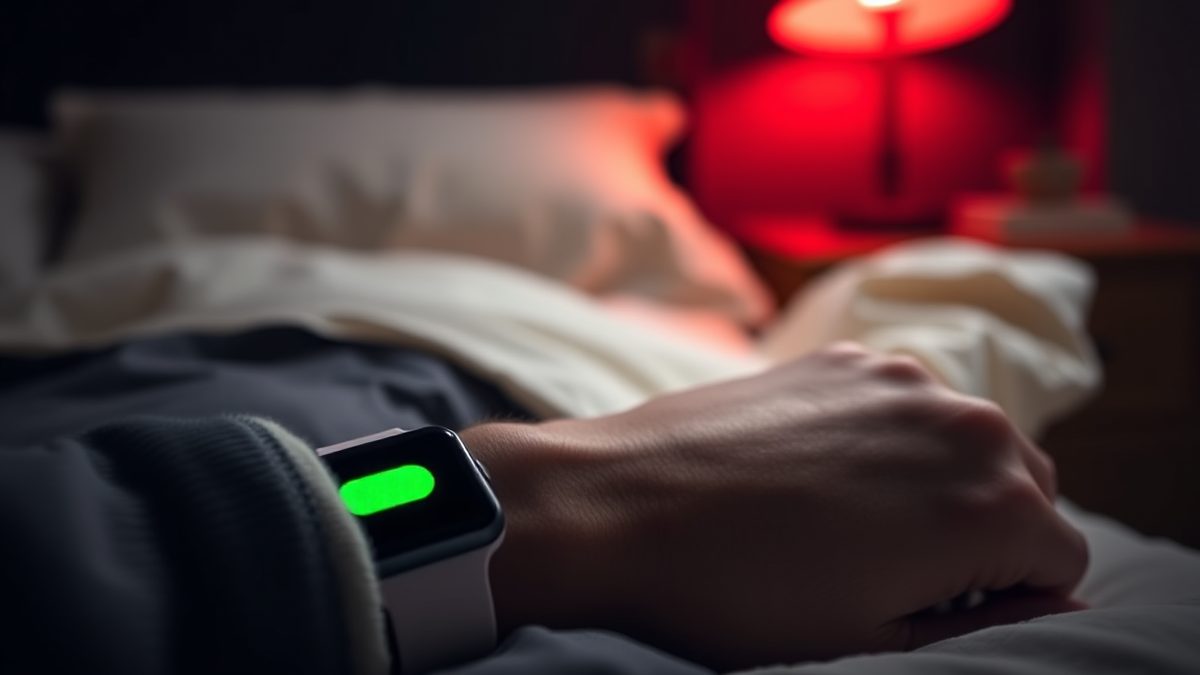
The study, published in Nature Scientific Reports, used a wrist-worn activity tracker to record movement and heart rate. From those signals, the team derived deep (NREM) and REM sleep stages. A separate smartphone app collected self-reported well-being data. The research team was based at the University of Texas at Austin, and the university's news service reported the findings on 2 April 2024.
Physical activity lengthened REM latency, meaning it took participants longer to enter REM sleep. According to the UT Austin write-up, that may indicate exercise helps consolidate deeper sleep stages before the brain transitions into REM. Both low-intensity and moderate-to-vigorous activity were linked to deeper, more restorative sleep. Better sleep was in turn associated with more energy and less stress the following morning.
"You can learn a lot from lab studies, but obviously there are limitations to studying the sleep patterns of individual participants in just one night," said Benjamin Baird, a research assistant professor of psychology and one of the authors. "It's an unfamiliar, clinical-type setting, which can be stressful. And you can't really look over time, either. So, there are always questions about generalizability from that kind of design."
David M. Schnyer, a co-author and chair of the Department of Psychology, framed the device choice as the point. "We've shown using a standard Fitbit that anyone could wear, not even an expensive scientific device, that it is actually sensitive to these sorts of sleep architecture measures, and in a way that's showing predictive results," he said. "The world is your oyster now. You can use this device to study all manner of different sleep architecture data related to lifestyle, related to mood and mood disorders, in the field, not in a lab, that people might have thought was not possible previously."
Scaling up from 82 people to millions
The Austin sample was small, 82 young adults, but it sits inside a much larger movement. In a 24 September 2024 feature, ABC technology reporter James Purtill described how consumer sleep tracking has given researchers access to millions of hours of data. This lets them watch population-level changes after earthquakes, COVID variants, Christmas and daylight savings. Michael Gradisar, head of science at the Swedish app Sleep Cycle, told ABC that sleep is "one of the first things to go wrong in a person's health" and called it "the canary in the mine".
Sleep Cycle's data scientists saw night-time coughing rise in New York roughly a week before confirmed Omicron cases, Gradisar said, describing the phones as an early warning system. Danny Eckert, director of the Adelaide Institute for Sleep Health at Flinders University, told ABC that single-night diagnostic studies for sleep apnoea, the current gold standard, can misclassify severity in up to half of cases. He cited a 2022 study he co-authored. "We've never been able to monitor accurately what's going on with sleep apnoea in the home. Now we can do it every single night for weeks, months and years," he said.
Regulators have moved too. Samsung's smart watch sleep apnoea detection cleared the US health regulator in early 2024 after an eight-month review. Apple's smart watch received the same approval later that year, according to ABC. Neither feature is meant to replace a sleep clinic.
The caution is not gone. Gabriel Pires, a sleep researcher in Brazil, told ABC that he and colleagues initially published papers warning that the new consumer technologies did not work well. The Texas study itself notes that its findings replicate what sleep labs had already shown. The novelty is the setting and the duration, not the direction of the effect.
What the field still lacks is a shared standard for turning wrist data into clinical claims. A Fitbit that is sensitive to sleep architecture is not the same as a validated diagnostic. The studies that matter most, the ones that change treatment, will need to show that continuous consumer data predicts something a clinic can act on. For now the evidence points one way: more nights of data, from more people, in their own beds.
Sources
2- 01Move More, Sleep Better, UT Study FindsEN
- 02Sleep-tracking devices are wiring the world for the study of sleep. What will we find?EN
All figures and quotations in this text come from the sources listed below.
Content prepared by the editorial team with AI assistance.
Sofia Marchetti
Comments
0- No comments yet — be the first.