A $1.7M Gold Mini PC and a New Inference Cost Calculator: What AI Hardware Really Costs
On 27 September, Tom's Hardware reported that a collector ordered a solid 24-carat gold Kubb Fanless mini PC for around $1.7 million. A new browser-based inference cost calculator went live to help developers price the AI boom that is driving such excesses.
 Rachel NwosuAI, models and technology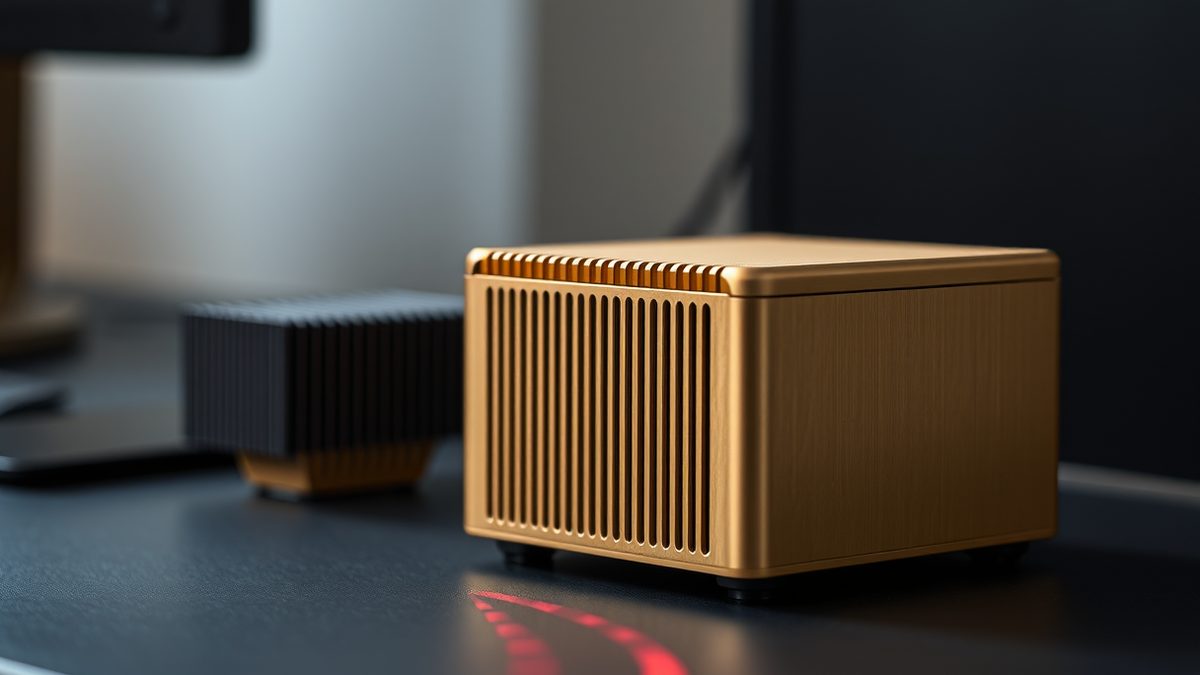
Tom's Hardware reported the gold Kubb Fanless PC on 27 September. It is a 120 x 120 x 120mm passively cooled machine with a 24-carat gold chassis. It weighs 28.7 pounds (13kg) instead of the standard 4.6 pounds (2.1kg), and it costs around $1.7 million.
Fanless Tech, which first posted about the order, called it a "cooling marvel" and claimed gold moves heat "about 30% to 50% faster" than aluminum. Tom's Hardware noted that copper would have been cheaper and better. The customer, though, is presumably buying an appreciating asset rather than a computer. The specs are modest: Intel Core Ultra 5 225H, Intel Core Ultra X7 358H, or AMD Ryzen AI 5 340, with Wi-Fi 7 or Wi-Fi 6 and a handful of USB and HDMI ports. Standard aluminum versions sell for €1,595 ($1,822) at Kubb.eu, though the site shows no stock. The gold unit is a custom order, not a product line.
Inference pricing gets a calculator
The gold PC is an outlier. The broader question of what AI hardware and inference actually cost is drawing more attention. On 23 September, developer Flavio Copes published an inference cost calculator that compares 27 models across OpenAI, Anthropic, Google, xAI, Mistral, OpenRouter and Workers AI. Users set daily active users, calls per user, input and output tokens, and an optional prompt-cache hit rate. The tool then ranks every model on the same assumptions.
"The dominant cost of an AI app is the LLM calls, and almost nobody can estimate it," the calculator page says.
Copes warns that the figures come from published API rates. They ignore batch pricing, enterprise discounts, image or tool surcharges, and custom caching layers. The output is a planning estimate, not a vendor quote. That caveat matters, because the recent headlines around GPU and inference pricing have been loud and contradictory.
A recent headline from KuCoin, for example, said B300 GPU pricing exceeds $24 per hour in short-term contracts. Nebius was reported to have raised inference prices 18.3% rather than cutting them. Those headlines are context only; the dossier does not provide their full text, so their numbers cannot be verified here. The calculator offers a more grounded way to compare model costs, even if it does not settle the GPU rental market.
Solar costs in Brazil show the other side of the energy bill
AI infrastructure is ultimately an energy story. A 26 September report in pv magazine on Brazilian PV costs shows how equipment prices can move in the opposite direction. Average PV system prices in Brazil rose 7% in the first half of 2026 for projects up to 300 kW, according to Greener's "Distributed Energy Solutions" study. Final prices ranged from BRL 2.02 ($0.38)/W for 30 kW and 50 kW installations to BRL 3.62/W for 2 kW systems.
Kit costs drove the increase. They rose 18.3% for 4 kW systems, from BRL 1.42/W to BRL 1.68/W. For 300 kW systems, kit prices rose 2.0%. The survey also found that new distributed generation connections fell 16% year over year, from 488,000 to 411,000. Financing fell to its lowest share in the period analyzed, at 33% of integrator sales. Residential systems made up 65% of added capacity, up from 39% in 2019.
Those figures are background for the AI cost debate. Cheaper solar would lower the operating cost of data centers, but the Brazilian data shows prices can rise even as the technology matures. The same tension runs through the inference calculator, where model prices are falling but usage per task is rising.
A solo-built research workspace
On 28 September, a Show HN post introduced ParkourNote, a research workspace built solo in a month with Claude. The tool imports papers, books, web pages, videos and recordings, transcribes and translates them, and keeps notes next to the page. It runs in the browser, in Chrome's side panel and on the phone. Claude, ChatGPT or Codex can read the library through an MCP server. The author says it took a month to build, which says something about how quickly AI-assisted development can produce software, and about the token consumption that makes inference pricing a live issue.
ParkourNote is in testing for Claude, ChatGPT and Codex, and supports OAuth sign-in without API keys. It can search a library, read papers and notes, and follow the page a user has open. Every call it makes shows up in a chat tile, and users can revoke access in Settings. The project is a reminder that the cost of AI features is not just the model bill; it is also the engineering time saved or spent.
Four sources, dated 23, 26, 27 and 28 September, describe a market where a single machine can cost $1,822 in aluminum or $1.7 million in gold, while the cost of running AI models is measured in tokens and watts. The gold PC is an extreme. The calculator and the Brazilian PV data are the practical tools. Neither resolves the debate about GPU pricing, but both make the assumptions visible.
Sources
4- 01Custom 24-carat gold mini PC costs around $1.7 million, weighs nearly 29 pounds for up to 50% faster heat transferEN
- 02Inference Cost CalculatorEN
- 03PV system costs increase by 7% in Brazil in H1EN
- 04Show HN: ParkourNote – A research workspace, built solo in a month with ClaudeEN
All figures and quotations in this text come from the sources listed below.
Content prepared by the editorial team with AI assistance.
Rachel Nwosu
Comments
0- No comments yet — be the first.