Aluminum Association of Canada says US midterms raise pressure for tariff rollback
Jean Simard, president and chief executive of the Aluminum Association of Canada, said on 4 November that the US midterm elections could increase pressure on Washington to roll back the 50 per cent tariff on Canadian aluminium. Ottawa's trade minister said the same day the result changes nothing in the short term.
 Dr. Amara PatelEconomy, business and world
Simard's read on the midterms
Simard said the election sent a clear message that American voters are frustrated with the economic impact of US trade policy. He said the results could increase pressure on Washington to roll back the tariffs and create new momentum for an agreement with Canada.
"I'm certainly far more optimistic than I've ever been, because the signal is overwhelmingly clearer than I thought it would be," he said.
For Canadian producers the stake is direction, not survival: whether their metal returns to its biggest market or the shift to Europe becomes permanent. Ontario Premier Doug Ford said on Wednesday morning he had been "doing cartwheels down the street" and called the result "a victory for Canada".
Why the 50 per cent duty matters
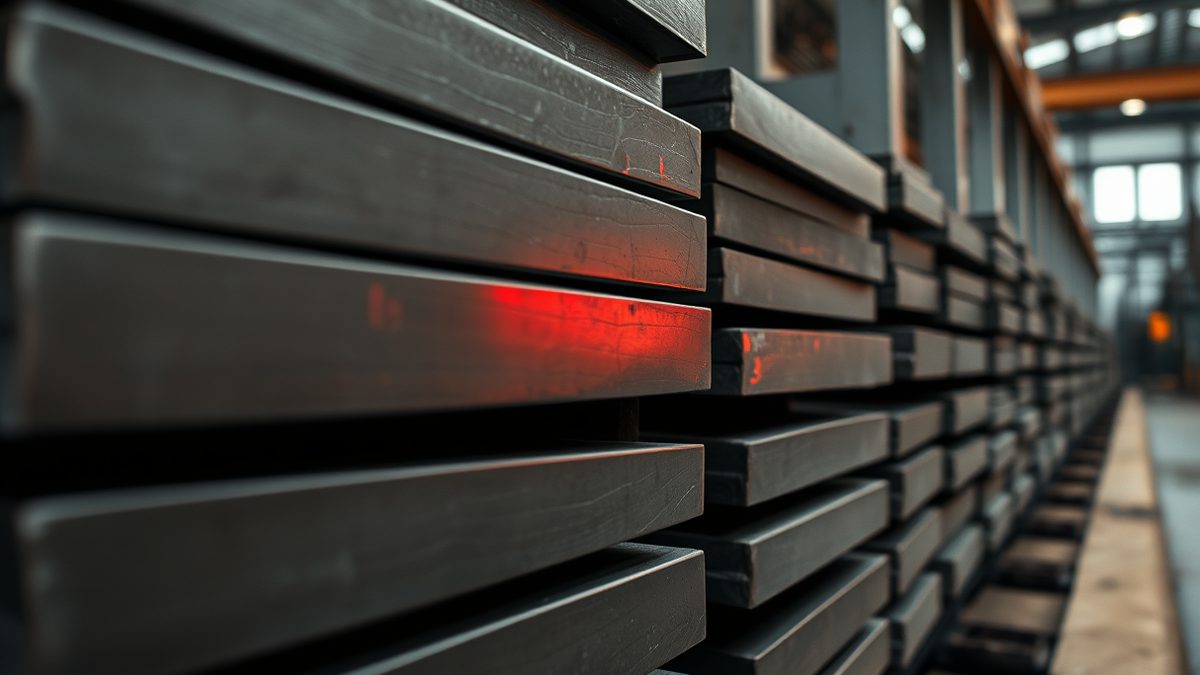
Canada produces roughly 3.3 million tonnes of aluminium a year and exports about 90 per cent of that output, according to Simard. Most of those shipments historically went to the United States. The 50 per cent tariff pushed producers to redirect them to Europe.
Simard said Rio Tinto, Alcoa and Aluminerie Alouette initially kept filling American orders before switching. That let the industry hold production without layoffs or output cuts, he said. The damage is uneven across Canadian industry: the BBC reported that a RYAM paper mill in Témiscaming, Quebec, sat idle with most of its 360 employees out of work.
How the tariff ladder was built
The first Trump administration imposed a 10 per cent tariff on aluminium imports in 2018; Canada was initially exempt, then faced the duty from June 2018 until May 2019, when the exemption was restored.
The current round is steeper. The US imposed 25 per cent tariffs on Canadian aluminium in March 2025 and doubled them to 50 per cent on 4 June 2025. After trade talks collapsed in August, the administration added a 50 per cent tariff on $20bn worth of Canadian goods, from dairy to furniture. Canada retaliated with its own 50 per cent "dollar-for-dollar" tariffs, and most provinces banned the sale of US alcohol.
The political check
US-Canada Trade Minister Dominic LeBlanc said on Wednesday the midterm results will not change anything in the short term. Andreas Schotter of Western University's Ivey Business School said Canadian companies should not expect a dramatic shift: "Even on the Democratic side, there's a strong 'America First' notion," he said.
Congress may not be the lever it appears. Trump's levies have been largely enacted through executive orders without congressional approval, and he told Fox News on Tuesday night he would use his veto against bills he does not like.
What happens next
Prime Minister Mark Carney said on Tuesday evening that US negotiators "are asking less and they're offering more" in recent discussions, and that the two countries "will now be working in the coming weeks to deliver that outcome". Trump, speaking in Iowa on Sunday, said: "We have the concept of a very good deal with Canada".
No date is attached to any of it. LeBlanc's office said the trade minister has no current plans to visit Washington, and no new visit has been publicly confirmed for chief negotiator Janice Charette. Flavio Volpe, president of the Automotive Parts Manufacturers' Association, said he had seen no term sheet exchange.
Sources
28- 01Canadian aluminum industry sees hope for tariff relief after U.S. midterm electionsEN
- 02US midterm results a 'victory' for Canadians hopeful of tariff reliefEN
- 03Trump's tariffs could shutter this Canadian town - its residents are fighting to save itEN
- 04The midterms are over. Will Trump still want to make a deal with Canada?EN
- 05Tariff relief for Canada not guaranteed after Democrats sweep U.S. midterm elections - CTV NewsEN
- 06What’s next for US energy policy after the midterm elections?EN
- 07AI data centers comprehensively defeated at US midterm electionsEN
- 08Sierra Club Response to Midterm Election ResultsEN
- 09US midterm elections 2026 live updates: Democrats win Senate control and edgeEN
- 10Top health takeaways from the midterm electionsEN
- 11US midterm elections 2026: live results from Senate, House and governor racesEN
- 12‘Wellness is on the ballot’: Why did so many pilates studios tell me to vote in the midterms?EN
- 13Exit polls show AI ranked last among voter priorities in the 2026 U.S. midtermsEN
- 14Anti-data center candidates claim victory across the US in 2026 Midterm ElectionsEN
- 15Post-Hoc Live: What the US midterm elections mean for biopharmaEN
- 16Voters rebuff data centers in every ballot measure except one during the 2026 midtermsEN
- 17Elon Musk spent nearly $500 million on the midterms and lost big-timeEN
- 18Election Deniers Aren’t Contesting Their Massive LossesEN
- 19Elon Musk’s record election bet backfired. The backlash may reach beyond one billionaireEN
- 20Schrödinger’s Election: AI Data Centers Were on the Ballot Even When They Weren’tEN
- 21Aluminum–Air Generators for Data Centres Face a Metal Logistics TestEN
- 22Tesla wins trade zone status for Texas Megapacks, but China tariffs stayEN
- 23AI and Crypto’s Election Spending Spree Backfired SpectacularlyEN
- 24Researchers asked people to use AI chatbots for election info – results were mixedEN
- 25US charges two Canadians accused of hacking US universitiesEN
- 26Americans bet $1.9B on midterms; markets favor Democrats in House and SenateEN
- 27The Midterm DownturnEN
- 28Elon Musk’s Attack Ads Are Backfiring As Midterms NearEN
All figures and quotations in this text come from the sources listed below.
Content prepared by the editorial team with AI assistance.
Dr. Amara Patel
Comments
0- No comments yet — be the first.