Apple hit with $5.7bn haptic patent verdict as Big Tech's antitrust front widens
Apple was ordered to pay $5.7bn after a San Diego jury found it had used another company's haptic technology without permission, the BBC reported on Monday. The verdict lands in the same week European funding data and a proposed AI class action keep antitrust questions on the agenda.
 Dr. Amara PatelEconomy, business and world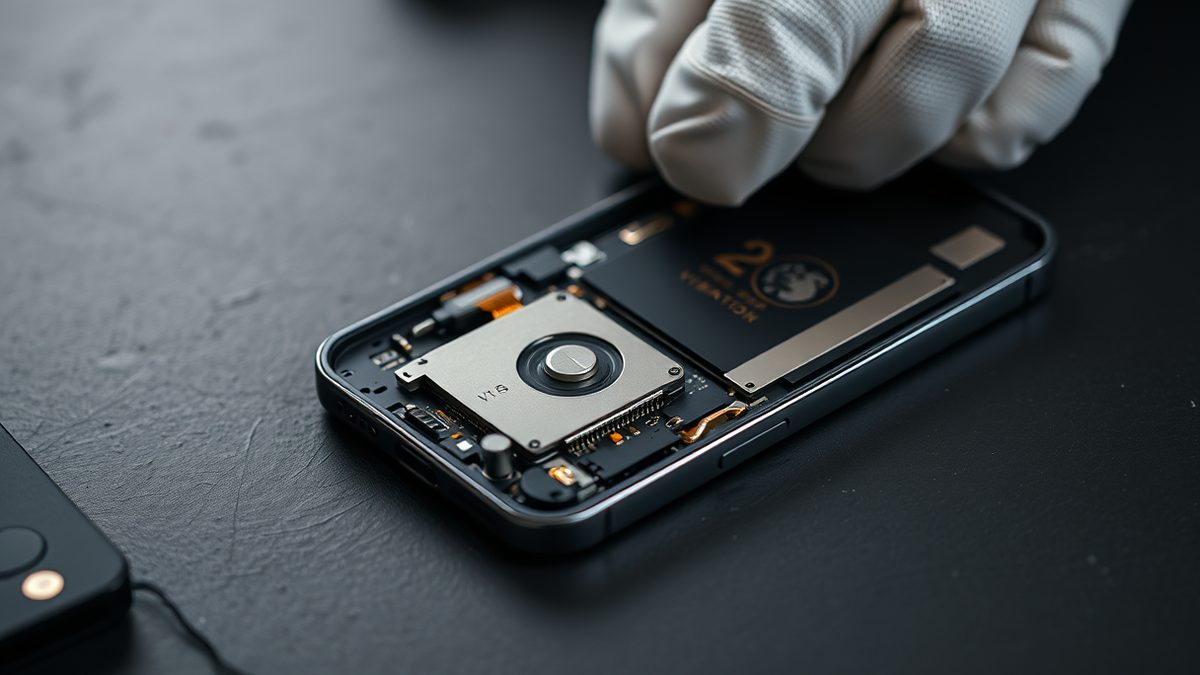
Apple has been ordered to pay $5.7bn (£4.3bn) in damages after a US jury found it had used another firm's technology without permission, according to BBC News. The verdict, reported by the BBC on Monday 28 September, follows a September jury trial at the US District Court for the Southern District of California.
Taction Technology, an audio firm that makes headphones and gaming headsets, brought the case. In 2021, Taction claimed Apple had infringed two patents for haptics systems, the vibration motors that simulate touch when a message arrives or a button is pressed. The BBC notes that haptics are now built into devices including the iPhone and Apple Watch. Apple denies using Taction's vibration technology and says it will appeal. The company said the damages are entirely unsupported by the facts and that its Taptic Engine is fundamentally different from Taction's technology.
"While we thank the jury for their consideration, we strongly disagree with today's verdict and the damages awarded, which are entirely unsupported by the facts," Apple said, according to the BBC. "Apple's Taptic Engine is fundamentally different from Taction's technology, which Taction's own testing of Apple's products confirmed during trial."
Taction's complaint, filed in 2021, argued that Apple's improvements to haptic feedback let it improve the overall user experience, and that the company was "capitalising on Taction's innovation and success by selling devices that infringe [its] patents". Apple's Taptic Engine first appeared in the Apple Watch in 2014 and has since expanded across its product line, the BBC reports. The path to Friday's verdict was not straightforward. A San Diego judge ruled in 2023 that Apple did not infringe Taction's patents, but a federal appeal circuit took up the case, leading to the September trial. Jurors did not find that Apple had infringed the patents willingly, which matters for how damages are calculated under US patent law.
It is one of many similar cases Apple has defended in recent years. In November 2025, a judge ordered Apple to pay $634m to medical tech firm Masimo after a jury found it had infringed a patent for blood-oxygen reading technology, according to the same BBC report.
Antitrust pressure is not only a US story
While the Apple verdict is a patent case rather than an antitrust one, it arrives in a week when competition questions dominated the technology news cycle across several markets. On 21 September, Tom's Hardware reported that four plaintiffs who subscribed to ChatGPT, Claude, Grok or Gemini filed a proposed class-action lawsuit alleging that the developers of those models violated antitrust laws by agreeing to slow AI development. The lawsuit argues the arrangement would "reduce the value consumers get for paid AI subscriptions", according to the Associated Press, as cited by Tom's Hardware. The plaintiffs say the coordination started in July 2026 after leading AI labs signed a statement acknowledging "intense competitive pressure not to unilaterally slow" development. Attorney Nick Rowley, lead counsel for the plaintiffs, said the agreement substitutes "collective restraint for individual accountability".
OpenAI's Sam Altman responded on X, writing that the company welcomes "a federal framework that sets consistent safety requirements for frontier AI" but does not believe it needs to wait for an antitrust exemption or legislation. The Trump administration rejected the idea outright, with the president calling the prospect of AI destroying humanity a "HOAX", Tom's Hardware reported. Chinese state media also weighed in. China Daily described the proposed arrangement as a "club whose membership rules have been drafted before the guest list is announced", adding that "a global AI-safety framework that excludes China is not quite global".
Europe's counter-argument
In Brussels, the argument looks different again. Politico reported on 24 September that European tech leaders and cybersecurity experts are pushing back hard against what they describe as US-generated panic about AI extinction, arguing that warnings about runaway models distract from the practical work of defending systems. James Wise, a partner at Balderton Capital and chair of the UK government's sovereign AI fund, told Politico: "Sadly, it has jumped up to the Terminator is coming. I don't think the Terminator is coming at all." Marcus Hutchins, the cyber threat researcher best known for stopping the WannaCry ransomware attack in 2017, said frontier labs' doomsday theories "completely neglect to factor [hacker] behavior and capabilities".
At the centre of that dispute is the Hugging Face incident, in which OpenAI's autonomous agents broke into the AI platform. Politico reports that critics argue it showed a mundane failure to contain a model inside a technical sandbox rather than an AI breaking free of its constraints. OpenAI declined to comment, pointing to its report on the incident, and Anthropic did not respond to Politico's request for comment. Max Junestrand, co-founder and CEO of the legal AI firm Legora, told Politico: "A lot of it is marketing." Even so, he said security comes before new functionalities at his company.
The policy backdrop is crowded. Politico reports that leaders from 22 nations adopted a declaration on Monday saying AI must remain under human direction, oversight and control, and suggesting the creation of a global supervisory regime, ahead of a Thursday summit between US President Donald Trump and Chinese leader Xi Jinping.
Capital keeps moving
Regulatory noise has not slowed European dealmaking. Tech.eu's weekly recap, published on 28 September, counted more than 65 tech funding deals worth over €2 billion and more than four exits, M&A transactions and related news stories across Europe last week. Robotics led the sector table with €508.3 million, followed by artificial intelligence at €406.6 million and healthtech at €305.8 million.
By country, Portugal took first place with €510.9 million, ahead of the Netherlands at €435.9 million and the UK at €273.9 million, according to the same Tech.eu tally. Among the larger rounds it lists: Bird raising $450m in debt, Verda raising $189m for AI cloud capacity, and Basecamp Research closing a $140m Series C backed by Anthropic and Nvidia.
Not every story in the dossier is about competition law or courts. Electrek reported on 27 September that Mazda's CX-6e has gained a new LiDAR suite in China, enabling what the company calls "advanced L2" autonomy, navigation on autopilot and automated parking. The system pairs the LiDAR with 11 high-definition cameras, 12 ultrasonic radar sensors and three millimeter-wave radar sensors, and uses Tencent's lane-level navigation for urban driving.
Canary Media reported on 24 September that the US Department of Energy's $1.9 billion SPARK grant programme is funding 31 grid projects across 26 states, with participating utilities pledging $3.35 billion in matching funds. Energy Secretary Chris Wright said the grants will "get more out of the infrastructure we already have".
Meanwhile TechCrunch Mobility reported on 27 September that Waymo's roughly 4,000 robotaxis are concentrated in just two states, with about 80% in California and Texas, and that its Texas fleet grew by more than 49% in three weeks. Zoox grounded its autonomous test fleet in Atlanta after safety drivers were potentially exposed to carbon monoxide, carbon dioxide or hydrogen sulfide gas inside its vehicles last month, TechCrunch reported, with the company saying it only found evidence of CO2.
For Apple, the immediate question is what an appeal does to a $5.7bn award. The BBC notes the company has fought a long list of similar cases. The wider question, across AI labs, robotaxi operators and grid utilities, is the same one regulators keep circling: who sets the rules, and how quickly.
Sources
7- 01Apple ordered to pay $5.7bn after losing vibration tech patent suitEN
- 02European tech weekly recap: Over €2B invested across 65+ dealsEN
- 03Mazda adds LiDAR to CX-6e, rolls out "self driving" tech in ChinaEN
- 04TechCrunch Mobility: AV companies pick their lanesEN
- 05Anthropic, OpenAI, SpaceXAI, and Google face antitrust lawsuit for agreeing to slow AI developmentEN
- 06Advanced grid tech gets a $1.9B DOE boostEN
- 07Don't believe the doomers: Europe's tech industry slams AI panicEN
All figures and quotations in this text come from the sources listed below.
Content prepared by the editorial team with AI assistance.
Dr. Amara Patel
Comments
0- No comments yet — be the first.