Brazil's central bank holds Selic at 13.75%, ending run of cuts
Brazil's central bank unanimously held the Selic at 13.75% on Wednesday, ending a run of cuts begun in March, as inflation stayed above target after Lula's 25 October runoff win over senator Flavio Bolsonaro. Reuters poll: 33 of 48 expected the hold.
 Dr. Amara PatelEconomy, business and world
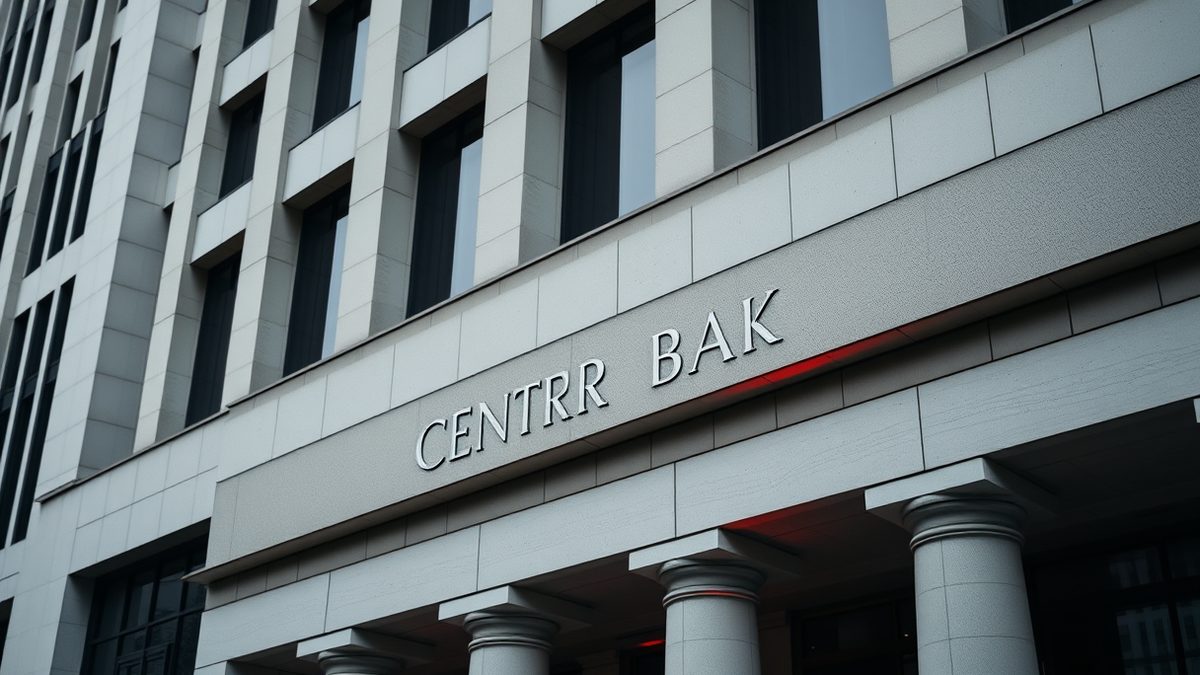
Copom holds at 13.75%
Copom voted unanimously on Wednesday to keep the Selic at 13.75%, the level set at its 16 September meeting, when it delivered the fifth consecutive quarter-point cut.
A hold at 13.75% keeps Brazilian bonds paying one of the world's highest yields, which favours dollar investors who lend in reais. It also leaves heavily indebted retailers and homebuilders under pressure for longer.
The central bank began the year at 15.00% and cut by a quarter point at each of its five meetings from March to September. In its statement the committee pledged to keep policy "adequately restrictive" to bring inflation back to target. Policymakers said inflation risks appeared tilted to the upside, while noting a "more pronounced deceleration of domestic economic activity".
Why the hold lands where it does
Brazil's inflation target is 3%, with a tolerance band of 1.5 percentage points either way, so the Selic sits far above what the official goal implies. Annual inflation of 4.6% remains above the top of that band, and markets expect it to stay above the 3% target until as late as 2029, the Straits Times reported.
Before the vote, investors were positioned for more easing. Immediately before the 25 October runoff, they were largely pricing two consecutive 25-basis-point cuts, one in November and another next month. Options contracts traded on Brazil's exchange earlier on Wednesday suggested investors expected rates to remain unchanged. The statement offered little guidance on next steps.
The decision follows a sharp fall in Brazil's currency and stock market after Lula's surprise win over senator Flavio Bolsonaro in the 25 October runoff. Policymakers said the outlook required "serenity and caution".
The board is the next battleground
Lula, frustrated by high rates he says hold back growth, has begun consulting advisers and economists on ways to bring the Selic down in his fourth term, Valor International reported.
He can name six of the nine people who set the Selic by the end of 2027. Two seats have been empty since 1 January 2026, when Diogo Guillen (economic policy) and Renato Gomes (financial-system organisation) left at the end of their terms. Two more terms end on 28 February 2027, those of monetary-policy director Nilton David and supervision director Ailton Aquino Santos. The last two end on 31 December 2027, when the terms of Paulo Picchetti (international affairs) and Rodrigo Teixeira (administration) run out. Chair Gabriel Galípolo and directors Gilneu Vivan and Izabela Correa serve until 31 December 2028, so a full slate of Lula picks would hold a two-thirds majority from 2028.
Lula is looking for more heterodox candidates, Valor reported on 3 November. One name under discussion is André Roncaglia, Brazil's executive director at the IMF. Lula has an understanding with Senate President Davi Alcolumbre to submit nominations later this month for two Central Bank seats, the directors of Financial System Organization and Resolution and of Economic Policy, vacant since January. It is unclear whether David and Santos will be reappointed, given Lula's wish for fresh perspectives on the board.
A denied rumour and a weaker market
Finance Minister Dario Durigan denied on 2 November that officials were weighing a cap on interest rates. He also ruled out using foreign-exchange reserves to hold the real steady, after days of market chatter about economist André Lara Resende's ideas.
A cap would mean elected officials, not the central bank, decide where rates sit. Investors treat the bank's independence as a pillar of Brazil's credibility, so even a denied rumour can move traders.
Markets grew uneasy after O Globo columnist Lauro Jardim reported on 1 November that Lula might meet Lara Resende, an architect of the 1994 Real Plan who has proposed unconventional ways to lower the Selic, including an explicit interest rate target. Durigan said no meeting is scheduled between the two.
EWZ, the US-listed fund that tracks Brazilian stocks, slipped 0.9% to US$32.16 on Monday, two days before the decision, and has lost about 4% since closing at US$33.62 on 28 October. The dollar-real rate was near 5.44 reais per dollar late on Monday, little changed on the day. Lula met Galípolo on 28 October at the Palácio da Alvorada to discuss household debt. Durigan has called the level of the Selic a bottleneck for the economy.
What happens next
Any nominee needs Senate approval, and the economic affairs committee questions candidates first.
Since 2021 a law has made the central bank independent, with board members serving fixed terms. Calm, career picks would steady the real, while overtly political ones would be read as a threat to the bank's independence. Lula has not formally nominated anyone.
Sources
22- 01Brazil's central bank ends run of rate cuts after Lula election winEN
- 02Lula seeks Central Bank shake-up to accelerate rate cutsEN
- 03Lula Can Fill Six Brazil Central Bank SeatsEN
- 04Brazil Denies Plan to Cap Interest RatesEN
- 05Brazil election: Five economic challenges facing Brazil’s re-elected President LulaEN
- 06OpenAI is already trying to shape the 2028 electionEN
- 07What’s next for US energy policy after the midterm elections?EN
- 08Elon Musk’s record election bet backfired. The backlash may reach beyond one billionaireEN
- 09Election Deniers Aren’t Contesting Their Massive LossesEN
- 10Sierra Club Response to Midterm Election ResultsEN
- 11Blood banks targeted in latest European fridge cyberattacksEN
- 12 AI data centers comprehensively defeated at US midterm elections — 45 measures put on the ballot as Americans overwhelmingly vote against developments EN
- 13 Upgrade to an OLED display for only $269 at Walmart — Acer's 27-inch Nitro gaming monitor has a superfast 240Hz refresh rate and crisp WQHD resolution EN
- 14The First AI Slop Election Is Over. The Slop Isn’t Going Anywhere.EN
- 15Hackers Hit Banks of the Cash and Blood Variety in FranceEN
- 16Researchers asked people to use AI chatbots for election info – results were mixedEN
- 17Schrödinger’s Election: AI Data Centers Were on the Ballot Even When They Weren’tEN
- 18 Tachyum, developer of heavily-delayed universal Prodigy processor, voluntarily files for bankruptcy EN
- 19Post-Hoc Live: What the US midterm elections mean for biopharmaEN
- 20Brightspeed swaps CEOs as it reportedly nears bankruptcyEN
- 21Federal Reserve Board announces approval of application by The Bank of Nova ScotiaEN
- 22Price hikes aren’t all that’s at stake in FirstEnergy Ohio’s rate caseEN
All figures and quotations in this text come from the sources listed below.
Content prepared by the editorial team with AI assistance.
Dr. Amara Patel
Comments
0- No comments yet — be the first.