Brazil solar costs up 7% as inference pricing tools land on the same spreadsheet
Average photovoltaic system prices in Brazil rose 7% in the first half of 2026 for projects up to 300 kW, according to Greener's Distributed Energy Solutions study, published by pv magazine on 26 September.
 Rachel NwosuAI, models and technology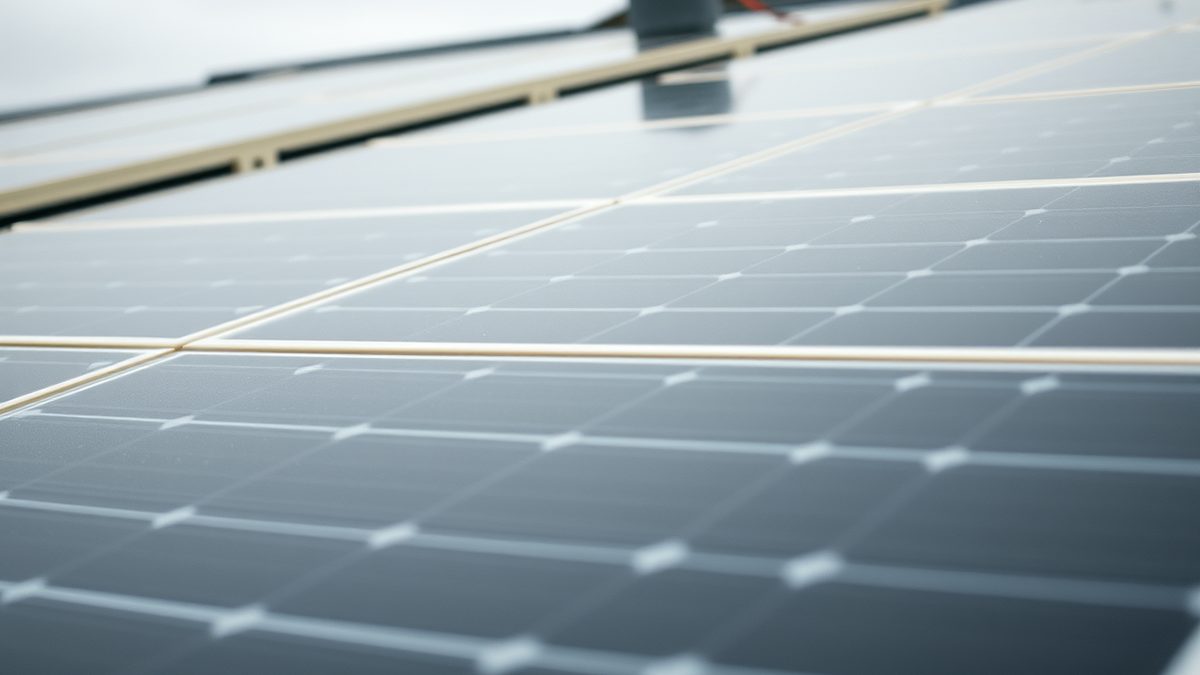
That number has nothing to do with GPUs. It belongs on the same desk anyway. Anyone sizing a compute budget in late September 2026 is juggling hardware capex, electricity, per-token API rates and a spreadsheet of assumptions that rarely survive contact with production traffic.
Two of the newest dossiers published this weekend attack the problem from opposite ends: what the hardware and the sun cost, and what the tokens cost once the hardware is running.
The Brazil number, in detail
pv magazine reported the Greener study on 26 September. The 7% increase covers January to June 2026. Final system prices ranged from BRL 2.02 ($0.38) per watt for 30 kW and 50 kW installations up to BRL 3.62/W for 2 kW systems. The 2 kW average climbed from BRL 3.44/W in January to BRL 3.62/W in June, roughly BRL 7,200 for the whole system. A 300 kW system averaged BRL 2.40/W, about BRL 720,000, rising to around BRL 834,000 for a ground-mounted version.
Equipment drove the increase, not labour. Kit prices for 4 kW systems jumped 18.3% between January and June, from BRL 1.42/W to BRL 1.68/W. For 300 kW systems the kit rose just 2.0%, from BRL 1.02/W to BRL 1.04/W. For 50 kW kits it went from BRL 1.14/W to BRL 1.24/W, up 8.8%.
Demand thinned at the same time. New distributed generation connections fell 16% year on year, from 488,000 to 411,000, and the number of new consumer units receiving credits dropped 43%, from 951,000 to 541,000. Residential systems took 65% of added capacity, up from 39% in 2019. Financing featured in only 33% of integrator sales, down eight points and the lowest share in the period analysed. Greener's historical series puts a 4 kW residential system at BRL 7.74/W in January 2017 against BRL 2.91/W in June 2026.
What a token actually costs
On 23 September, developer Flavio Copes published an inference cost calculator that tries to put a monthly bill on a feature before anyone writes a billing integration. It compares 27 models across OpenAI, Anthropic, Google, xAI, Mistral, OpenRouter and Workers AI using published API rates. Feed it daily active users, calls per user, input and output tokens and an optional prompt-cache hit rate, and it returns an estimate.
The tool is explicit about its limits. It ignores batch pricing, enterprise discounts, image and tool surcharges, and any caching layer you build yourself. Copes describes the output as a planning estimate, not a vendor quote. Everything runs in the browser, and a share link only encodes the inputs in the URL.
The gap between list price and real cost is where most of the arguing happens. Nexlab published a survey on 20 September comparing LocalAI, exo, GPUStack, vLLM, Ollama, llama.cpp, Xinference, LiteLLM, SkyPilot and others. It notes that cache-aware routing determines whether a follow-up turn lands where its KV or prefix cache already sits. Ollama, at 181,000 GitHub stars on 20 September, has no cluster story beyond round-robining several URLs. vLLM does prefix caching per instance. LocalAI added a distributed mode in June 2026 with libp2p discovery and a NATS-based router aware of VRAM and prefix caches.
The difference between the two represents the integration cost, which includes the integrator's technical and operational margin.
That line comes from the Greener methodology as pv magazine describes it. It applies just as well to inference: the kit is not the bill.
Benchmarks are getting expensive too
On 26 September, StarSkirmish launched a benchmark in which ten LLMs each get one hour of wall clock time to write a Protoss bot in C++ against BWAPI 4.4.0, played on OpenBW. GPT-6 Astra and Claude Opus 5.5 are described as functionally tied at the top. GPT-6 Sol is close behind and singled out for value against the average API cost of a one hour run.
The field is 50 LLM bots (10 models, 5 runs each), 3 demo bots and 9 human written bots, for 62 entrants. Every entrant plays every other entrant six times, twice on each of three maps. Ratings are Elo, fitted from all games at once, with Stardust scaled to 100 and Four Gate Dragoon to 0. Games ran on Prime Intellect sandboxes through OpenRouter with first party inference only. The organisers say they plan longer reasoning periods because state of the art models now benefit from runs beyond one hour.
The cost of that kind of evaluation is not published. Neither is the price of the gold.
Tom's Hardware reported on 27 September that a customer ordered a custom Kubb Fanless mini PC with a pure 24-carat gold passive chassis for around $1.7 million, citing Fanless Tech. Weight goes from 4.6 pounds (2.1 kg) to 28.7 pounds (13 kg). Fanless Tech calls gold's thermal conductivity 30% to 50% better than aluminium. Tom's Hardware notes copper would have been cheaper and conducts heat better. The underlying machine is a 120 x 120 x 120mm box with an Intel Core Ultra 5 225H, Core Ultra X7 358H or AMD Ryzen AI 5 340, listed at €1,595 ($1,822) at Kubb.eu with no stock.
The awkward part
None of these numbers share a unit. BRL per watt, dollars per million tokens, dollars per benchmark run, dollars per kilogram of gold. The one comparison that holds is that all four are rising or being argued about in the same week, and none of the public figures include the costs that decide whether a project pays back.
For inference planners, the practical move is to model the cache hit rate. Copes's calculator treats it as optional and notes that at least one provider publishes no cached-input discount at all, so the cache rate is ignored for that model. Nexlab's survey makes the same point from the infrastructure side: routing a repeated prompt to a machine that already holds its prefix is worth more than a cheaper GPU that has to recompute it. Neither source puts a single number on the saving, and neither claims to. Treat both as planning inputs, then measure your own traffic.
Sources
5- 01PV system costs increase by 7% in Brazil in H1EN
- 02Custom 24-carat gold mini PC costs around $1.7 million, weighs nearly 29 pounds for up to 50% faster heat transferEN
- 03Inference Cost CalculatorEN
- 04StarSkirmish: a StarCraft: Brood War benchmark for LLM-written botsEN
- 05Self-hosted inference orchestrators compared: LocalAI, exo, GPUStack, Xinference, Ollama, vLLM and CoderAI (September 2026)EN
All figures and quotations in this text come from the sources listed below.
Content prepared by the editorial team with AI assistance.
Rachel Nwosu
Comments
0- No comments yet — be the first.