BYD Tests Coach-Door Flagship as Solid-State Race Tightens
China's Yangwang brand is testing an ultra-luxury sedan that Autohome says will be BYD's first EV with solid-state batteries. Images surfaced online on 29 September, with a launch window set for 2027.
 Daniel FisherSport, cars and travel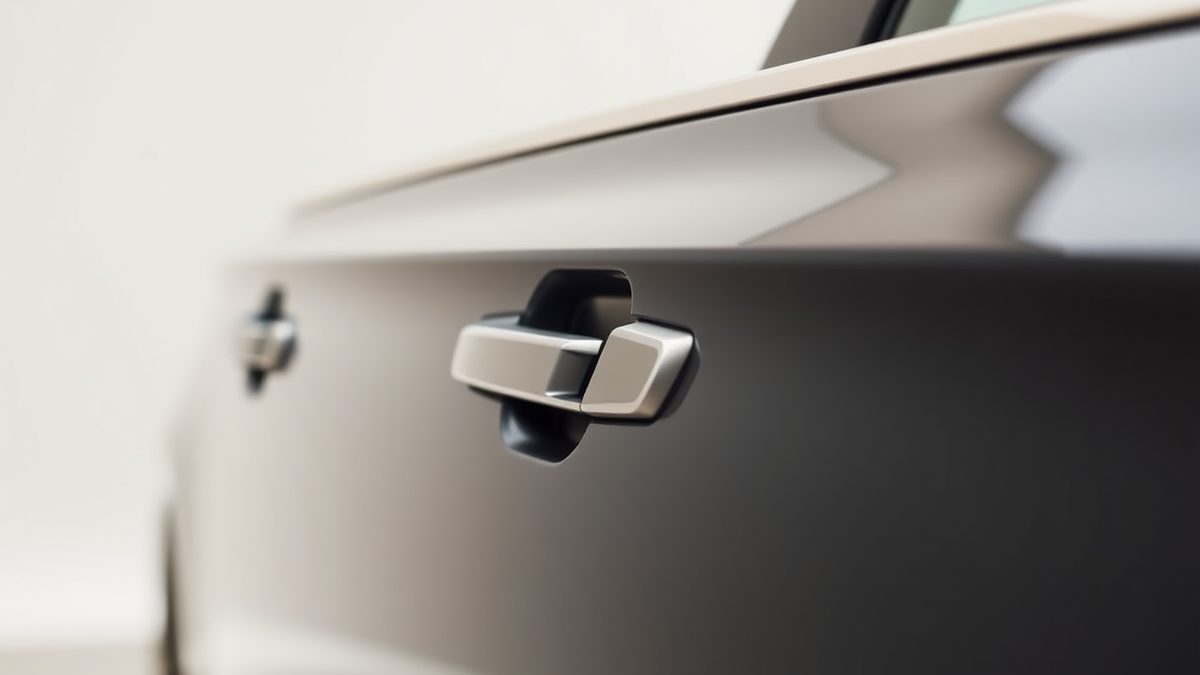
The car has no final name. Internally, BYD calls it "HU". Yangwang general manager Hu Xiaoqing posted images of the flagship sedan on Weibo and confirmed the name is still undecided, according to Electrek's report on 29 September. The sedan measures about 5.5 metres, roughly the size of a Mercedes-Benz Maybach S-Class, and will be BYD's first vehicle with rear-hinged coach doors.
Autohome reports the executive-class EV will be BYD's first to use solid-state batteries. Zheng Yu, Yangwang's executive general manager, said the model will feature "unprecedented disruptive technology" but gave no specifics. One image shows the car at a BYD Flash Charging station, which suggests support for megawatt fast charging. Reports estimate a price above 2 million yuan, or nearly $300,000. The current Yangwang U7 luxury sedan starts at 658,000 yuan.
What BYD has actually committed to
The solid-state timeline is not new. BYD executive vice president Stella Li told Carwow.es earlier in September that the company is "in the leading position" on solid-state battery technology and commercialisation, and that it would "prove it" with a first vehicle debuting in 2027. FinDreams, BYD's battery business, aims to start producing sulfide-based all-solid-state cells in limited batches in 2027, scaling to mass production by 2030, according to Electrek.
That gap between a limited batch and mass production matters. If the Yangwang sedan is first, the batteries will likely be offered only on higher-priced variants, while standard models keep using BYD's Blade LFP packs. The company is not saying which variants get what.
GM picks a plant for a different chemistry
On Tuesday, Ultium Cells, GM's joint venture with LG Energy Solution, said it will build lithium manganese rich cells at its Spring Hill, Tennessee plant. The company calls Spring Hill "the first in the world to mass produce prismatic LMR battery cells", according to Electrek. Ultium says LMR can deliver 33% higher energy density than lithium iron phosphate at a comparable cost.
GM will put the cells in upcoming electric trucks and full-size SUVs, targeting over 400 miles of range. Kurt Kelty, GM's vice president of battery and sustainability, said high-nickel cells will still deliver the highest range, and that "adding LMR positions us to leapfrog today's more affordable chemistries and deliver lower costs with better performance." Upgrades at Spring Hill begin later this year and are due for completion by 2028, adding 500 jobs for a workforce of 1,700. GM expects its first LMR vehicle in 2028. For scale, the Chevrolet Silverado EV currently offers an estimated 478 miles on a single charge using high-nickel cells and starts at $55,895.
The grid is already using car batteries
While cell chemistry gets the headlines, vehicle-to-grid work is further along. RNZ reported on 29 September that New Zealand's Energy Efficiency and Conservation Authority will install up to 100 two-way chargers in homes and businesses in Auckland and other urban areas, building on a smaller trial expanding in Queenstown. EECA policy and regulation manager Murray Bell said the findings will "help build an evidence base to inform future policies and guidance".
Bell said a household with solar panels could charge an EV for free during the day and pull the energy out at night, and that car batteries can run a household for "up to three or four days" during outages. He also flagged the obstacles: very few compatible combinations of EVs and two-way chargers are available in New Zealand, manufacturers worry about third-party equipment affecting battery performance, and older house wiring raises safety questions. "We want this basically to be plug-and-play," he said.
Vermont has gone further. The BBC reported on 29 September that more than 5,500 homes have batteries installed through Green Mountain Power's programme, at $55 a month over a 10-year lease, and that the resulting virtual power plant has become the state's largest power source. Pollyanna Bladyka, a participant in Springfield, told the BBC she had been about to buy a $12,000 gas generator instead. "I'd like to say I did it for the environment, but I did it for myself," she said. The US now has over 40GW of virtual power plant capacity, according to internal analysis by Wood Mackenzie cited by the BBC, against roughly 600GW of natural gas and 200GW of coal.
Range anxiety is not the only cost problem
A total cost of ownership analysis published by Transport & Environment and carried by CleanTechnica on 28 September found electric trucks are already the cheapest financial choice in six of nine major EU markets, which together account for 46% of new heavy truck sales in the EU. Five-year savings reach €100,000 in the Netherlands, €85,000 in Germany and €69,000 in Denmark, with the vehicles paying off after two years. Running a Chinese truck in the Netherlands pushes the five-year saving to €128,000.
That arithmetic rests on policy. T&E credits EU truck CO2 targets, national purchase subsidies and lower road tolls, and says electric trucks would be cheaper to operate in all nine markets by 2030 even if purchase subsidies are phased out, provided the Eurovignette Directive and RED III are implemented. The group also warns that a new energy crisis in Europe is widening the gap between diesel and electric running costs.
Cheaper running costs do not fix everything. The VDE, Germany's electrical engineering association, said on 21 September that more than half of international master's graduates in the field, 55.5%, leave Germany after finishing their degrees. Michael Schanz, who heads the VDE's education committee, said every euro invested in an international student generates about 16 euros in added value, a figure the association says could be higher if more stayed. Prof. Kira Kastell of the VDE said domestic students are about 7 percentage points more successful than their international peers.
Elsewhere in the dossier
Volkswagen will premiere the ID. Tiguan in early October, its third nameplate to go electric after the ID. Polo and ID. Cross, with market arrival in early 2027. The ID. Tiguan succeeds the ID.4 and ID.5, which have delivered more than 950,000 units since 2021, and will be sold alongside the combustion and hybrid Tiguan. Volkswagen brand CEO Thomas Schäfer said more than 8.3 million Tiguans have been produced. Tesla, meanwhile, was granted US patent 12,746,987 B1 for an "Electric Fan Car" on 29 September, its second fan car patent in just over a year, filed in January 2024 and drawn on a Model S. Tesla ended Model S and Model X production in April.
Two other items show where battery research is heading. IEEE Spectrum detailed how Delhi cut electricity losses from 50% to 5%, a distribution fix that matters as much as storage. And researchers at MIT led by Giovanni Traverso built a swallowable battery from cellulose nanofibers, molybdenum trioxide, activated carbon, a magnesium alloy anode and a beeswax capsule, according to Chemical & Engineering News. It powered an RFID tag and a stimulation device in pig stomachs for three days, with voltage falling from 1.84 V to 1.45 V, then disintegrated within weeks. Traverso said the design is "readily tunable" and could last days to weeks.
The Philippine Electric Vehicle Summit, which opens in October, will be the next test of whether targets survive contact with buyers. As of mid-2026, the country's charging station count remains the weakest link in its roadmap to 311,700 EVs and 7,300 chargers by 2028, CleanTechnica noted on 29 September.
Sources
13- 01BYD tests new ultra-luxury EV with coach doors and a solid-state batteryEN
- 02GM's new EV battery tech will cut costs without sacrificing performance or rangeEN
- 03EVs being trialled as giant batteries to power homes for less in AucklandEN
- 04Vermont replacing power plants with home batteriesEN
- 05Are Electric Trucks Cheaper To Operate Than Diesel?EN
- 06VDE Figures: Electrical Engineering Programs Are Popular InternationallyEN
- 07Electric Future, Established Name: The New ID. Tiguan Premieres in OctoberEN
- 08Tesla patents 'Electric Fan Car' with 4 ducted fans ahead of Roadster revealEN
- 09How Delhi Cut Electricity Loss from 50 to 5 PercentEN
- 10This Battery Is Ready to EatEN
- 11Electrification is efficiency: The world will need less energy after the transitionEN
- 12Op-Ed: Upcoming Philippine Electric Vehicle Summit is an Audit of National PolicyEN
- 13Two Silverado EVs and a 150 kWh battery powered this entire concert tourEN
All figures and quotations in this text come from the sources listed below.
Content prepared by the editorial team with AI assistance.
Daniel Fisher
Comments
0- No comments yet — be the first.