China's AI and battery export controls tighten as DeepSeek and Huawei build domestic stack
China's State Council released a new five-year battery plan on 28 September, two days after new entry-exit rules took effect letting authorities block engineers from leaving, according to pv magazine and DW. The measures show Beijing is trying to keep both technology and talent inside its borders as it races the US on AI and clean energy.
 Dr. Amara PatelEconomy, business and world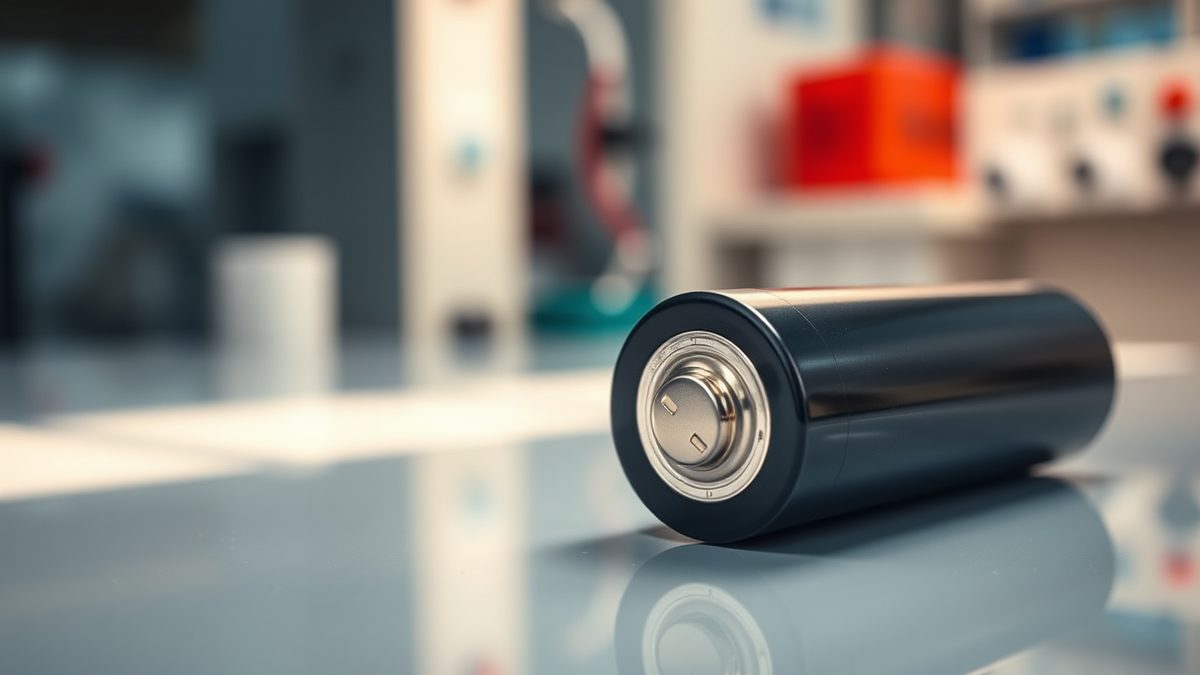
On 1 October, US Congressman Ro Khanna sent letters to the chief executives of OpenAI, Anthropic, Google, Meta and SpaceX. He wants to know how they guard their model weights from theft by China or other hostile actors, according to Reuters. The letters, first reported by Reuters, also ask each firm to describe the cybersecurity measures it uses to prevent that kind of theft. Khanna is the top Democrat on the House Select Committee on China and represents part of Silicon Valley.
"The theft of such a model weight by (China) could erode America's AI lead with the stroke of a keyboard," he wrote, according to Reuters. The companies and the Chinese embassy in Washington did not immediately respond to Reuters' requests for comment.
Khanna's letters to the five US firms follow a run of complaints from American labs about Chinese rivals. OpenAI and Anthropic have both accused Chinese firms, including Moonshot AI and DeepSeek, of distillation, meaning training their own models on the answers from US systems. However, few cases of stolen model weights are publicly known, as The Next Web noted on 1 October. This week, Khanna also wrote to three Chinese labs: DeepSeek, Alibaba and Moonshot AI. He sent a further letter to the US intelligence community. Those letters ask how they handle the risks of advanced AI. "You cannot trust Silicon Valley tech billionaires to write the rules to keep us safe," Khanna told Reuters.
DeepSeek and Huawei build a domestic stack
DeepSeek, the Chinese AI developer, is releasing open-source programming tools for Huawei's Ascend chips, according to a post on its official WeChat channel cited by Reuters and reported by The Decoder on 30 September. The centrepiece is TileLang, a programming language developed by researchers at Peking University that DeepSeek has used for about a year. According to DeepSeek, Huawei "fully supported" the work. The two companies also optimized a so-called supernode, a cluster of 128 Ascend 950 chips. DeepSeek argues that anyone trying to build an independent software ecosystem for AI chips first needs a universal language that is easy to program but still gets full performance out of the hardware. In the company's view, TileLang offers a simpler programming model than Nvidia's CUDA platform.
Entry-exit rules and the talent block
On 24 September, DW reported that China's new entry-exit rules took effect, giving Chinese authorities the power to stop engineers, founders and other specialists from leaving the country if their expertise in batteries, rare earths or AI is judged a threat to "industrial and technological security." Henry Gao, a law professor at Singapore Management University, told DW that the curbs "offer a rare glimpse into the true state of China's economy." "These measures suggest that Beijing is deeply concerned about economic weakness and substantial capital outflows," Gao said, adding that authorities are also determined to stop "entrepreneurs and skilled personnel from leaving the country." Alicia Garcia-Herrero, chief economist for Asia-Pacific at Natixis, told DW that the block on talent will matter more than the squeeze on capital. "You can still move money slowly, with approvals," she said. "You cannot easily replace a process engineer who cannot board a plane, or who will not take an overseas job because of an indefinite ban."
Batteries and the 2030 targets
On 28 September, seven government bodies including the Ministry of Industry and Information Technology, the National Development and Reform Commission and the National Energy Administration publicly released the New-Type Battery Industry Development Plan for the 15th Five-Year Plan Period, according to pv magazine. The document is dated 14 September. By 2030, China aims for preliminary large-scale application of all-solid-state batteries, a cycle life of 15,000 cycles for long-life lithium batteries, and product defect rates at leading manufacturers reaching the parts-per-billion level. Unlike some earlier industrial development policies, the plan does not set a specific capacity or output-value target. The plan retains lithium-ion as the core technology while calling for a supply system in which sodium-ion and flow batteries develop alongside lithium batteries. It also calls for research into new alkali-metal-ion batteries, multivalent-ion systems, metal-air and metal-sulfur batteries, and nuclear batteries. Standards development for sodium-ion batteries is listed alongside work on solid-state and other emerging technologies.
The sodium-ion provisions are notable for stationary storage, where energy density is generally less critical than cost, cycle life, safety and supply-chain diversity. But the plan does not set a sodium-ion deployment target, and it does not indicate that sodium-ion technology should replace lithium iron phosphate. Instead, it places sodium-ion within a broader multi-chemistry storage portfolio. MIIT said authorities will strengthen capacity early-warning mechanisms, product-quality supervision and regulation of price competition to avoid sharp swings in supply and demand. The plan also supports mergers and consolidation, recycling, safety management and more orderly overseas investment.
A different race
Writing in Rest of World on 22 September, Rumman Chowdhury and Konstantinos Komaitis argued that Washington frames the AI contest almost entirely around model performance, while Beijing has built a more extensive regulatory environment for how the technology interacts with users. China's rules on labelling AI-generated content require transparency across the AI content ecosystem, and its laws protect vulnerable populations from anthropomorphic AI manipulation and algorithmic price discrimination. The authors also cite a striking gap in attitudes: 87% of Chinese citizens trust AI compared to 23% in the US. That difference matters commercially. Airbnb CEO Brian Chesky said his company uses Alibaba's Qwen model because "it's very good. It's also fast and cheap," according to the same piece. And the Sora deepfake debacle cost OpenAI a $1-billion licensing deal with Disney.
None of this means China's position is secure. Bank lending fell to a record low over the summer, and new car sales in August dropped nearly a quarter year-on-year, DW reported. Bloomberg Intelligence estimated that some $1 trillion in Chinese wealth left the country last year, the largest amount of hot money leaving since 2006, when records began. Beijing has not tightened its annual $50,000 foreign-exchange quota, but it has squeezed the unofficial routes the wealthy used around that cap.
Gao, the SMU law professor, believes the new curbs may prove counterproductive. "Over time, that could further erode confidence, accelerate capital flight and deepen the very economic problems the measures are intended to contain," he told DW. That is the bet Beijing is making: that keeping the engineers, the model weights and the battery recipes at home is worth the cost.
Sources
5- 01US lawmaker asks five AI firms how they guard model weights from ChinaEN
- 02China's AI industry closes ranks as Deepseek ships open-source software for Huawei's Ascend chipsEN
- 03China's new travel rules unsettle tech giants and talentEN
- 04China sets 2030 battery targets, backs sodium-ion and solid-stateEN
- 05America is in the wrong AI race with ChinaEN
All figures and quotations in this text come from the sources listed below.
Content prepared by the editorial team with AI assistance.
Dr. Amara Patel
Comments
0- No comments yet — be the first.