China tightens AI talent travel rules as DeepSeek shifts to Huawei chips
China has extended overseas travel restrictions to the spouses and children of senior AI and chip executives, Bloomberg reported on 28 September, the same week DeepSeek open-sourced tooling for Huawei's Ascend accelerators.
 Dr. Amara PatelEconomy, business and world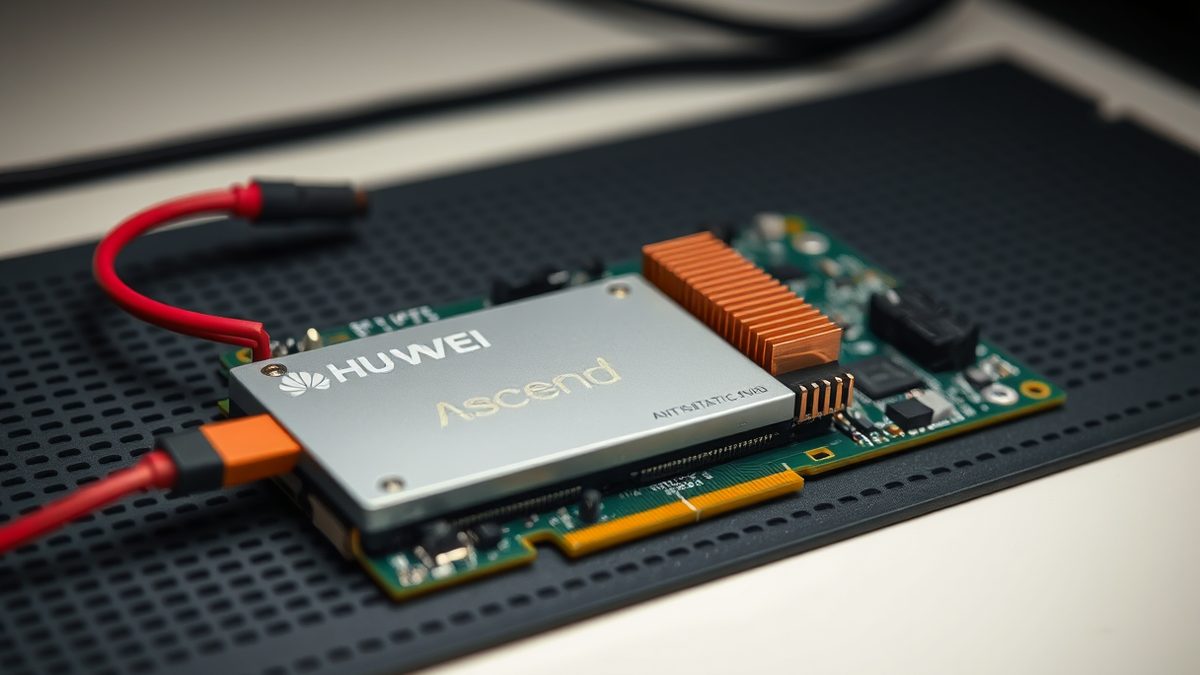
Bloomberg reported on 28 September that Beijing has begun requiring direct relatives of certain AI and chip executives to obtain approval before going abroad, even for short trips, according to people familiar with the matter. Business Standard carried the report the same day. It is not a chip or a model. It is a family rule.
Bloomberg's sources say the restriction extends to spouses and children of founders and heads of strategically important AI firms. Government departments have already notified several people that family travel needs clearance. The Ministry of Industry and Information Technology did not respond to a faxed request for comment, the report says. It is not clear whether every family in the affected category falls under the new strictures. This is an extension of a policy that already existed. Bloomberg News reported in May that China had restricted foreign travel for top AI professionals at private firms including Alibaba and DeepSeek. What is new is the perimeter: the family, not just the employee.
The hardware side moved first
On Wednesday, 30 September, DeepSeek open-sourced six software modules tailored for Huawei's Ascend AI chips, according to the South China Morning Post. The Hangzhou-based company said the release aims to build what it called an independent and controllable software ecosystem for GPUs, mirroring its earlier open-source tools for Nvidia hardware.
Among the modules is an Ascend-compatible version of TileLang, a language for writing high-performance kernels. TileLang lists Nvidia as its primary back end; its GitHub page now says it officially supports Huawei's Ascend 950 accelerators, with native code generation, automatic scheduling and synchronisation. That is a software play, and it is the kind of thing export controls are poorly designed to stop. Hardware is harder. Nvidia and AMD have been lobbying the White House to soften China-related chip restrictions in a defence bill, according to Politico and Benzinga reports from 29 September, and the ASML chief executive has argued that restrictions on China will accelerate Huawei's own development, Zamin.uz reported the same day.
Open-source platforms as sovereignty infrastructure
Rest of World reported on 30 September that Chinese developers are building domestic alternatives to Hugging Face, which Beijing blocked in 2023. Alibaba launched ModelScope in 2022; it now hosts more than 170,000 models. OSChina launched MoArk in 2023, serving about 20,000 models.
Not everyone is able to use a VPN all the time, OSChina chief executive Xu Yong told Rest of World, adding that in the AI era China is developing an independent ecosystem faster than in the internet era.
Rest of World also notes that Nvidia announced in September it was acquiring Hugging Face for $12.9 billion. The same outlet reports that Beijing tolerates VPN workarounds on the US platform because total isolation would starve its domestic AI industry of global connections. That tension, between sealing the border and staying at the frontier, is the actual policy.
What the demand side says
China's NEV retail sales fell 20% year-on-year in the first 27 days of September, CnEVPost reported on 30 September, citing China Passenger Car Association data. Overall passenger car retail sales fell 29%. NEVs still accounted for 65.7% of passenger car retail sales, and the year-to-date NEV figure of 7.5 million units is down 13%. The CPCA attributed part of the decline to a high comparison base created by a subsidy-driven buying rush last September.
Charging infrastructure tells the opposite story. Electrek reported on 30 September that Geely's 2,250kW chargers are already in service in five cities: Hangzhou, Shanghai, Ningbo, Jiaxing and Xi'an, with 15,000 sites planned by the end of next year. EVgo's 750kW system in the US, announced the same week, has slipped from 2026 to 2027.
Beijing is also applying pressure through the courts and through capital. The Justice Department and FBI announced on 26 August the seizure of two hacking platforms, QScan and QTRouter, which court documents in the Southern District of California link to a PRC state-sponsored group called QTFY, employed by Nanjing Xinjiuwei Network Technology Company. The listed targets include NASA, the Federal Reserve, the Department of Energy and the US Senate.
On the capital side, the SCMP reported on 30 September that Suzhou Dongshan Precision Manufacturing, a printed circuit board maker, has cleared its Hong Kong listing hearing and won China Securities Regulatory Commission approval to issue up to 234 million shares, aiming to raise up to $3 billion, according to people familiar with the matter. Dongshan makes PCBs, optical transceivers and precision components.
Analyst firm Omdia set out its 2027 outlook on 30 September, arguing that digital sovereignty, supply chain disruption, AI monetisation and physical AI will define the next phase. It says more than 100 countries now pursue digital sovereignty initiatives. The Chinese version of that push is now visible in three places at once: a model company writing tools for domestic silicon, a family travel rule, and an IPO pipeline feeding Hong Kong.
Whether the curbs work is a separate question. The dossier offers one data point worth holding onto: analyst David Cheng, writing after a week in Beijing and Shanghai, put youth unemployment at 17.9% in July and July retail sales growth at 0.6% year-on-year against an expected 1.5%. His read is that AI is the one sector the state has decided must work.
Sources
12- 01China broadens travel curbs to encompass family of top AI talentEN
- 02China's DeepSeek open-sources tools to help Huawei chips supplant Nvidia in AIEN
- 03The open-source AI platforms vying to become China's Hugging FaceEN
- 04China NEV retail sales fall 20% in first 27 days of September as decline deepensEN
- 05China's 2,250kW chargers are already in service, while US thinks about 750kW next yearEN
- 06Justice Department and FBI Seize Platforms Operated and Used by China State-Sponsored HackersEN
- 07Mainland China's PCB giant wins Hong Kong approval for planned US$3b listing: sourcesEN
- 08Four forces set to reshape technology in 2027 - OmdiaEN
- 09Involution Without Export Is Wasted EffortEN
- 10Goodbye, 'China Plus One': The Real Change in US China PolicyEN
- 11Apple leads China smartphone sales after launch of iPhone 18 Pro. Can the momentum last?EN
- 12Who we become when we talk to machinesEN
All figures and quotations in this text come from the sources listed below.
Content prepared by the editorial team with AI assistance.
Dr. Amara Patel
Comments
0- No comments yet — be the first.