Delhi Cut Grid Losses From 50% to 5%, but Europe's Truck and Charging Math Is Shifting
Delhi's power distribution overhaul cut losses from about 50 percent to 5 percent, IEEE Spectrum reported on 29 September, as new analysis from Transport & Environment argues electric trucks are already the cheapest option in six of nine major EU markets.
 Dr. Amara PatelEconomy, business and world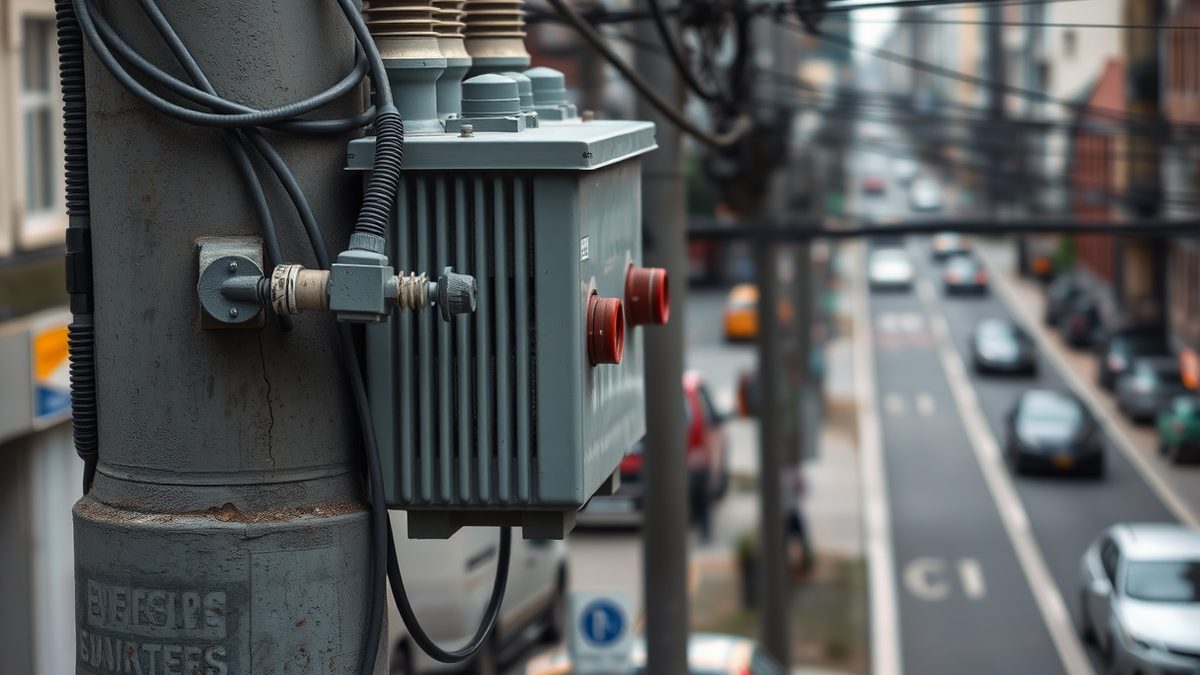
Delhi's turnaround is the headline number of the week. IEEE Spectrum reported on 29 September that the Indian capital reduced electricity losses from roughly 50 percent to 5 percent. The fix took years and involved metering, billing discipline and political will. The article describes the lived reality of the starting point: in January 2002, blackouts hit a New Delhi household three times in one week, knocking out lights, the mixer and the kettle before a school run.
That story matters beyond India. Grid losses are the quiet tax on every electrification plan. If a utility loses half its power before it reaches a customer, the generation, the cables and the investment all get wasted. Delhi's shift to 5 percent changes the arithmetic of who pays.
The same week brought a harder commercial calculation for road freight. Transport & Environment published a total cost of ownership analysis, covered by CleanTechnica on 28 September, finding that in six of nine major EU markets electric trucks are already the cheapest financial choice. Those six markets account for 46 percent of all new heavy trucks sold in the EU. The savings are not marginal. According to T&E's figures, five-year savings reach €100,000 in the Netherlands, €85,000 in Germany and €69,000 in Denmark, with payback after two years. Operating a Chinese-built truck pushes five-year savings up to €128,000 in the Netherlands. T&E attributes the shift to EU truck CO2 targets, falling vehicle prices and national measures such as purchase subsidies and lower road tolls.
Charging remains the weak link
Where the truck math gets tested is the plug. In the Philippines, the 14th Philippine Electric Vehicle Summit opens in October against a statutory target of 311,700 electric vehicles and 7,300 dedicated charging stations by 2028, under the Electric Vehicle Industry Development Act. Raymond Tribdino wrote in a CleanTechnica op-ed on 29 September that the charging count as of mid-2026 was the fragile part of the roadmap. Volkswagen is meanwhile preparing its own volume bet. CleanTechnica reported on 29 September that the ID. Tiguan will premiere in early October and reach markets in early 2027, succeeding the ID.4 and ID.5. Volkswagen brand CEO Thomas Schäfer said in the release that more than 8.3 million Tiguan vehicles produced demonstrate the strength of the nameplate. The company says ID.4 and ID.5 deliveries passed 950,000 units since 2021.
Electrification also changes how much energy the system has to move. Hannah Ritchie wrote on 29 September that a post-transition system modelled on Oxford professor Nick Eyre's numbers would see global final energy demand fall from 416 exajoules today to 247 EJ, even as electricity demand rises from 110 EJ to 189 EJ. The grid gets busier while the total energy bill gets smaller.
Investors are watching the hardware that carries the load. Tesla was granted US patent 12,746,987 B1 on 29 September for an "Electric Fan Car" using four ducted fans in the rear diffuser, Electrek reported, with an active rear wing patent already in hand. Whether that ends up on a Roadster or nowhere, it is a reminder that performance engineering still consumes engineering attention.
Not every grid story is about generation. Dutch police confirmed the arrest of a 24-year-old Amsterdam man in the ShinyHunters investigation, The Hacker News reported on 29 September, with the Rotterdam District Court appearance set for that day. Security journalist Brian Krebs and DataBreaches.Net identified him as Pepijn van der Stap; ShinyHunters denied any association with him.
Meanwhile, SK pharmteco plans to spend at least $200 million over five years to expand its development and manufacturing infrastructure, Endpoints News reported on 29 September. Industrial electrification and grid capacity are now the same conversation, whether the load comes from a factory, a truck depot or a data centre.
Sources
8- 01How Delhi cut electricity loss from 50 to 5 percentEN
- 02Are Electric Trucks Cheaper To Operate Than Diesel?EN
- 03Op-Ed: Upcoming Philippine Electric Vehicle Summit is an Audit of National PolicyEN
- 04Electric Future, Established Name: The New ID. Tiguan Premieres in OctoberEN
- 05Electrification efficiency: The world will need less energy after the transitionEN
- 06Tesla patents 'Electric Fan Car' with 4 ducted fans ahead of Roadster revealEN
- 07Dutch Police Arrest 24-Year-Old Amsterdam Man in ShinyHunters InvestigationEN
- 08SK pharmteco unveils $200M+ investment to expand CDMO capabilitiesEN
All figures and quotations in this text come from the sources listed below.
Content prepared by the editorial team with AI assistance.
Dr. Amara Patel
Comments
0- No comments yet — be the first.