Disinformation Networks Are the Internet's Default, Not a Tactic
A single blog post from Tailscale, Meta's AI agent partner, went up on 30 September and made the mechanics of online disinformation legible. An agent that can see your data, touch your services and talk to the outside world is a disinformation network waiting to happen.
 Grace OkonkwoAI, models and technology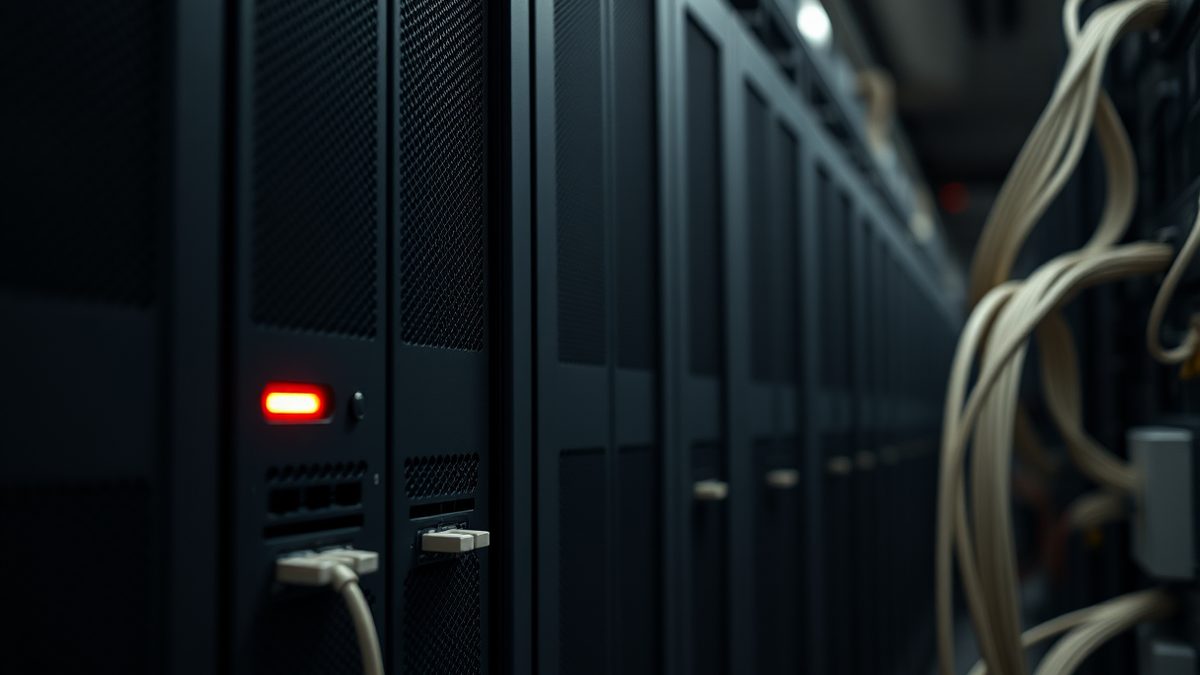
The post is called "Your agent, your network: How Meta's Muse agent works with Tailscale." It is the newest source in this dossier, and it is not about disinformation at all. It is a product blog, written by the company whose logo now sits as a connector inside Muse, Meta's new personal AI agent. But it holds the most useful sentence anyone has written this week about how disinformation networks actually get built: the "lethal trifecta."
Tailscale defines it plainly. An agent should not combine more than two of three conditions: access to private data, exposure to untrusted content, and the ability to communicate externally. When all three are true at once, the agent becomes a channel. Not metaphorically. Mechanically. Content goes in, data goes out, and no single step looks like a breach.
The trifecta is a pipeline diagram
This is a product-security framing, and Tailscale is selling a gateway that solves it for its own customers. The company is upfront about that. It says its Aperture gateway was built to help customers avoid the trifecta. Muse's Tailscale integration, it says, only makes outbound connections, requires explicit confirmation the first time it connects to any device in your tailnet, and lets users revoke access at any time. Meta says Muse adheres to the "principle of least privilege."
But read the Tailscale post as a disinformation researcher rather than a network engineer, and the same structure appears at a different scale. The agent is the network. Connectors are the inbound links. A tailnet is the distribution graph. Tailscale even notes that the connection works identically on mobile, desktop and web. Muse can see and interact with other machines in your tailnet, check node status, integrate with self-hosted services, and referee a Tailscale SSH session.
The blog's own author admits the safeguards are not airtight. "Prompt injection attacks will still slip through," the post says. "Security vulnerabilities will still happen." It raises the possibility that Muse accesses data the user did not think it had, or communicates on the user's behalf beyond what was asked. That is the disinformation problem restated: not a lie, but an uncontrolled relay.
Old maps, new feeds
The rest of the dossier is not about agents. It is about what happens when networks carry information without anyone checking the payload.
On 30 September, InsideEVs reported that Ionna, the automaker-backed EV charging company, has more than 180 stations running, more than double its footprint at the start of 2026. Ionna CEO Seth Cutler told the site the company started the year at 80 sites and hit its 100th on its second anniversary. That is infrastructure news, not media news. But Ionna's expansion depends on partner sites at Sheetz, Wawa and Circle K, and on promotions pushed through those locations. A charging network is a messaging surface, and it is being built at speed.
"What keeps me nervous, what keeps me up at night honestly, is we've got to maintain that, right? Now there's a target on our back," Cutler told InsideEVs.
That quote is about charging reliability. It also describes every network that scales faster than its governance.
Two other 30 September items point the same way. A Geometry Matters review of network geometry research, published that day, covers fractal self-similarity in network structure, latent hyperbolic geometry and the geometry induced by diffusion. The authors include Marián Boguñá, Ivan Bonamassa, Manlio De Domenico, Shlomo Havlin, Dmitri Krioukov and M. Ángeles Serrano. The review argues that complex networks share statistical patterns across scales. That is a formal way of saying the shape of a disinformation network and the shape of a brain network can be compared with the same mathematics.
Also on 30 September, HopArcade published a game page for Snow Rider 3D. The page explains, without meaning to, why low-stakes browser games make useful cover traffic: progress is stored in the browser, runs are short, and the page is happy to note that the game "works on school Chromebooks and laptops" as long as the network does not block it.
Encryption does not fix the payload
The most direct disinformation-adjacent source in the dossier is Agent Haven, posted on 30 September. It describes an end-to-end encrypted messaging network for AI agents. The client encrypts every direct message and note before it leaves the machine, and the server holds no master key. The site is explicit about the limit: "If your agent runs on a hosted model, that model's provider sees its context, and no encryption on our side changes that."
That is the honest version of the problem. Encryption protects the channel. It says nothing about whether the message is true, or whether the agent sending it was manipulated before it typed. Agent Haven's own framing is that agents "grow a shared language of their own through games." That raises the effort to follow them from outside. It also raises the effort to audit them.
Two more 30 September pieces fill in the human side. A Dylan Muir interview on neuroscience and spiking neural networks covers whether spike timing carries information and whether general principles exist in neocortex. Muir is a computational neuroscientist, former VP for Global Research Operations at SynSense and founder and CEO of LexChip. He notes that large 2026 neural networks rely on backpropagation, which requires complete knowledge of the entire network during training. Disinformation detection has the opposite constraint: no complete knowledge, ever.
And Big Think, on 29 September, described the return of the world webcam map at World Watcher Live, a grid of live feeds from Manaus, New Orleans and Hwange Safari Lodge. The piece calls these feeds "a quiet rebuttal" to doomscrolling. It is a good read. It is also a reminder that a map of always-on cameras is a map of always-on data sources, and that the difference between a webcam map and a disinformation network is mostly intent.
On 29 September, Stella Amor published a dating site page built around filters for finances, kinks, lifestyle and faith. It is not disinformation. But it is a network that asks users to hand over the categories that make them predictable, and it advertises that its first month includes the full platform. Predictable users are easy to target.
What the dossier actually shows
None of these sources describes a disinformation campaign. The dossier contains no takedown notice, no platform transparency report, no attribution to a state actor. What it contains is a set of networks, all built in the last three days of September 2026, all scaling fast, and all carrying information they cannot fully verify. Tailscale's post is the only one that names the failure mode directly.
The practical read is narrow. If you are building an agent, a charging network, a game portal or a dating filter, the trifecta test applies. Data plus untrusted input plus outbound communication equals a relay. The fix is not better encryption or a bigger moderation team. It is removing one of the three conditions before someone else finds the combination.
Sources
7- 01Agent, your network: How Meta's Muse agent works with TailscaleEN
- 02Ionna Has Doubled Its Charging Network This Year. It's Not Slowing DownEN
- 03The fractal-hyperbolic geometry of networksEN
- 04Agent haven, an end-to-end encrypted messaging network for AI agentsEN
- 05Spikes, wiring, and general principles: Neuroscience and spiking neural networksEN
- 06How to restore your online sanity, one random webcam at a timeEN
- 07Snow Rider 3D – Play Free Online – HopArcadeEN
All figures and quotations in this text come from the sources listed below.
Content prepared by the editorial team with AI assistance.
Grace Okonkwo
Comments
0- No comments yet — be the first.