Superfluid qubit design, a DOE roadmap and a universal gate set
Researchers at the University of Surrey say they have designed a qubit built from superfluid helium that their calculations suggest could cut error rates roughly 100 times below conventional superconducting qubits. The study appeared in npj Quantum Information and was publicised by ScienceDaily on 1 October.
 Rachel NwosuAI, models and technology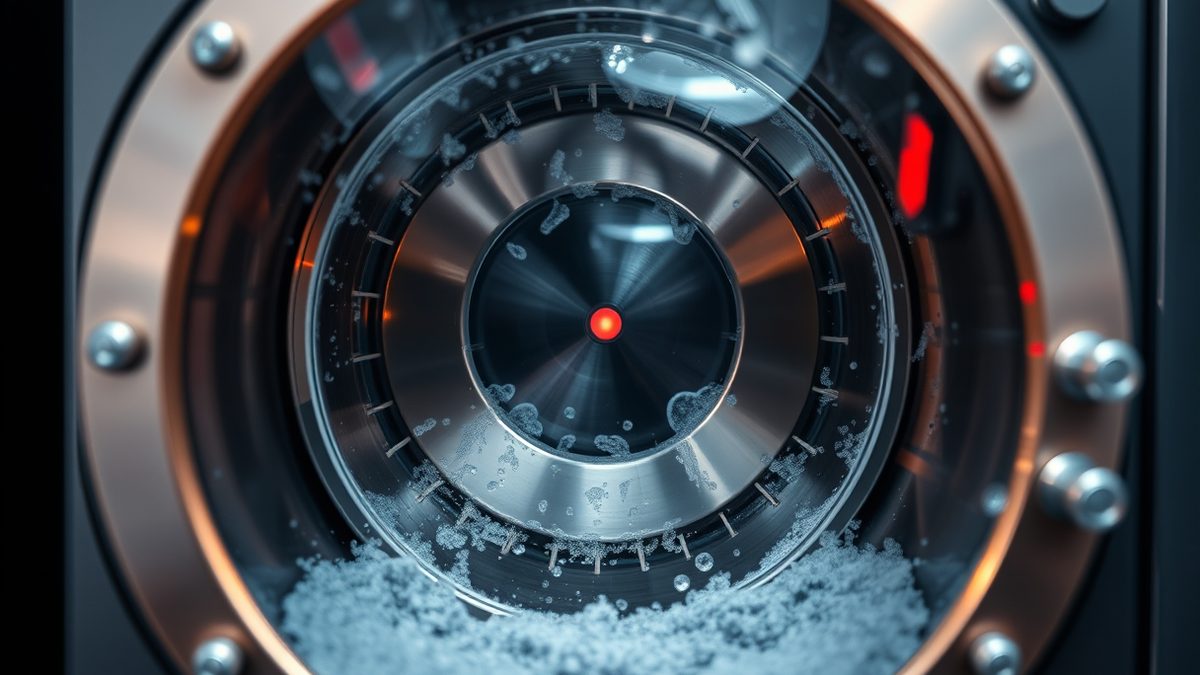
The proposal, called the Superfluid Helium Oscillator Quantum device, or SHOQ, uses charge-neutral superfluid helium-3. Because the helium carries no electric charge, the design is described as naturally shielded from some of the electromagnetic noise that disturbs superconducting circuits. The team's paper in npj Quantum Information states this is the first reported qubit design based on a superfluid. ScienceDaily carried the summary on 1 October.
"We are not the first to think about the individual components behind this idea, but what we have done for the first time is bring them together in a microfluidic device and work out the specific details that could enable the device to function as a qubit," said Priya Sharma, a Daphne Jackson Fellow in Hybrid Quantum Systems at Surrey and lead author of the study, according to ScienceDaily's write-up.
Sharma added that the maths suggests it should work and that the next step is a prototype. No prototype has been built. That distinction matters: the 100x figure is a calculation, not a measurement, and the dossier contains no independent replication of it.
Three results in eight days, and none of them agree on the path
The Surrey design is one of several quantum computing results in the dossier clustered between 23 September and 1 October. On 25 September, ScienceDaily reported work from the University of Chicago Pritzker School of Molecular Engineering, Harvard, Stony Brook University and Quantinuum that used 54 qubits on Quantinuum's H2 processor to demonstrate a universal gate set built from non-Abelian anyons. The paper appeared in Nature. The team combined braiding and fusion, operations that braiding alone could not supply.
Henrik Dreyer, managing director and scientific lead at Quantinuum's Munich office and a co-author, called non-Abelian codes "a dark horse in the race to quantum error correction" in comments carried by ScienceDaily. He said the work shows a universal gate set in a non-Abelian code for the first time, and that fault-tolerant computation can in principle proceed without magic state distillation or cultivation. Those two steps are the most expensive operations in standard error correction codes, Dreyer said.
Ruben Verresen, an assistant professor at UChicago PME and co-author, described the approach in blunter terms: "We demonstrated a so-called universal gate set, meaning that if you store information in these emergent versions of quarks, and you move them around, you can do any quantum computation you might want to do." The same ScienceDaily report dates to 25 September.
Then on 30 September, Caltech published results in Nature that measured energy levels predicted by the Ising and tricritical Ising conformal field theories, ratios theorists had calculated for roughly 40 years without direct experimental confirmation. Jason Alicea, William K. Davis Professor of Theoretical Physics at Caltech, said the energy levels "encode profound information about the theories themselves." The work used laser-trapped neutral atoms as a quantum simulator, not a general-purpose quantum computer.
Xiangkai Sun, a graduate student in the Endres lab and co-lead author, framed the shift plainly: "Over the past 10 years, people have been learning to control these systems, and now we are at the point where we can use them to do fundamental physics research." ScienceDaily published that account on 30 September.
Add Kyoto University and Hiroshima University, whose researchers demonstrated an entangled measurement that identifies 3-photon W states, a capability that had been missing since the equivalent measurement for GHZ states was proposed more than 25 years ago. Corresponding author Shigeki Takeuchi said the team had "finally obtained the entangled measurement for the W state as well, with genuine experimental demonstration for 3-photon W states." ScienceDaily reported it on 29 September.
Washington wants utility, not qubit counts
The policy layer moved too. Fermilab published the SCAC Quantum Committee Report on 27 September, setting out a milestone-driven path toward demonstrating scientific utility from quantum computing, with a stated target of a scientifically relevant, error-corrected machine by 2028 and a long-term vision for a dedicated Quantum Computing User Facility. Anna Grassellino, Fermilab chief technology officer, chaired the subcommittee; Supratik Guha of the University of Chicago's Pritzker School of Molecular Engineering was vice chair. Fermilab's note says the report drew on input from hundreds of contributors across national laboratories, academia, industry and federal agencies.
The report argues that success should be measured by scientific utility rather than hardware benchmarks. Its stated applications include predicting molecular properties for drug discovery, designing catalysts, simulating fusion-relevant materials and modelling early-universe physics. The Department of Energy's pitch is integration: quantum processors wired into hybrid classical-quantum workflows alongside its high-performance computing centres and existing user facilities.
Between the physics and the policy sits a less glamorous problem. A preprint posted to arXiv on 28 September by Hoang Pham Cong and Ho Viet Duc Luong defines the decision value of perception compute and finds that better perception does not reliably produce better downstream decisions. Testing deployed monocular geometry on KITTI and nuScenes, the authors report that 34 to 54 percent of escalations that change downstream loss make it worse. Choosing among deployable signals by missed-object perception gain rather than decision value reduced realised test decision gain by 7.4 percent of the all-cheap loss on average, they write. The paper is a machine learning result, not a quantum one, but it lands on the same question the DOE roadmap raises: what counts as a useful output.
Commercial and application layers keep moving
On 1 October, Q/C Technologies said it would collaborate with the Center for Integrated Nanotechnologies at Sandia National Laboratories on nanophotonic components for its optical processing unit aimed at AI inference. HPCwire carried the announcement the same day. Joshua Silverman, the company's executive chairman, said access to CINT's photonics expertise was "an important step" as the company develops its platform. The stated project goals include nonlinear operations, memory, precision, optical loss and integration with electronic systems, which is a list of unsolved problems rather than a product specification.
Quantum Space, meanwhile, executed a spacecraft processing work order with All Points Logistics for its Prime mission, SpaceNews reported on 30 September. Prime is a pathfinder for the company's Ranger and Scout platform, has completed a Systems Integration Review, and targets launch in the second half of 2027 from Vandenberg Space Force Base. Kerry Wisnosky, president of Quantum Space, said the agreement covers clean-room facilities, propellant servicing, launch-site safety and operational reviews, ground support and transport to the launch vehicle integration facility.
Two older items in the dossier are worth keeping as background rather than news. Google DeepMind described on 23 September how it will bring persistent, encrypted server-side memory to its Private AI Compute platform, with cryptographic keys held on user devices. And Quanta Magazine reported on 23 September on work by Princeton chemist Gregory Scholes suggesting that complex classical networks can mathematically mimic quantum behaviour without being quantum, a claim that sits awkwardly beside the hardware milestones above.
Across the eight most recent sources, the pattern is consistent: designs, simulations and gate sets are advancing faster than any of them can be shown to beat an existing machine at a problem worth solving. Surrey's 100x figure is the most striking number of the week. It is also the least tested.
Sources
11- 01This new qubit could be 100 times less error-prone in superfluid quantum computer breakthroughEN
- 02Quantum computing's "dark horse" just proved it can go universalEN
- 03Caltech physicists finally measure a quantum energy ladder predicted 40 years agoEN
- 04Quantum teleportation breakthrough: Scientists crack a 25-year entanglement challengeEN
- 05DOE releases national quantum computing roadmap following field-wide effort led by SCAC subcommitteeEN
- 06Q/C Technologies Collaborates with Sandia on Optical Computing for AI InferenceEN
- 07Quantum Space Executes Launch Processing Agreement with All Points Logistics for Prime MissionEN
- 08The Decision Value of Perception ComputeEN
- 09Advancing Private AI Compute with secure, server-side memoryEN
- 10Biology Might Not Be Quantum, but Its Math Is QuantumlikeEN
- 11AI-Defined Vehicles Push Compute, Memory, And Validation LimitsEN
All figures and quotations in this text come from the sources listed below.
Content prepared by the editorial team with AI assistance.
Rachel Nwosu
Comments
0- No comments yet — be the first.