Shopify Canvas Puts an AI Chat at the Centre of Store Building
Shopify launched Canvas on 1 October, a site-building tool that lets merchants assemble a store by chatting with the company's AI agent, Sidekick, rather than editing a theme by hand.
 Rachel NwosuAI, models and technology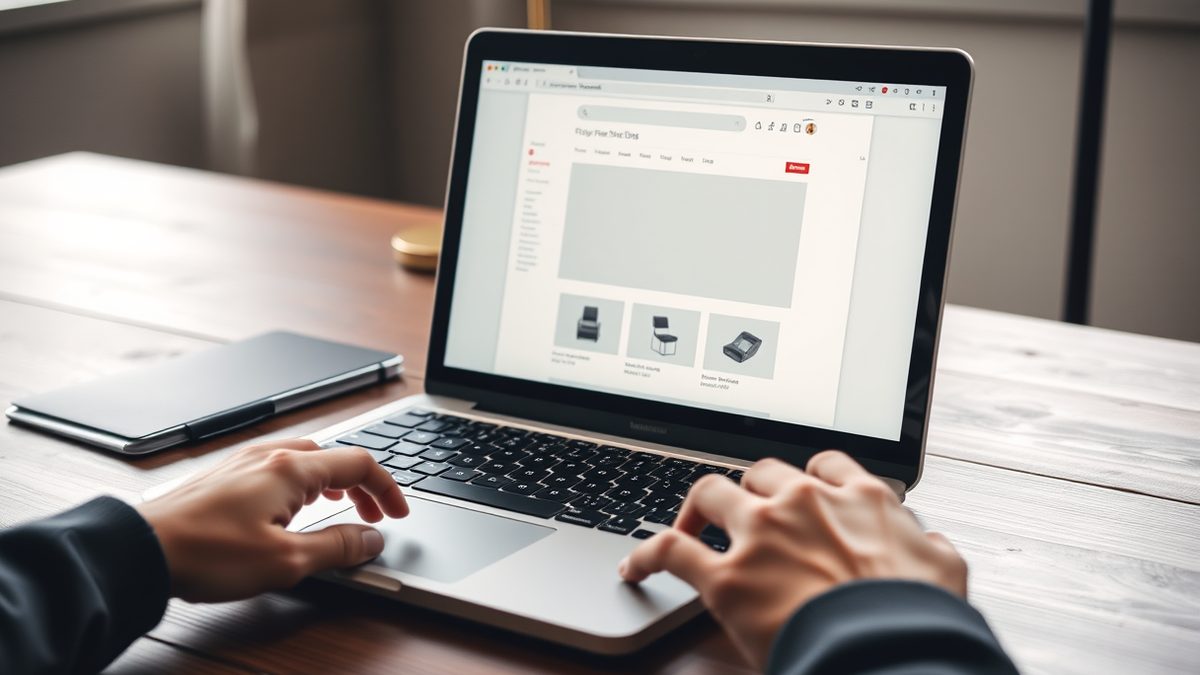
The tool, announced by the company on Thursday, drops merchants into a conversation with Sidekick, the assistant Shopify has already used for writing code, building apps and customising themes. As the agent makes changes, Canvas renders the store's real code in place, according to TechCrunch, so merchants can test interactivity and animation and check how pages look at different screen sizes instead of judging a static mock-up.
Shopify simplified its theme architecture for the launch so Sidekick can read and rewrite a store's structure, logic and design. Sidekick also takes screenshots of its own work so it can see what the merchant sees as the site updates. Merchants can still click individual elements to change them directly, but the product's default path is the chat window.
Canvas is far from finished. Third-party theme support, app blocks and extensions, markets, translations, rollouts and theme updates are all missing from the initial release, and the tool is desktop-only. Shopify told TechCrunch those gaps will close over time.
The launch lands in a crowded category. Wix, Squarespace, Webflow and Framer all ship AI site builders, and vibe-coding platforms such as Lovable and Replit target much the same promise: a working site without a developer. Canvas joins that list with one distinction, that the preview is the production code rather than a rendering of it.
Attackers get faster too
The same week, security researchers published a case that shows what happens when agents act without a human at the keyboard. The Dutch Institute for Vulnerability Disclosure said its own network was breached through a chain of two zero-days in Zammad, an open-source helpdesk platform. The flaws, tracked as CVE-2026-102489 and CVE-2026-102490, allowed session hijacking, remote code execution and escalation from a Zammad user to root, BleepingComputer reported on 30 September.
DIVD described the intrusion as driven by an AI agent that chose its own next steps. Because the agent left explanations of its decisions behind, the nonprofit could reconstruct the sequence. Network segmentation limited the damage, the investigation is ongoing, and DIVD said it would publish more on 1 October. Its advice to Zammad users is blunt: upgrade to version 7 or take the instance offline.
Zammad says on its website that more than 2,000 customers and 55,000 users run the software, among them De'Longhi, Amnesty International and NextCloud.
Vendors are moving to answer that class of threat. GTT Communications launched GTT Defense Halo on 29 September, an AI-native network defence platform it says runs as a dedicated instance per customer and generates remediation plans before attackers find the same flaws. GTT's announcement cites an open letter published in late August and signed by more than 100 technology, cybersecurity and financial services companies warning that AI-enabled attacks will spread and that defenders have a narrow window to prepare.
Buyers, meanwhile, are not fully convinced by their suppliers. Research published by Arelion on 28 September found that 58% of senior business leaders had delayed, scaled back or added safeguards around strategic initiatives in the past two years because of concerns about a network provider. AI and data-driven projects were hit hardest, cited by 49% of those who reported disruption, followed by security and compliance programmes at 44%. Nearly all respondents, 93%, said they largely or completely trust their current provider, but only 15% said they had complete confidence in that provider's ability to detect and resolve a serious network incident quickly.
Microsoft's account of NeedyMantis, published on 28 September, describes malware that keeps long-term access to networks that were already breached. It has appeared in a small number of targeted intrusions at telecommunications organisations, universities, medical nonprofits, intergovernmental organisations and government contractors, and its use goes back to at least October 2025. Microsoft found it while following indicators from Kaspersky's investigation into a supply chain attack on DAEMON Tools, in which signed installers carried malicious code from 8 April 2026 until the developer replaced them on 5 May. The activity is tracked as Storm-3069, which Microsoft assesses originates in China, though it has not tied the group to a Chinese nation-state actor.
Two five-week training cohorts from InfoQ, one on AI security and privacy engineering starting 26 October and one on AI-assisted engineering starting 19 October, point at the same skills gap; facilitators describe building context for coding agents and limiting their permissions before wrapping checks around them. On the research side, three arXiv papers submitted on 28 September cover sampling-invariant embeddings for organised signal sets, neural networks for spectral optimisation, and transversal pooling networks for affine group actions.
Sources
10- 01Shopify debuts Canvas, a way to build online stores by chatting with AIEN
- 02DIVD says Zammad zero-days enabled AI-driven network breachEN
- 03GTT launches AI-native network defense platformEN
- 04Trust in network providers is holding back AI and digital transformation initiatives – ArelionEN
- 05Hackers Use NeedyMantis to Maintain Long-Term Access in Breached NetworksEN
- 06InfoQ Online Cohorts Address AI Security and Coding Agent VerificationEN
- 07Graph neural networks for sampling-invariant embeddings of organized signal setsEN
- 08Neural networks for spectral optimizationEN
- 09Transversal Pooling Neural NetworksEN
- 10Ionna Has Doubled Its Charging Network This Year. It's Not Slowing DownEN
All figures and quotations in this text come from the sources listed below.
Content prepared by the editorial team with AI assistance.
Rachel Nwosu
Comments
0- No comments yet — be the first.