EU backs Arctic cable to Greenland as hacked freezers expose OT risk
The European Union backs a Pan-Arctic subsea cable linking Greenland directly to Europe, TechRadar reported on 3 November 2026. The route would offer an alternative to Red Sea cables carrying over 90% of Europe-Asia communications, according to TeleGeography.
 Dr. Amara PatelEconomy, business and world
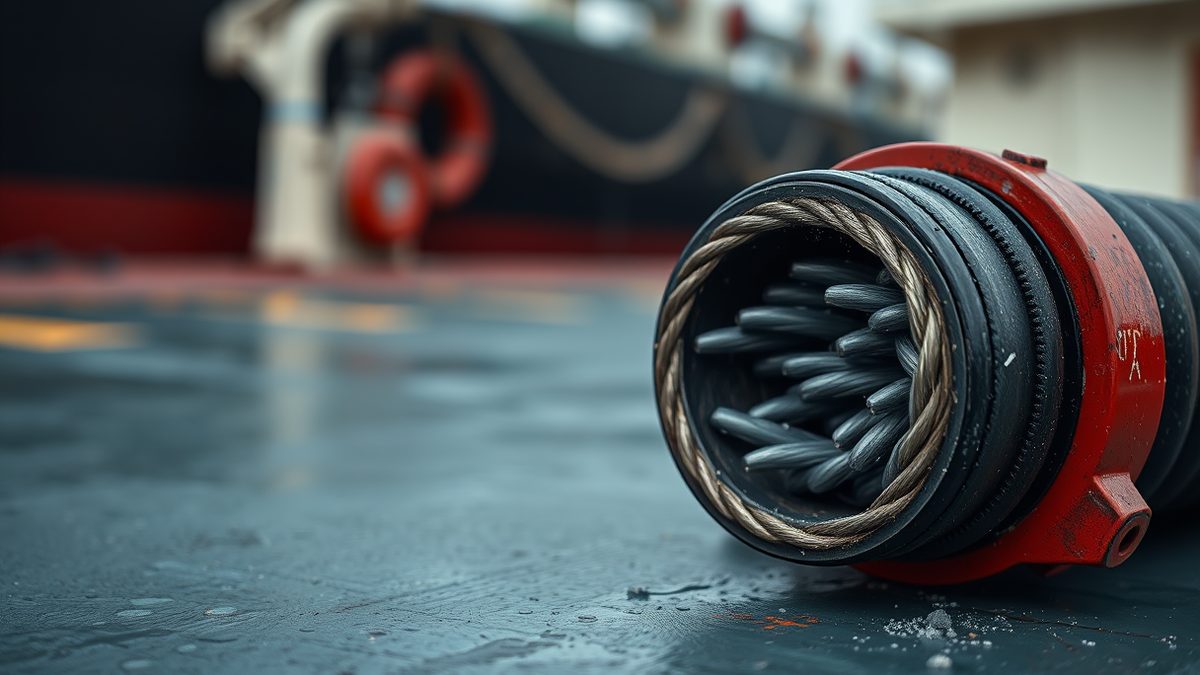
Brussels backs a cable that skips the US
A European Commission joint communication published on 20 October 2026 names the Pan-Arctic Cable as a European Union flagship project. The document sets out "a sovereign, secure and resilient submarine cable connection linking Greenland directly to the EU".
The proposed route would run from Europe to Greenland. It could later extend to Canada, with Japan and South Korea as a longer-term destination. That would give European carriers a path to Asia that does not cross the United States. The politics behind it are recent. A trilateral security agreement between the United States, Greenland and Denmark in September 2026 settled repeated attempts by the Trump administration to claim the territory. It also expanded US military access. Relations with European and Canadian allies have grown strained. Trump initiated trade wars and took an increasingly pro-Russia stance on Ukraine.
Why the route matters
More than 90% of communications between Europe and Asia run through undersea cables in the Red Sea, according to TeleGeography. Houthi forces have fired missiles and drones at commercial ships in the Bab al-Mandeb Strait and the wider Red Sea.
Elisabeth Braw, a senior fellow at the Atlantic Council, told Ars Technica the link "would have seemed like not a particularly commercially attractive proposition" five years ago. She said the fact it is under consideration is "very much on trend". The EU has committed $119 million (107 million euros) to Greenland's secure communications infrastructure and the cable project.
For network planners, that leaves a promise without a schedule.
A survey ship and a cable
The physical risk is not hypothetical. Tom's Hardware reported on 3 November 2026 that a Chinese survey ship loitering near an undersea cable ignored Philippine demands to withdraw. Europe's own cable map has similar pressure points. Maintaining Red Sea routes has become riskier as the Yemeni government and the Houthi faction fight.
The same weakness on land
On land, connected equipment that keeps food cold has already turned against its owners. The Guardian reported on 2 November 2026 that retailers in at least seven European countries found refrigeration systems pushed overnight to as high as 50C (122F). Several companies confirmed hackers had hit them.
That followed an attack in France last month. Hackers seized cooling units in as many as 700 supermarkets and raised temperatures to 50C, causing fires and food losses estimated in the tens of millions of euros. The UK's National Cyber Security Centre said it was working with affected companies and that the national impact was minimal. Paul Chichester, the agency's director of operations, said the attacks were not AI-enabled and used vulnerabilities that had been "out there for a long period of time". Richard Horne, the NCSC's chief executive, called the fridge incidents the "foothills" of a larger cyberthreat.
What is still missing
Two gaps stand out. Neither the cable plan nor the freezer response has a published timetable.
The French attack involved legacy technology connected to the internet with default passwords, The Guardian reported. Horne said there are "so many vulnerabilities out there that ... you could say are waiting to be exploited". The cable plan answers a strategic question about routes through the Arctic. The freezer attacks answer a more mundane one about unpatched vulnerabilities and exposed devices.
Sources
28- 01EU backs new Arctic subsea cable linking Greenland directly to EuropeEN
- 02As US ties fray, Europe plans first undersea cable link to GreenlandEN
- 03Chinese survey ship loitering near undersea cable ignores Philippine demands to withdrawEN
- 04Supermarket freezers across Europe hit by second suspected cyber-attackEN
- 05Food suppliers in UK hit by cyber-attacks after freezers targeted in EuropeEN
- 06Bull and Schwarz Digits Sign MOU to Develop European AI InfrastructureEN
- 07 Piero Cipollone: Next-day securities settlement, tokenisation and the transformation of Europe’s financial infrastructureEN
- 08Binance breach puts custody at center of crypto infrastructure tradeEN
- 09 Dimorphos in sight: Europe's Hera probe gets its 1st look at battered space rock (photo) EN
- 10CrowdStrike to shell out nearly $500M for 2 AI security startups as the market for securing agents takes offEN
- 11Tesla cuts FSD’s speed margin from 50% to 10% over the limit in EuropeEN
- 12Russia–Ukraine War and the Fracturing European Security Order: Military Power, Strategic Alliances and the Limits of Diplomacy - https://debuglies.comEN
- 13Hanwha Q-Cells shifts focus to research and development in EuropeEN
- 14OpenAI hires former US Army Secretary Dan Driscoll for national securityEN
- 15Supermarket fridges hit with cyberattacks across Europe — here's what's happeningEN
- 16Bug hunters can now earn up to $172,000 from OpenAI as company ramps up securityEN
- 17Mercedes-Benz Is Giving Up On Its EV Charging Network In EuropeEN
- 18Portuguese AI startup Granter bags €1.6M to expand across EuropeEN
- 19OpenAI hires former U.S. Army Secretary Dan Driscoll for national security roleEN
- 20The ETS Investment Engine: Scaling Europe’s Strategic E-fuel Market for Shipping & AviationEN
- 21Mistral CEO: Europe faces ‘complete trap’ without frontier AIEN
- 22Committee on Security and Defence Ordinary meeting Joint meeting Delegation for relations with the NATO Parliamentary Assembly - ContexteEN
- 23Cellnex signs €375m loan with EIB to support rollout of 5G infrastructureEN
- 24Macronix Builds Hardware Security into NOR Flash Ahead of EU Cyber Resilience ActEN
- 25 Nvidia Brev security breach may have exposed SSH keys used to access customer VMs EN
- 26How Europe’s battery passport could have a big impact on US e-bikesEN
- 27European tech weekly recap: Over €1.3B invested across 60+ dealsEN
- 2830,000-year-old DNA reveals Ice Age Europeans were far more connected than we thoughtEN
All figures and quotations in this text come from the sources listed below.
Content prepared by the editorial team with AI assistance.
Dr. Amara Patel
Comments
0- No comments yet — be the first.