Remains of circular marble monument found around tomb at Jerusalem's Holy Sepulchre
Archaeologists have uncovered fragments of a 20-foot-wide circular marble monument around the rock-cut burial chamber in Jerusalem's Church of the Holy Sepulchre, the Daily Mail reported, offering physical evidence the tomb was singled out and honored in antiquity.
 Sofia MarchettiScience and health
What the monument shows
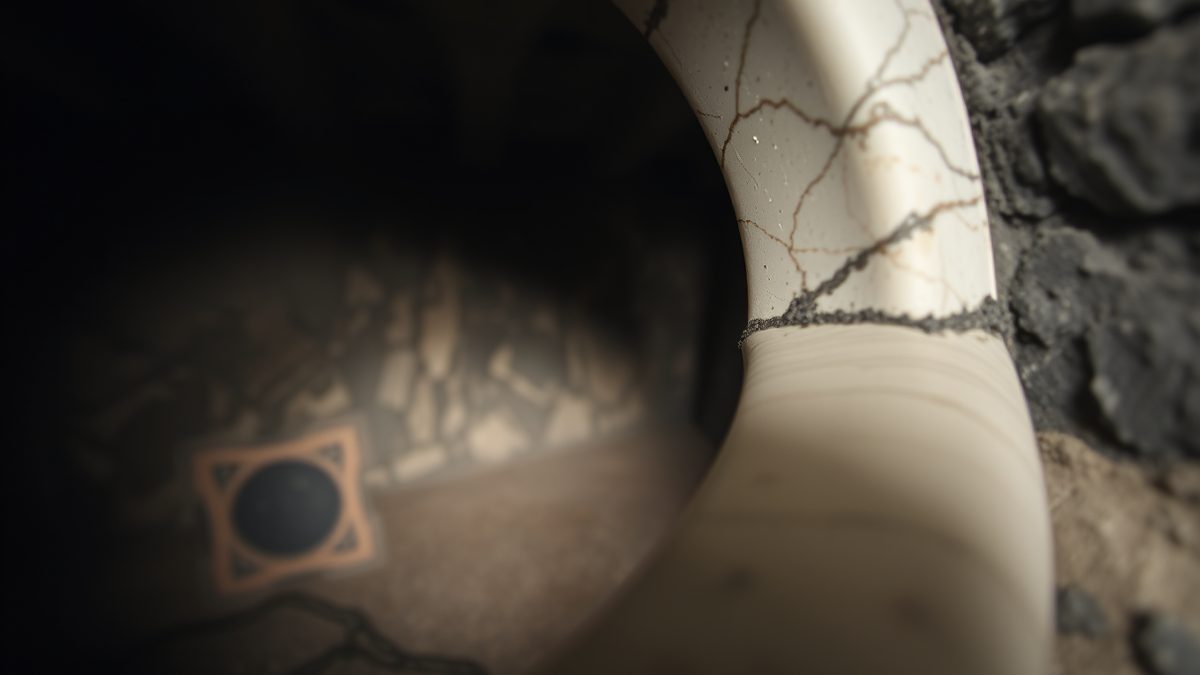
The Daily Mail reported that recycled marble slabs, carefully shaped and joined with mortar, formed a circular platform centered on the burial chamber. Fragments of the structure were found beneath the present-day shrine, and the surviving marble may belong to a later phase of construction. A narrow channel carved into the marble appears designed to carry water around the monument and into a nearby collection system. Researchers described the surviving structure as "the earliest archaeologically documented monument built around the venerated tomb."
Stasolla described the chamber as "the chamber in which tradition recalled the deposition of Christ." The Daily Mail reported that the discovery raises the possibility that the monument was built around this particular tomb because early Christians knew it was Jesus' burial place. The newspaper said that identification may have survived through an ancient chain of memory. "It is nonetheless possible that the memory of this tomb had crystallized within the early community and had been transmitted across generations," Stasolla wrote.
Newsweek reported that the chamber had been singled out for Christian veneration by Constantine's reign, although the evidence does not establish when worshippers first identified it or prove who had been buried there. Marca reported that the team has not discovered an inscription identifying Jesus, nor recovered physical remains that can be attributed to him.
Why the circular shape matters
The monument's circular shape closely matches early depictions of the shrine, leading archaeologists to believe the original fourth-century structure may have followed the same design, the Daily Mail reported. That early monument may also have featured a circle of small columns, an arrangement shown in ancient depictions. Two surviving slabs bear faint traces of decorative patterns that appear to date from after Constantine's reign, suggesting the structure may have been rebuilt or repaired centuries after its original construction, the Daily Mail reported. Stasolla raised the possibility that the surviving marble belonged to restoration work after the Persian attack on Jerusalem in 614 AD. Researchers are examining the mortar to establish when different parts were assembled.
The tomb and its setting
The excavation began in 2022 during restoration of the church floor. Beneath the floor, the team documented an abandoned quarry that later held cultivation plots and rock-cut burials. Some quarry cavities reached depths of about 20 feet before soil filled them, MailOnline reported. An archaeobotanical study examined material from four areas and identified cereals, figs and other cultivated or wild plants, along with olive wood and pollen. Low dry-stone walls divided small plots that held soil.
Greek City Times reported that the quarry dates to the Iron Age, between 1200 and 586 B.C., and that by the time of Jesus the area had become a burial ground with several rock-cut tombs. ThePrint and Marca reported that the site lay outside the city walls during his lifetime. The Daily Mail reported that the original church was dedicated in AD 335 after Roman buildings at the site, traditionally described as a temple to the goddess Venus, were demolished, and that the church attracts an estimated four million visitors a year. Constantine's workers excavated around one tomb to separate it from surrounding graves.
The findings are detailed in a 605-page report on excavations from May 2022 to October 2025, the Daily Mail reported. Newsweek reported that a preliminary report on the 2025 campaign was published in the journal Liber Annuus. Francesca Romana Stasolla of Sapienza University of Rome leads the team.
The dating dispute
ThePrint reported traces of olive trees and grapevines "dating to around 33 AD," the approximate time of Christ's death. Arkeonews reported that radiocarbon dating had not produced such an exact figure and that claims of "olive trees and grapevines dating to AD 33" go further than the published evidence supports. Express reported that radiocarbon results still needed confirmation. Stasolla said the archaeobotanical context placed the remains in the pre-Christian phase, not at a specific year.
What happens next
Geological testing on the marble tombs and mortar is still to come, ThePrint reported. Part of the church's northern aisle remains unexcavated. The three communities that share the church agreed in 2019 to allow excavations alongside the renovations. They are the Orthodox Patriarchate, the Custody of the Holy Land and the Armenian Patriarchate.
Sources
30- 01Search for Jesus' tomb leads to discovery of ancient structure marking his burial siteEN
- 02Archaeology Beneath the Holy Sepulchre Reveals a Landscape That Matches the Gospel Account of Jesus' BurialEN
- 03The real Jesus tomb? Excavation beneath Jerusalem's Holy Sepulchre show clues matching GospelEN
- 04Possible Jesus Tomb Matching Bible Account DiscoveredEN
- 05The search for Jesus' tomb takes a major turn beneath Jerusalem's Church of the Holy SepulchreEN
- 06Jesus Christ's 'True Tomb' Found: Italian Archaeologists Match 2,000-Year-Old Garden To Biblical TextsEN
- 07Archaeologists discover ancient path that Jesus walked to his crucifixion on the cross 2,000 years laterEN
- 08Jesus' Tomb Has Finally Been Found, According to ArchaeologistsEN
- 09'Unbelievable' discovery as archaeologists 'find' Jesus' tombEN
- 10Could This Ancient Garden Be Near Jesus’s Traditional Tomb? - Greek City TimesEN
- 11Archaeologists Found a 2,000-Year-Old Garden Beneath a Church. It May Be the Site of Jesus’s Tomb.EN
- 12Church of Holy Sepulchre closed amid warEN
- 13For Jerusalem Churches, restoration of the aedicule of the Holy Sepulchre is symbol of brotherhood and co-operationEN
- 14Scientists solve 30-year-old mystery and discover a hidden defense against inflammationEN
- 15PharmAgents2: Towards Autonomous End-to-End Drug DiscoveryEN
- 16AI helps Stanford scientists discover a “natural Ozempic” with a surprising advantageEN
- 17All 5 genetic “letters” of DNA and RNA discovered in a 4.5-billion-year-old asteroidEN
- 18Scientists discover new Alzheimer’s drug that repairs DNA damage and reduces brain inflammationEN
- 19Churchill Capital XI shareholders approve $2.5B Agility Robotics humanoid SPACEN
- 20Scientists discover that some “unhealthy” diets can boost cancer immunotherapy in miceEN
- 21NASA's Hubble and Webb discover ancient worlds that remember their pastEN
- 2228 Zero-Day Findings in Less Than Two Days: What AI-Speed Discovery Means for RoboticsEN
- 23Scientists discover the hidden “muscles” trees use to straighten themselvesEN
- 24Scientists discover metals that defy the deep freeze at -424°FEN
- 25Scientists discover a bacterial defense so strange they thought it was brokenEN
- 26A surprising vitamin A discovery is changing what scientists know about visionEN
- 27Trace Gas Orbiter discovers potential evidence of volcanic activity on Mars via atmospheric observationsEN
- 28Scientists discover mysterious seahorse lookalikes that no one has ever seen aliveEN
- 29NASA discovers Jupiter’s invisible shield is more complex than Earth’sEN
- 30How AI Is Changing the Pace of Discovery for Millions Living With DementiaEN
All figures and quotations in this text come from the sources listed below.
Content prepared by the editorial team with AI assistance.
Sofia Marchetti
Comments
0- No comments yet — be the first.