Salvadoran armored units enter Plaine du Cul-de-Sac in first major Haiti ground operation
Salvadoran armored units entered Plaine du Cul-de-Sac on 2 November 2026 in El Salvador's first large ground operation in Haiti, reportedly killing at least a dozen 400 Mawozo and Chen Mechan fighters after four technicians disappeared, Latin Times reported.
 Dr. Amara PatelEconomy, business and world
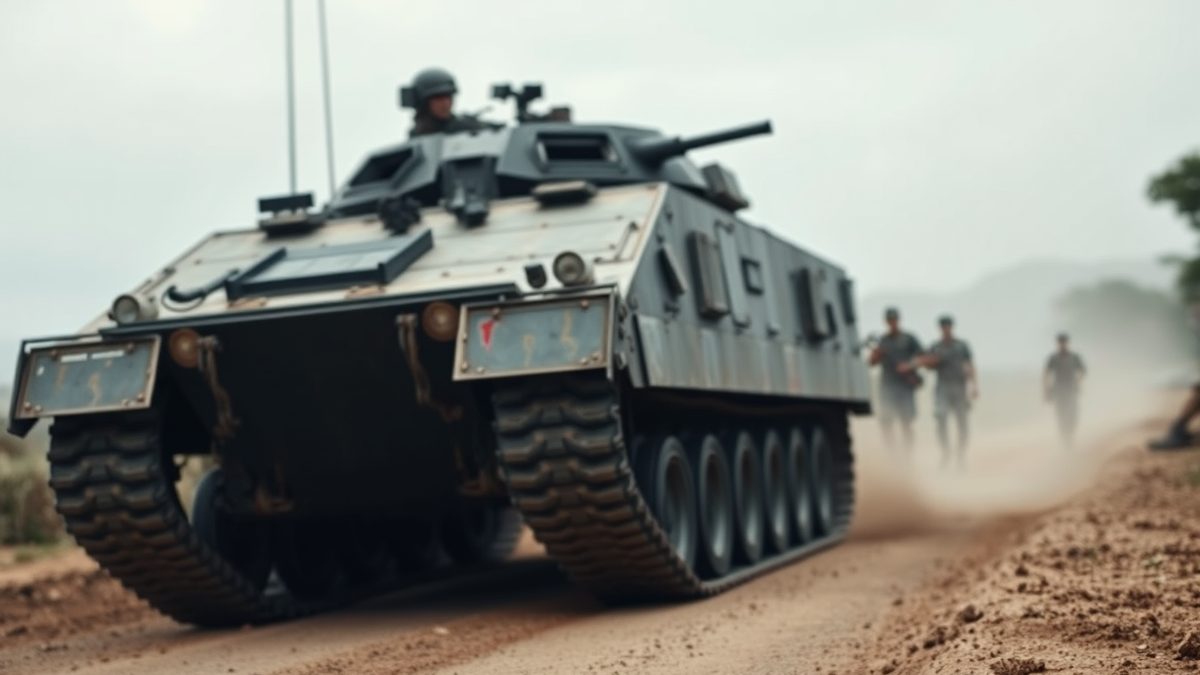
Salvadoran armored columns moved through strategic corridors northeast of Port-au-Prince and special forces spread into neighborhoods on 2 November 2026 in what Latin Times described as El Salvador's first large-scale ground combat operation in Haiti, reporting that at least a dozen 400 Mawozo and Chen Mechan fighters were killed. The ground push followed a joint helicopter offensive by the GSF and Haiti's National Police in the preceding days that killed several gang members and wounded four GSF personnel. Residents of Plaine du Cul-de-Sac protested the Salvadoran presence that day; CNN en Espanol reported that the Viv Ansanm coalition had threatened civilians who refused to take part.
The operation followed the 18 October 2026 ambush of four Salvadoran aviation technicians serving with the UN-backed Gang Suppression Force in Croix-des-Bouquets. Their armored vehicle was destroyed and the men disappeared. El Salvador's Foreign Ministry confirmed on 29 October that it had deployed more than 2,000 troops after a phone call between President Nayib Bukele and Haitian interim Prime Minister Alix Didier Fils-Aime, and said the four had been serving with the GSF. UN spokesperson Stephane Dujarric said most Salvadoran troops in Haiti fall outside the GSF's mandate and reporting arrangements. The GSF's troop and police contributors include El Salvador, Chad, Guatemala, Jamaica, Mongolia and Sri Lanka, the Haitian Times reported.
The deployment
Salvadoran troops set up a base in Tabarre, near the US embassy, and began armed patrols on 30 October 2026, with armored vehicles and helicopters near Toussaint Louverture International Airport and Croix-des-Bouquets, Latin Times reported, citing Infobae. Bukele said the mission was to find the four technicians, not to wipe out Haiti's gangs, and that his forces would rescue them by force if needed and then leave. Salvadoran officials said the operation was coordinated with Fils-Aime and denied it was an invasion. AFP reported the more than 2,000 troops effectively doubled the contingent of foreign soldiers in Haiti. Latin Times reported the deployment is authorized through October 2027.
AFP reported that the precise legal framework for security cooperation with Haiti remains unknown, that Jake Johnston, a Haiti researcher at the Center for Economic and Policy Research, said overlapping forces look like a nightmare for coordination on paper, and that Diego Da Rin of the International Crisis Group said five separate forces are operating without a proper unifying chain of command.
The GSF shortfall
The Security Council created the GSF by Resolution 2793 on 30 September 2025, replacing the Kenya-led Multinational Security Support mission. It authorized 5,550 personnel, including 5,500 military and police and 50 civilians. On 29 September 2026 the council extended the GSF's mandate to 31 March 2027, a six-month renewal rather than the two-year extension requested, with 12 votes in favour and China, Russia and Pakistan abstaining, the Haitian Times reported.
A Security Council report counted 1,083 military personnel as of 8 July 2026, plus 16 civilian staff, against the authorized ceiling of 5,550 personnel. The US said more than 1,500 troops were deployed, with over 4,000 expected in the coming months. AFP reported around 2,000 GSF troops on the ground. Latin Times reported that El Salvador's more than 2,000 troops surpass that contingent.
The GSF has faced delays in reaching full strength. Its predecessor, the Kenya-led MSS, was meant to reach 2,500 members and never grew much beyond 1,000. Violence has continued: at least 11 people were killed in Gros-Morne on 28 September 2026 in what local authorities called a gang reprisal after a GSF operation, the Haitian Times reported.
The gang leader's letter
Wilson Joseph, known as Lanmo Sanjou and leader of the 400 Mawozo, sent a letter dated 1 November 2026 to UN Secretary-General Antonio Guterres asking for dialogue and mediation and warning that threats from Bukele could escalate violence and endanger civilians, the Associated Press reported. He claimed the four technicians were killed in territory held by the Chen Mechan gang, but offered no evidence. Haitian authorities describe the men as abducted, and Salvadoran officials believe they are alive.
Dujarric confirmed receipt of a letter bearing Joseph's signature but said that did not amount to recognition or endorsement of its contents. Latin Times reported that Joseph faces US hostage-taking charges and a $1 million reward, and that InSight Crime estimates the 400 Mawozo at roughly 300 members.
What happens next
AFP reported it was unclear how long the Salvadorans would stay. MSF warned of the risk of further escalation after the arrival of additional military contingents and said worsening insecurity forced it to suspend mobile clinics and treated-water distribution in some of Port-au-Prince's most densely populated neighbourhoods. Davina Hayles, its head of mission in Haiti, called the situation "shocking" and cited the continuous arrival of injured civilians, including significant numbers of women and children.
The UN says armed groups control up to 90 per cent of Port-au-Prince, and more than 1.3 million people have been displaced.
Sources
21- 01El Salvador sends armored units into Haiti in its first major ground offensive after four technicians were kidnappedEN
- 02Haitian gang leader urges UN mediation, warning Salvadoran military operations could bring more violenceEN
- 03Bukele Sends 2,000 Troops to Haiti in an Unprecedented Rescue MissionEN
- 04Is Bukele's troop deployment in Haiti just a rescue mission?EN
- 05El Salvador deploys more than 2,000 troops to Haiti to fight gangsEN
- 06UN extends Haiti's Gang Suppression Force mandate to March 2027 amid rising violenceEN
- 07Haiti: new 'suppression force' for Haiti amid gang violenceEN
- 08UN puts new focus on containing Haiti's gang violenceEN
- 09Fighting back against the gangs: What is Haiti's new UN-backed force?EN
- 10Kenya disputes UN report over rape allegations against its forces in Haiti - BBCEN
- 11Haiti Faces Overlapping Crises as UN and International Partners Scale Up Support - Welcome to the United NationsEN
- 12Hard lessons for Kenya in Haiti’s tricky mission to suppress gangs - Daily NationEN
- 13Haiti gangs try to seize key airport as violence surges in Caribbean nationEN
- 14Martha Karua: Haiti may soon need to come and secure KenyaEN
- 15For More Than 20 Years, Bangladesh’s One Constant Has Been Political ViolenceEN
- 16 Rocket Lab launches Japanese Earth-observing satellite on 99th mission to date (video) EN
- 17PS Sing’oei courts Dominica support for Njoki Ndungu’s ICC bid - The Star, KenyaEN
- 18Simera Sense and Spacemanic to Collaborate on a New Complete Dual-Use Mission SolutionEN
- 19Launch Preview: Falcon 9 to launch USSF missions, China to launch internet satellitesEN
- 20Astranis Upgrades Falcon 9 Launch Contract to Dedicated Mission for Entire Block 4 Production Run of SatellitesEN
- 21Replay: Satellite Mission Management at the EdgeEN
All figures and quotations in this text come from the sources listed below.
Content prepared by the editorial team with AI assistance.
Dr. Amara Patel
Comments
0- No comments yet — be the first.