Europe's energy squeeze hits chip demand, heat pumps, grid rules
The European Commission sent letters of formal notice to 18 member states on 28 September 2026 for failing to enact the bloc's new right to share renewable electricity. Separate data released the same day showed European tech funding passing €2 billion in a week and residential heat pump sales climbing 11% in the first half.
 Dr. Amara PatelEconomy, business and world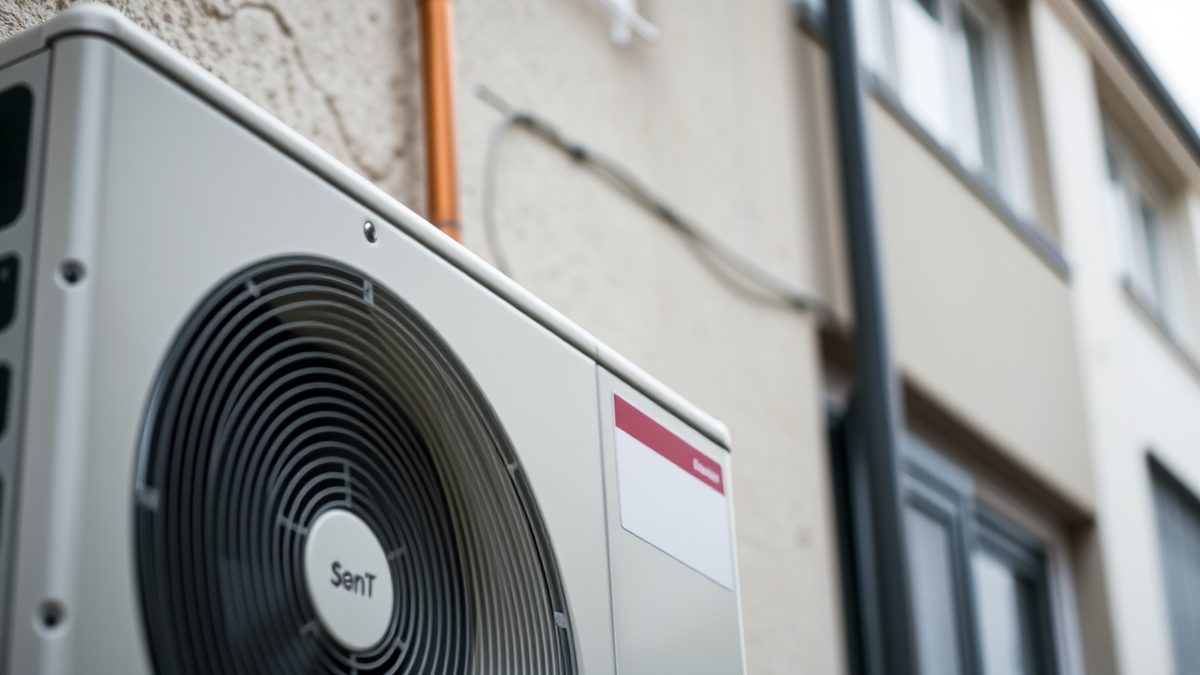
The infringement action, reported by pv magazine on 28 September, covers Belgium, Estonia, Ireland, Greece, Spain, France, Croatia, Latvia, Lithuania, Luxembourg, Hungary, Malta, the Netherlands, Poland, Romania, Slovenia, Finland and Sweden. They had until 17 July 2026 to transpose Directive (EU) 2024/1711. The letters concern failure to notify transposition, not a finding on the substance of national rules, the Commission's announcement says.
National approaches already differ sharply, which is part of the problem. Germany started energy sharing under Section 42c of the Energy Industry Act on 1 June, though community energy groups have called the rules half-hearted. Spain extended the maximum distance for shared self-consumption to 5 km in March, and France revised energy allocation rules for its collective self-consumption schemes in June. Both are among the 18 states now facing letters.
Cheap power is the missing demand signal
On the same day, Tom's Hardware carried remarks from ASML's executive vice president for public affairs, Frank Heemskerk, made at a panel at the Dutch centre De Balie. "We are selling absolutely nothing in Europe," he said. Europe accounted for 0% of ASML's revenue in the first two quarters of 2026, against 1% in 2025 and 5% in 2024, according to the company's earnings reports. Heemskerk linked the collapse to the absence of European chip factories and called on EU authorities to aggregate and guarantee demand, not just subsidise supply.
That framing sits awkwardly against the funding picture. Tech.eu's weekly recap, published on 28 September, counted more than 65 European tech funding deals worth over €2 billion in the past week. Robotics took €508.3 million, artificial intelligence €406.6 million and healthtech €305.8 million. Portugal led by country with €510.9 million, ahead of the Netherlands at €435.9 million and the UK at €273.9 million. The headline total is large, but the sector split shows capital chasing compute and automation rather than the industrial demand ASML says it needs.
"There simply is no demand here for these kinds of highly specialized machines," Heemskerk said. "That is the problem."
Electrification is moving faster than the grid rules meant to support it. The European Heat Pump Association, cited by pv magazine on 28 September, found roughly 1,163,000 residential heat pumps sold in 12 countries in the first half of 2026, up from 1,048,000 a year earlier, an 11% rise. EHPA attributed the gain to higher oil and gas prices during the Strait of Hormuz crisis and to European Commission plans to push governments to cut electricity taxes. The association argues sales depend strongly on the electricity price. It wants annual installations to reach 4 million by 2030.
Storage economics are being redrawn in parallel. Italy's energy regulator Arera raised the MACSE auction premium cap to €27,000 per qualified MWh per year on 24 September, up from €22,000 proposed in July and 27% below the first auction, pv magazine reported on 28 September. The increase follows a benchmark investment cost rising from €125,000 to €150,500/MWh and a WACC moving from 8.0% to 8.2%. For a reference 75 MW, 600 MWh asset, qualification factors leave it with 552 MWh. The cap supports €24,840 per nominal MWh per year, and the peak guarantee requirement reaches €6.71 million.
Not every signal points the same way. ASML's account of zero European sales in 2026 is a company-level revenue figure for two quarters, not a measure of European industrial output. Tech.eu's €2 billion week counts deals announced in a seven-day window across a continent of very different markets. The Commission's letters say nothing yet about whether the 18 national regimes are substantively compliant. The 18 governments have two months to respond, complete transposition and notify the Commission. It may then issue a reasoned opinion and ultimately refer a case to the Court of Justice of the European Union. For now, the dossier shows a bloc writing the rules for cheap and shared electricity while its largest industrial supplier says there is no one at home to buy.
Sources
5- 01EU opens infringement cases against 18 states over energy-sharing rulesEN
- 02ASML says it sold 'absolutely nothing' in Europe in 2026EN
- 03European tech weekly recap: Over €2B invested across 65+ dealsEN
- 04European residential heat pump sales up 11% in H1EN
- 05Italy raises Macse energy storage auction premium cap from €22,000 to €27,000/MWhEN
All figures and quotations in this text come from the sources listed below.
Content prepared by the editorial team with AI assistance.
Dr. Amara Patel
Comments
0- No comments yet — be the first.