Europe's night trains keep expanding, but the newest rail story is about who is watching you
The newest rail story in the dossier has nothing to do with sleeper carriages: British Transport Police spent more than £320,000 on live facial recognition at London stations over six months, scanned more than 500,000 faces, and got zero correct matches.
 Daniel FisherSport, cars and travel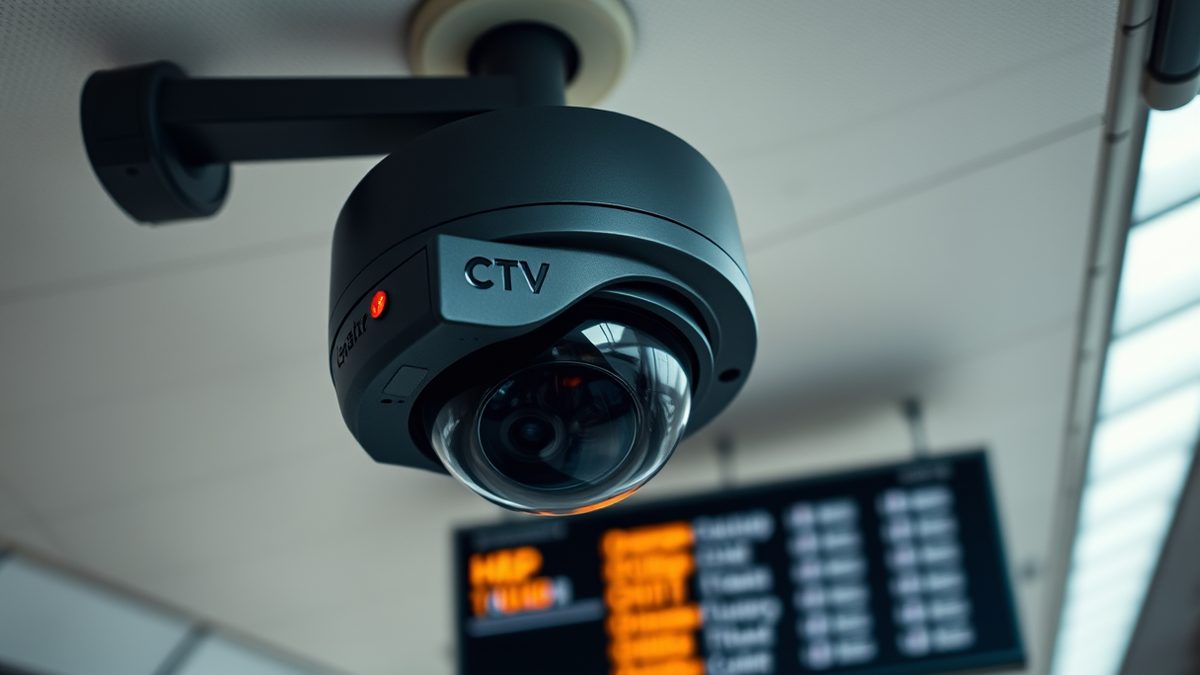
That figure comes from a Freedom of Information request by Liberty Investigates, reported by The Guardian and picked up by The Register on 30 September. The trial ran for six months. It generated exactly one alert, and that alert was a false positive. No live facial recognition alert led to an arrest.
British Transport Police has extended the trial until November and expanded it from Network Rail stations onto the London Underground. The hardware is NEC's NeoFace M40. Cameras scan people walking through a designated area and compare faces against a police watchlist. A match produces an alert for an officer to review before any stop.
What the pilot cost, and what it found
The Register's figures put the deployments at almost 100 hours of police officers' time and more than £320,000. Officers scanned more than half a million faces. One alert, wrong person.
"The figures from the British Transport Police's live facial recognition pilot would be laughable, if they didn't have such troubling implications for our rights and freedoms," Jasleen Chaggar, senior legal and policy officer at Big Brother Watch, told The Register.
Sarah Simms, senior policy officer at Privacy International, made a related point to the same outlet. Thousands of people have their facial data processed in public spaces, sometimes without knowing it, and she said that undermines the claim this is a targeted measure. She also flagged the absence of a specific legal framework for facial recognition in the UK.
BTP says it cannot identify people who are not on a watchlist, that it deletes the biometric data of anyone who is not, and that deployments are intelligence-led and aimed at crime hotspots. The force has not said it will stop.
Why this matters if you are planning a rail trip
Most coverage of European rail this autumn is about seats, routes and sleeper berths. This story is about the station you walk through before you reach the platform. The dossier's own related headlines show the direction of travel. The Register noted in August 2026 that British rail police had brought live facial recognition to the London Underground, and in July 2026 that a British supermarket group had tripled down on facial recognition to catch shoplifters. Earlier in 2026, UK police temporarily suspended deployments after independent testing raised concerns about racial bias at some operating thresholds.
The Register's report also lists a run of recent UK police data incidents in its sidebar. Dyfed-Powys Police confirmed a cyberattack with staff data potentially taken, and the Police National Legal Database confirmed a data theft after a dark web leak. None of those are facial recognition failures, and they should not be conflated with the BTP pilot. But they are the operational backdrop against which a £320,000 surveillance pilot with a zero hit rate is being extended.
Meanwhile, the actual night train map keeps growing
The dossier for this piece is thin on new sleeper routes. What it does contain on rail is mostly context: a set of recent headlines about Interrail sales, a Västtrafik order for 35 Avelia Stream Nordic trainsets, a Cruise.co.uk expansion of 2027 cruise and rail offerings, European Sleeper announcing a first route to the Nordic region, a Snälltåget Malmö-Oslo service, and a push for international trains to stop at a second major London station. Those headlines are not facts we can cite in detail here, and the underlying sources are not in the dossier.
What we can say is narrower and safer. The night train conversation in Europe is not standing still, and the commercial and political interest in cross-border rail is visible in the same news cycle as the surveillance story. A traveller weighing a sleeper against a short-haul flight is now making a decision that includes a question about what happens to their face at the station.
The rest of the dossier is a different beat
To be clear about what is and is not in the source material: most of the ten documents are not about rail at all. There is a technical write-up of training-free asynchronous LLM agents playing DOOM, published 30 September. There is an Internet Archive blog post from 30 September in which musician Ryley Walker talks about 95 of his shows being preserved on the Live Music Archive, part of a collection that now tops 300,000 recordings from more than 9,000 artists. There is a Modern Treasury journal piece on why checks still matter, citing the 2025 Federal Reserve Payments Study's roughly $24.5 trillion annual figure.
There is also a bat evolution study published in Nature and covered by ScienceDaily on 30 September: 137 researchers from 64 countries, 103 bat genomes including 42 newly generated chromosome-level assemblies, and 44 fossil bats, pointing to Europe around 65 to 60 million years ago. A Follow the Money newsletter from 30 September examines what Ursula von der Leyen left out of her Congress of Europe pitch. Business Standard reported on 28 September that China has broadened overseas travel restrictions for top AI professionals in private firms to include spouses and children. And TUNAI's nightly job-ad data, updated 30 September, counted 621,000 live adverts with 34,000 claiming to be more than a year old.
None of that is rail travel. It is included here only to be explicit that the dossier does not support a detailed new night-train route story. Any editor who tells you otherwise is working from a different set of documents.
What to watch next
The concrete, dated item is the BTP extension. The trial now runs to November and covers the London Underground as well as Network Rail stations. Big Brother Watch has called on the force to drop live facial recognition entirely. Privacy International wants a legal framework before further deployments. The force's own stated position is that the deployments are targeted and that non-watchlist biometrics are deleted immediately.
If you are booking a night train through or out of London this autumn, that is the live story. The sleeper timetables are the pleasant part. The cameras are the part with a number attached: £320,000, 500,000 faces, one false alert.
Sources
7- 01UK rail cops' £320K face-scanning spree nets zero matchesEN
- 02Every Night Is Different: Ryley Walker on Preserving Live MusicEN
- 03The Rail That Refuses to Die: Why Checks Still Matter in Modern PaymentsEN
- 04Bats may have first evolved in Europe 65 million years agoEN
- 05China broadens travel curbs to encompass family of top AI talentEN
- 06I count 600k live job ads nightly – 34k claim to be over a year oldEN
- 07Training-free asynchronous agents playing DOOMEN
All figures and quotations in this text come from the sources listed below.
Content prepared by the editorial team with AI assistance.
Daniel Fisher
Comments
0- No comments yet — be the first.