Europe's Night Trains: New Routes, Old Tunnels, Real Numbers
Europe's rail operators rolled out their 2024 timetables on 10 December, adding direct overnight links between cities that had no daytime connection, including the first Munich to Warsaw sleeper since 2010, according to the Guardian.
 Peter LindqvistSport, cars and travel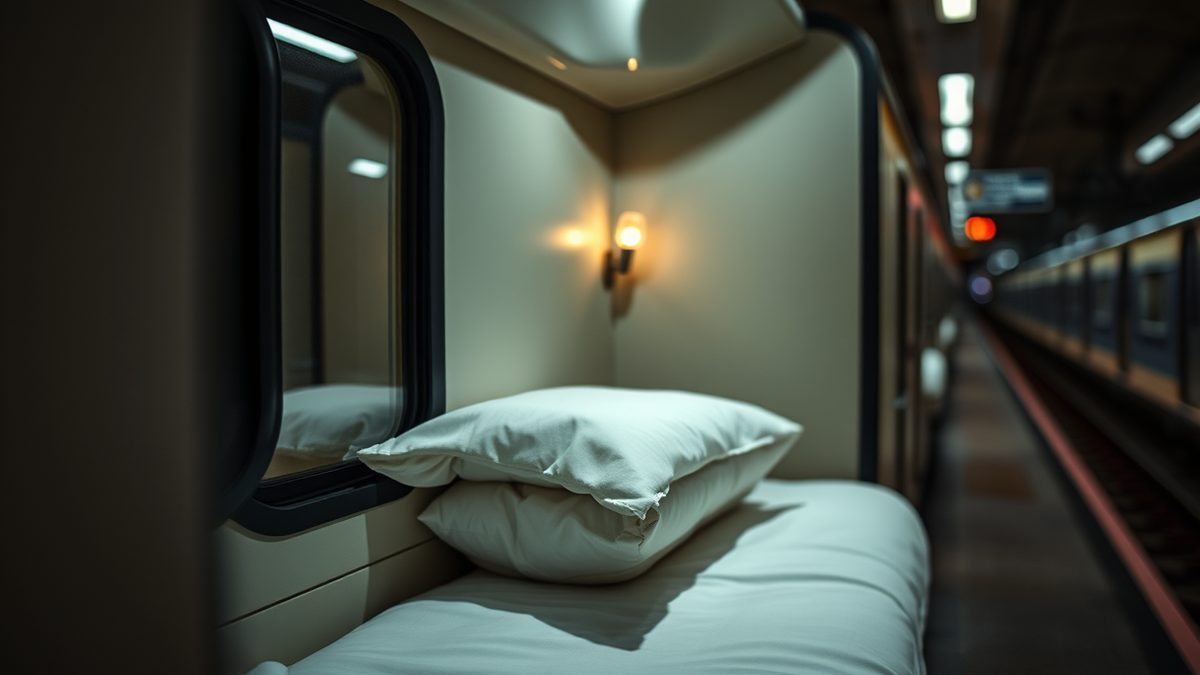
The Guardian reported on 14 December 2023 that the new schedules, introduced on 10 December, linked Warsaw with Munich, Berlin with Paris and Aachen with Halle by direct night trains. None of those city pairs had a direct daytime service.
Not every change was an addition. Aarhus lost its twice-daily direct trains to Hamburg, the Guardian noted. A connecting service now runs every two hours, with a same-platform change in Kolding. Nuremberg, previously a jumping-off point to the Czech Republic, went from five direct trains a day to none. Cat Jones, CEO of the flight-free operator Byway Travel, singled out the Salzburg to Kraków sleeper, which runs just under 10 hours. She said the new trains were "creating a real buzz" and letting her company pair places that previously had no direct rail link.
Night trains are not the whole story. The Guardian's round-up also recorded a 30-minute cut to Berlin to Amsterdam journeys, now under six hours, and a doubling of direct daytime trains from Kraków to Vienna and Berlin.
What the tunnels change
The bigger shifts are still under construction. CNN reported on 26 May 2026 that the Gotthard Base Tunnel in Switzerland, opened in 2016 at a cost of $11.3 billion, cut Zürich to Milan to two and a half hours from four. Its twin tunnels run more than 7,500 feet beneath the Alpine peaks at the deepest point. The European Court of Auditors said in January that costs across eight major Trans-European Transport Network projects had risen by an average of 82% over initial estimates, with an average delay of 17 years across five of them.
Denmark and Germany are building the Fehmarnbelt Tunnel, an 18-kilometre immersed link under the Baltic Sea. CNN reported in June 2024 that the budget was over 7 billion euros ($7.1 billion) and that the crossing, currently a 45-minute ferry, would take seven minutes by train and 10 by car. Femern A/S technical director Jens Ole Kaslund said Copenhagen to Hamburg would fall from around four and a half hours to two and a half. King Frederik X inaugurated the first tunnel element on 17 June, four years after construction began in 2020.
Cost is the other half of the argument. The Rail Delivery Group said in February 2024 that on the top 100 British business travel routes, an average petrol or diesel car produced nine times more carbon than the train. Edinburgh to London Kings Cross emitted 116kg of CO2 in a diesel car, 31.8kg in a battery car and 12.7kg per person by train, the RDG data showed. Single fares on LNER for that route were £183 without pre-booking. Michael Solomon Williams of Campaign for Better Transport said rail is greener and often quicker, but "what we now need to do is to ensure it is also cheaper."
Elsewhere the picture is patchier. Croatia extended free rail travel from 1 January 2026 to people with disabilities holding a National or European Disability Card, and to eligible residents of Istria County using the direct Pula to Zagreb service, which was reintroduced on 20 June 2025 and runs through Slovenia on Fridays and Sundays, according to Croatia Week.
Sources
5- 01Night trains and border crossings: Europe's best new rail routesEN
- 02Electric cars produce twice as much CO₂ as trains, says rail group dataEN
- 03The underground mega tunnels redrawing the railway map of EuropeEN
- 04Longest road and rail tunnel is being built under the Baltic SeaEN
- 05Croatia extends free train travel to more groupsEN
All figures and quotations in this text come from the sources listed below.
Content prepared by the editorial team with AI assistance.
Peter Lindqvist
Comments
0- No comments yet — be the first.