How to Judge a Used EV Battery, and Why It Matters More Than Mileage
A 2021 Nissan Leaf with 29,000 miles sold in the UK for £12,500 after the dealer quoted a battery state of health of around 93%, the BBC reported on 16 October 2025. Independent testers and auction data suggest that number is worth checking before you pay.
 Daniel FisherSport, cars and travel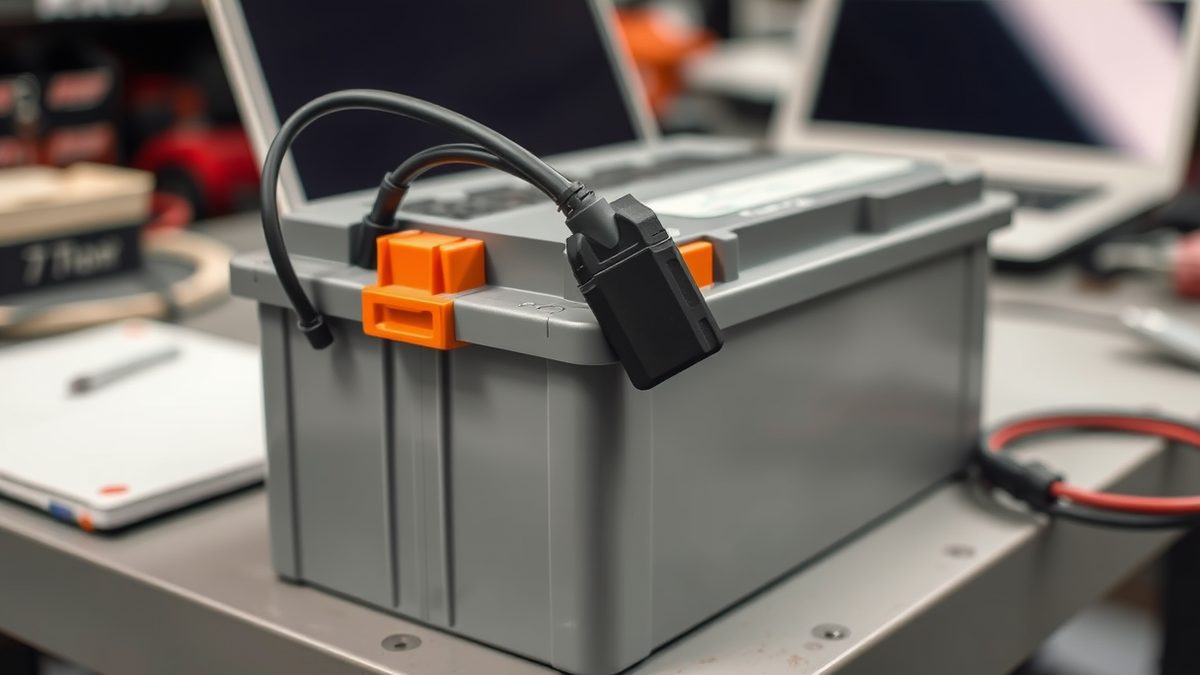
Kerry Dunstan, a cabinetmaker, bought that Leaf this summer. Three months on, he told the BBC it has performed exactly as expected, though he is not in love with it. "I like sporty, jazzy cars, and it's just a bit 'meh'," he said.
Age and mileage used to be the two headline numbers for second-hand car buyers. With EVs, the battery has become arguably more important. The reason is simple. Lithium-ion packs degrade in two ways. Calendar aging happens with time, even in storage. Cyclical aging comes from being charged and discharged, over and over. As batteries age, they hold less energy.
Recurrent, a research firm that pulls data from more than 30,000 EV drivers, describes the pattern as an S curve, according to NPR: a rapid decline at the start, a long level stretch, then a sharper fall at the end. "It's very much like breaking in a pair of shoes," Liz Najman, Recurrent's director of market insights, told NPR. The shoes start stiff, get more comfortable, and last a long time before the sudden end.
What the auction data shows
Adam George, a vehicle services director at Cox Automotive, which runs used car auctions, told NPR the industry expected trouble. "We were expecting battery health to be experiencing mass degradation over the first one to three years of owning a vehicle," he said. "What we have seen, though, is that these 2, 3, 4-year-old off-lease cars that are coming back have battery health scores well upwards of 95%."
Cox Automotive has tested nearly 80,000 EVs and found an average battery health of 92%, NPR reported. Recurrent's data shows cars from most major brands retaining 95% or more of their expected range after three years, partly because software and battery management systems correct for early degradation and keep range consistent.
The oldest cars are the more striking case. Among EVs ten years old or older in Recurrent's community, only 8.5% have ever had a battery replacement. More than 90% are still on their original pack. "EV batteries are holding up phenomenally well," Najman said. For EVs of any age past 150,000 miles that have not had a replacement, Recurrent found they still deliver at least 83% of original range.
There are caveats. Recurrent's decade-old sample is small, because few EVs were built that long ago, and some early models cannot connect to its opt-in network. The data set is also skewed young, since the vast majority of EVs on the road are recent. And some batteries fail early because of a manufacturing defect, which warranties typically cover.
How the testing actually works
Several firms now sell independent battery health checks. Aviloo, based in Austria, provides certificates for the UK outlet British Car Auctions. Its chief product officer, Patrick Schabus, told the BBC the company can "completely independently, determine the state of health of a battery."
- The premium test: a data logging box about the size of a glasses case is plugged into the car and monitors performance over a few days, from 100% charge down to 10%.
- The flash test: a different box pulls data from the car's battery management software and analyses it with a computer model. "We can do this at a standstill in under two minutes," Schabus said.
Aviloo chief executive Marcus Berger told the BBC his firm's results sometimes diverge "substantially" from the state of health percentages produced by cars' own built-in systems. He also pushed back on the idea that a battery below 80% is finished. "An EV with a state of health below 80% can still be a great car," he said. "It just needs to be priced appropriately."
Dealers are using these reports as a sales tool. David Smith, sales director at Cleevely Electric Vehicles in Cheltenham, told the BBC that most customers ask for the information and his company uses reports from ClearWatt. "They're completely independent. We can't interfere with the reports," he said. "Once customers have seen the report, that aids the sale nine times out of 10."
Matt Cleevely, the firm's managing director, added that it is often possible to replace groups of cells or modules inside a pack, which is far cheaper than fitting a whole new battery.
The numbers on the dash are not gospel
In New Zealand, EV owner Lucy Hawcroft bought a Nissan Leaf with her husband about three years ago. The dealership gave an SOH of roughly 95%. A year later an independent mechanic checked again. "It dropped quite a bit," she told the BBC. "My husband was a bit surprised, or concerned, about that." The car still manages around 160km (100 miles) on a full charge, and the couple mostly drive journeys of up to 10km.
Her experience points to a broader problem: methods vary. Paul Chaundy at Second Life EV Batteries in Dorset told the BBC, "We need more standards around that, I think."
Older Nissan Leafs are a specific case. They were built without the liquid-based battery cooling common to many other EVs, and earlier models show a considerable shortening of range year by year, according to data analysed by the US insurance and research firm NimbleFins.
Charging habits matter, but the advice is not settled. Simona Onori at Stanford University told the BBC: "There is likely a sweet spot between frequent fast charging and avoiding it altogether." She added that, to her knowledge, this has not been thoroughly studied.
What has changed is cell life. Max Reid, head of battery costs at the market research firm CRU, told the BBC that older batteries might last 500 to 1,000 charging cycles, while "now, it's 10,000 cycles in some of these new EV cells coming out."
Dead packs are not necessarily waste either. Chaundy said some customers, including businesses with electric forklifts and a grid connection too small for all of them, use former EV batteries to store electricity on site.
For a used buyer, the practical upshot is narrow. Get an independent state of health report, not just the dashboard figure. Treat a low percentage as a negotiating point rather than a dealbreaker, and ask whether modules can be replaced instead of the whole pack.
Sources
2- 01How good is the battery in a used electric vehicle?EN
- 02How long do electric vehicle batteries actually last?EN
All figures and quotations in this text come from the sources listed below.
Content prepared by the editorial team with AI assistance.
Daniel Fisher
Comments
0- No comments yet — be the first.