India to make storage procurement mandatory for discoms, rules targeted for March 2027
India will require licensed utilities to buy energy storage alongside renewable power, Power Secretary Pankaj Agarwal said on Thursday. Regulations are targeted for March 2027, and the obligation size is undecided, with 10% and 20% options on the table.
 Dr. Amara PatelEconomy, business and world
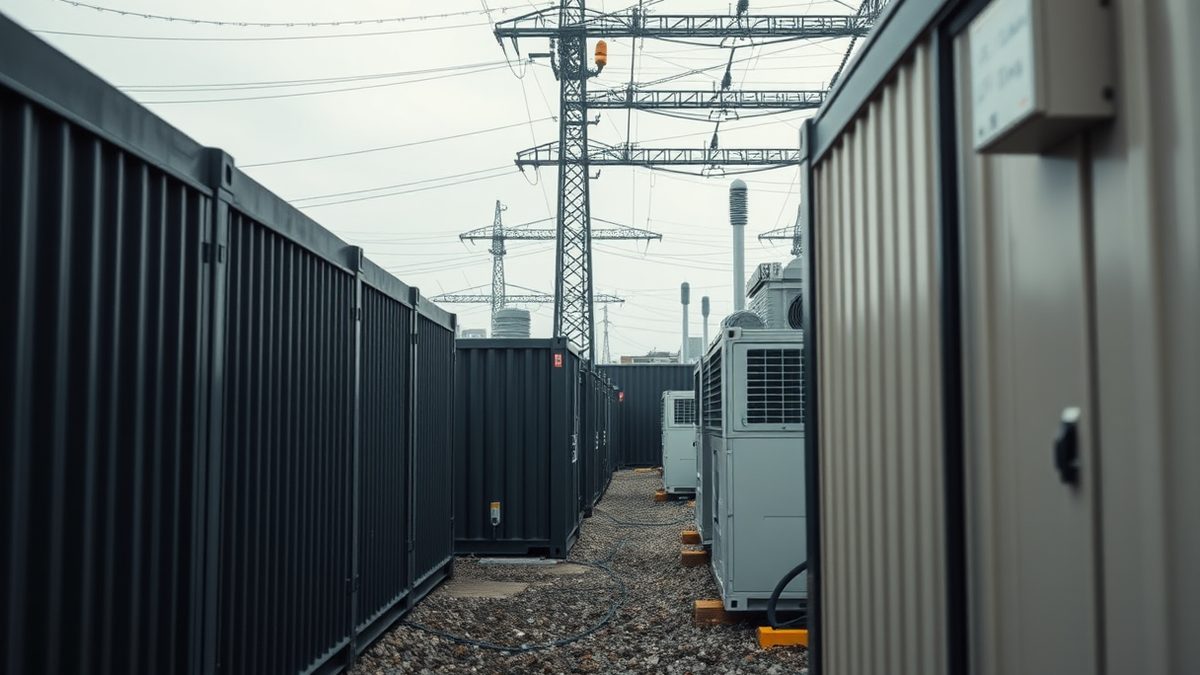
What the mandate would cover
Speaking at the Bharat Renewable Energy Summit in New Delhi, Agarwal said proposals under examination involve storage equal to 10% and 20% of capacity for two-hour durations. The final requirement and the implementation timeline remain undecided. An existing advisory asking developers to integrate storage at their projects would become binding regulation. The move aims to cut electricity shortages during evening and night-time hours and improve grid reliability.
Discoms must fund the storage on top of renewable purchases. Those costs reach consumers only if regulators allow timely tariff revisions.
The ₹14,500 crore behind the rule
The mandate follows money. The Union Cabinet approved ₹14,500 crore in viability gap funding a day before Agarwal spoke.
The VGF scheme supports 92 GWh of grid-scale storage between FY27 and FY31. It covers 60 GWh of pumped hydro, 30 GWh of battery storage and 2 GWh of emerging technologies. The projects are expected to draw total investment of around ₹97,600 crore. Government support will cover roughly 15% of the cost. Battery projects must meet a minimum domestic content requirement of 40%. Public and private sector discoms will be eligible for support for battery storage and pumped hydro projects.
Why the grid needs it
The grid is already discarding power. About 11% of solar generated during the hottest months this year went to waste. Grid restrictions caused the loss despite record demand.
Nationally, curtailment rose nearly fourfold between May and August 2026 compared with the previous year. In Rajasthan, curtailment reached 11.5 GW cumulatively between January and March 2026. Some projects faced near-total shutdowns during peak solar hours. Storage contributes about 1% to 2% of national peak demand. India has more than 300 GW of non-fossil fuel generation capacity. It still relies on coal plants in the evening and at night, when solar output falls. JMK Research & Analytics put demand-generation mismatches, transmission constraints and limited storage among the main reasons for curtailment.
The Central Electricity Authority projects India will need 411 GWh of storage by 2031-32.
State rules and tenders already moving
States are not waiting for New Delhi. Tamil Nadu's BESS Policy 2026 requires new solar and wind-solar hybrid projects of 1 MW and above to install battery storage equal to at least 10% of solar capacity. Gujarat's regulator has approved tariffs for GUVNL to procure 450 MW/900 MWh of standalone battery capacity under Phase IX.
SECI has tendered 2,500 MW/10,000 MWh of standalone battery storage in Rajasthan and 1,500 MW/6,000 MWh in Gujarat, with bids closing on 19 November 2026. Green Energy Corridor Phase III carries a ₹1.86 lakh crore outlay, including ₹50,000 crore for 50 GWh of battery storage. The scheme has a completion target of FY2033 and aims to evacuate up to 135 GW of renewable power. From July 2027, a separate regulation will require developers of solar and wind projects to install battery storage at their sites. UPERC has approved Noida Power Company's plan to buy 300 MW of firm, dispatchable round-the-clock renewable power for 25 years through competitive bidding.
What happens next
The government aims to complete consultations and notify the regulations by March 2027.
SECI's ESS-V battery storage bids close on 19 November 2026. That comes first. Agarwal said the government is also working to launch additional clean energy tenders for energy storage.
Sources
30- 01Govt Likely to Introduce Energy Storage Procurement Mandate for Discoms by March 2027EN
- 02Centre plans mandatory energy storage for discomsEN
- 03India to Require State Utilities to Add Energy Storage CapacityEN
- 04India's Energy Storage Push: Utilities, Developers, and the ₹14,500 Crore BetEN
- 05India Q3 2026 Renewable Policies Target Grid StabilityEN
- 06Green Energy Corridor III: Making every renewable megawatt dependableEN
- 07India’s installed solar PV capacity to exceed 350 GW by 2030, says IEAEN
- 08Democrats' state wins open the door for major clean energy progressEN
- 09CATL, Octopus Energy and Ampace partner to explore European home energy storageEN
- 10How the Solar+ industries can make better decisions for the energy transitionEN
- 11Tampa Community Turns Out for Sierra Club’s ‘Power & Perspectives: The Energy Dialogue’EN
- 12Vensum Power raises €9M to cut power losses in AI data centres, EV charging and energy storageEN
- 13Lame-duck Congress might actually do something: speed up energy projectsEN
- 14Top clean energy wins from the midterm electionsEN
- 15DTE Energy ups five-year utility investment plan to $44bn, cites data center demandEN
- 16Thermal Dawn — Thermal Storage Is Cheap StorageEN
- 17Will PG&E’s $2B grid cutbacks derail California’s clean energy buildout?EN
- 18Singapore Reveals Five-Year Energy Plan to Feed Data Center, Semicon ProgressEN
- 19More of the Same Expensive Dependence on Fossil Fuels in TEP and APS 2026 Energy PlansEN
- 20 India targets creating homegrown GPUs within 2 years and plans to commercialize indigenous SHAKTI and VEGA processors EN
- 21 Boost your Nintendo Switch 2's storage for Zelda: Ocarina of Time with these microSD Express deals, starting at $48 EN
- 22A new bill could change how the US builds energy infrastructure EN
- 23Blue Wave Not Climate Related, But Critical To Clean Energy & Electric VehiclesEN
- 24Green Hydrogen: India’s Big Ambitions, Costly RealitiesEN
- 25Why a Democrat-Held Congress in Washington Could Be Bad News for Modi’s IndiaEN
- 26India’s Rediscovery of Poland: The Drivers and Limits of a Growing PartnershipEN
- 27The Buildout: Surf cuts ribbons in Delaware County, IndianaEN
- 28A Michigan utility’s iffy plan to trap CO2 from its new gas plantsEN
- 29Stratos Data Center Will Emit Air Pollution That’s Linked to Premature Deaths and Health Economic Damages for Utah & States DownwindEN
- 30How Some Media Shape Regional Australia’s Hostility to Renewable EnergyEN
All figures and quotations in this text come from the sources listed below.
Content prepared by the editorial team with AI assistance.
Dr. Amara Patel
Comments
0- No comments yet — be the first.