Iran has drawn up plans to attack Hormuz internet cables, officials tell Reuters
Two senior Iranian security officials told Reuters, in reporting relayed by India Today on 2 November, that Tehran plans to attack submarine internet cables under the Strait of Hormuz and could block repairs, threatening Gulf and Indian links.
 Grace OkonkwoAI, models and technology
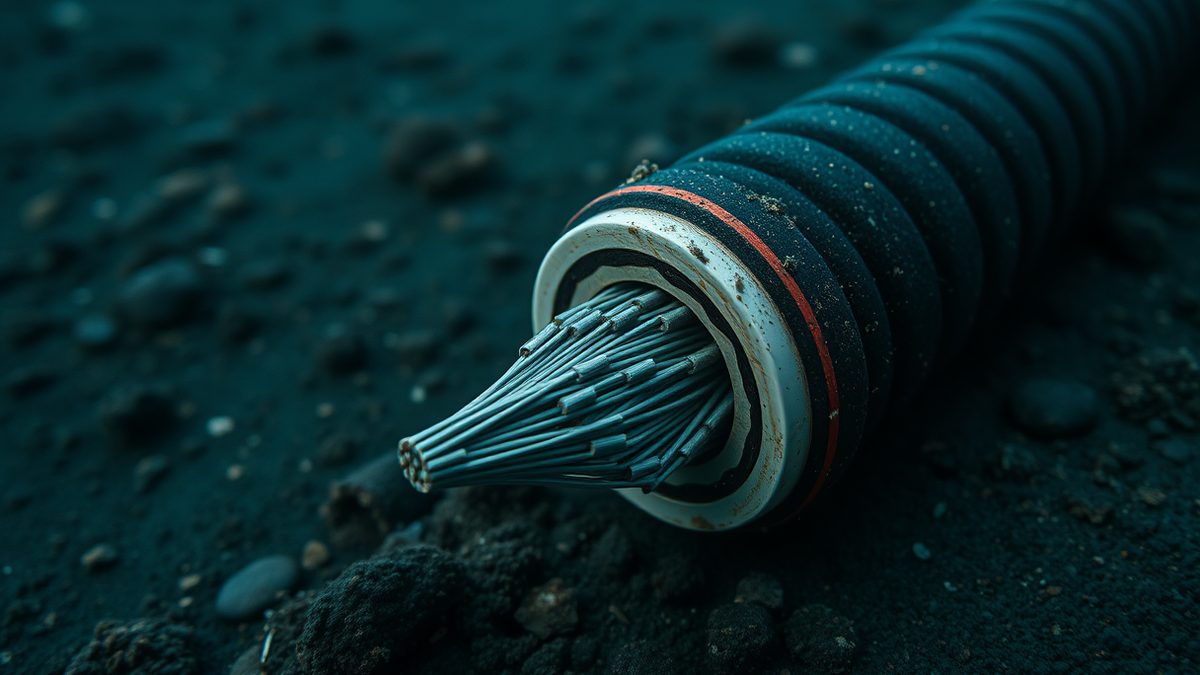
Two senior Iranian security officials told Reuters that Tehran has drawn up plans to attack submarine internet cables under the Strait of Hormuz if the US and Israel resume strikes, and one warned Iran could prevent repair work, India Today reported on 2 November. A cut would not switch off India's internet, but it would slow or reroute traffic across the strait and prolong outages if repairs are blocked.
The 19 October statement
IRGC spokesman Hossein Mohebbi said on 19 October that seven major internet cables run beneath the Strait of Hormuz and that new targets and new weapons would be unveiled. He said the response this time would be much harsher, Windward reported. Earlier in October, Supreme National Security Council secretary Mohsen Rezaei said Iran could strike US-linked cables, data centres and AI facilities in a new war.
Tankers over the cables
In the two weeks before Mohebbi spoke, Windward tracked two OFAC-sanctioned tankers linked to Iran drifting for days directly over regional cable corridors. One slowed to under one knot on 30 September and drifted for 73 hours, crossing the edges of the AAE-1, Bay of Bengal Gateway and 2Africa corridors and passing within half a nautical mile of FALCON, GBI and MENA, Windward said.
Six live cables, eight by 2027
Six live cables cross the strait today: 2Africa, AAE-1, FALCON, GBI, Tata TGN-Gulf and OMRAN/EPEG. FIG and SEA-ME-WE 6 are due in 2027, taking the total to eight. Iran's figure of seven sits between the current and near-future count, according to TeleGeography data cited by Windward. Less than 1 per cent of global international bandwidth passes through the strait, according to TeleGeography, while around 99 per cent of international data traffic travels through submarine cables, India Today reported.
Three of the six live cables land in Iran. FALCON and GBI land at Bandar Abbas and Bushehr, and OMRAN/EPEG also has an Iranian landing, according to Windward. Cutting FALCON and GBI would sever Iran's own international links as well.
Four countries with nowhere else to route
Iraq, Kuwait, Bahrain and Qatar are the most exposed because every cable they use lands inside the Gulf, Windward said. Iraq has three live cables; Kuwait has five, Bahrain five and Qatar seven. FOG, Qatar-UAE and Kuwait-Iran never leave the Gulf, leaving Kuwait with three routes out, Bahrain with four and Qatar with five.
The UAE is better placed. Six cables land on its Gulf coast, but 14 land at Fujairah and Kalba on the Gulf of Oman. Oman has two cables at Khasab, 11 on its Gulf of Oman coast and five at Salalah and Qalhat on the Arabian Sea, Windward said.
India's exposure
India's internet depends on submarine cables that come ashore at landing stations including Mumbai and Chennai. At least four Hormuz-linked systems have links to Indian landing stations, India Today reported, citing Communications Today. FALCON, GBI and AAE-1 are live, and SeaMeWe-6 has been landed in Mumbai and Chennai by Bharti Airtel but is not yet in service and is due in 2027.
Airtel is part of the SeaMeWe-6 consortium and Reliance Jio is a member of the AAE-1 consortium. An Economic Times report earlier this year estimated that around a third of India's westbound data traffic passes through the Hormuz corridor. If cables are damaged, operators would have to find other routes, including redirecting some traffic through networks connected to Singapore, India Today reported.
Sources
19- 01Iran threatens to cut undersea internet cables if war resumes, what it means for IndiaEN
- 02Iran Threatens the Hormuz Internet Cables: Four Gulf States Have No Subsea Route That Avoids the StraitEN
- 03Does Reliance on China Undermine Iran's Grand Strategy?EN
- 04 T-Mobile launches $90 5 Gbps fiber internet plan EN
- 05Somali piracy surges as Iran war diverts US naval attention - CNN - Iran InternationalEN
- 06Google: Internetsuche gibt es für Schulen nur, wenn KI-Tools freigegeben sindEN
- 07 Voting in space: NASA astronauts cast ballots from International Space Station EN
- 08CrowdStrike launches AI kill switch that it says can stop internal agents that go rogueEN
- 09 Robot cube explores the International Space Station | Space photo of the day for Nov. 3, 2026 EN
- 10 Chinese survey ship loitering near undersea cable ignores Philippine demands to withdraw EN
- 11WorkOS says attacker used ARTEX AI to breach internal sales appEN
- 12SPFL tender could end Saturday 3pm TV blackout but is it really under threat?EN
- 13Here's how much Trump's Iran war has added to Americans' fuel costsEN
- 14Astronauts just gave the International Space Station a powerful upgradeEN
- 15Trump declares robot imports a national security threatEN
- 16Trump Says Iran Wants A Deal 'And It Could Happen' - Radio Free Europe/Radio LibertyEN
- 17Launch Preview: Falcon 9 to launch USSF missions, China to launch internet satellitesEN
- 18Shutting the Door on the XCPE Botnet (Threat Intelligence)EN
- 19What Tokayev’s Economic Agenda Means for Kazakhstan’s International PartnershipsEN
All figures and quotations in this text come from the sources listed below.
Content prepared by the editorial team with AI assistance.
Grace Okonkwo
Comments
0- No comments yet — be the first.