Iran keeps Strait of Hormuz shut until US meets seven conditions, security chief says
Iran will keep the Strait of Hormuz closed until Washington fulfils all seven of its conditions, the secretary of Iran's Supreme National Security Council said on 3 November, rejecting the US reply as "not convincing".
 Dr. Amara PatelEconomy, business and world
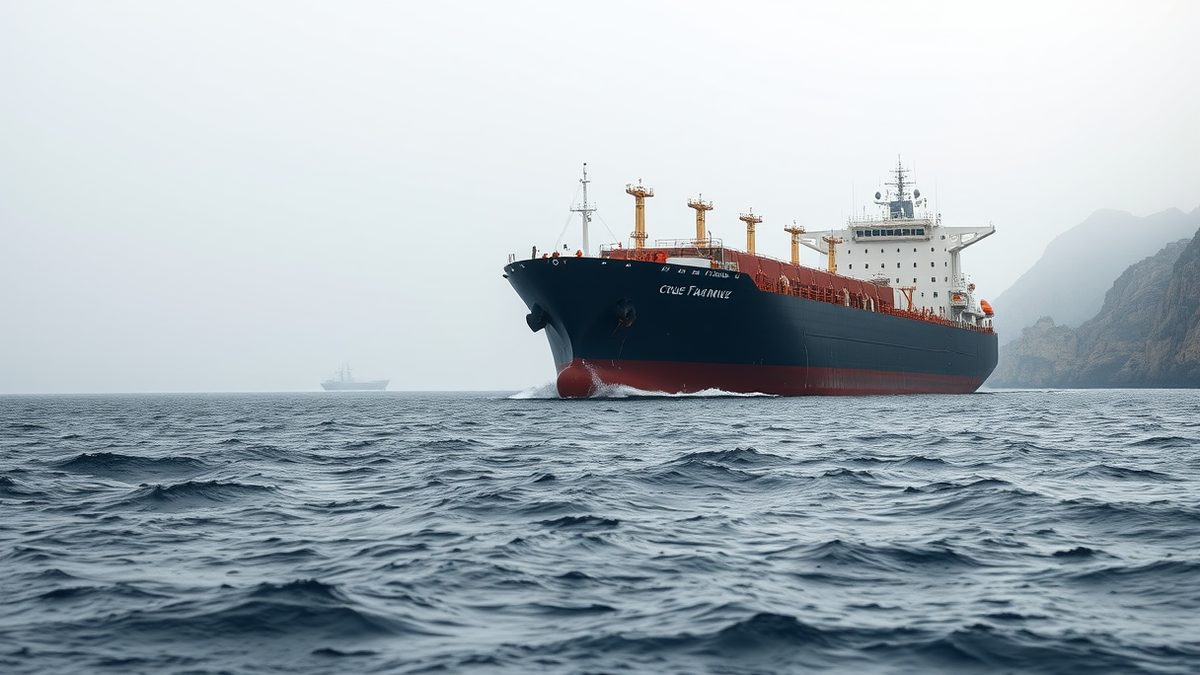
Seven conditions, and a reply Tehran calls unconvincing
Mohsen Rezaei wrote on X that "The US response to Iran's rights and demands was not convincing". He added that "They must respond fully and explicitly to Iran's seven conditions and fulfill them. Only then will the Strait of Hormuz be reopened".
The closure is in its second month, Al-Araby Al-Jadeed reported. That makes the order of concessions the practical question for every importer that moves oil or LNG through the waterway. Tehran wants the money and the blockade lifted before ships sail. Washington has warned it will consider other options if normal navigation is not restored.
The seven conditions are wide ranging. They include a comprehensive Middle East ceasefire, the unfreezing of Iranian assets held abroad and the removal of oil sanctions. Rezaei's list also covers an end to the US naval blockade, war reparations, the withdrawal of American forces and a halt to threats against Iranian sovereignty. A senior Iranian official told Reuters that Iran and the US remain far from a deal.
Qatar is leading the mediation. Its foreign ministry said both sides were reviewing proposals, and an official briefed on the talks told Reuters that feedback from Washington and Tehran was expected within 36 hours. A senior Iranian official later said there was no deadline for exchanging messages.
Military activity has continued alongside the diplomacy. US forces carried out limited strikes on Iran's Qeshm island overnight, targeting surface-to-air missiles used against US assets. A US official described the strikes as defensive and said they did not signal a return to major combat. President Donald Trump told the Financial Times the US was ready to act but there might be no reason to, and that indirect talks on Iran's enriched uranium were continuing. He told Fox News he did not want large loss of life but would act if required.
The sequencing problem that keeps sinking the rounds
Iran's foreign minister, Abbas Araghchi, said on 28 October that Tehran was in contact with mediators to implement a seven-day plan. Under that plan, presented to Washington through Qatari mediators in September, the US would act during the first five days: ending hostilities, lifting the naval blockade, easing restrictions on Iranian oil exports and releasing frozen assets. Iran would reopen the strait on day six. Negotiations would resume on day seven. The proposed measures remain subject to agreement.
After a third straight day of talks in Doha, Araghchi said the plan's timeline for reopening the Strait of Hormuz had been shortened from seven days to two.
Vessels would use a route agreed by Iran and Oman. They would travel under Iranian supervision.
Safe passage is not assured even when it is cleared. The Qatari LNG carrier Al Mayeda was struck near the strait on 30 October, according to people familiar with the shipment who spoke to Bloomberg, after Pakistan had negotiated safe passage for it. Several earlier cargoes cleared the same way and crossed safely. Responsibility for the attack has not been established and no one has claimed it.
Tehran courts Beijing and Moscow as guarantors
Mediators have been weighing whether China could guarantee that Washington delivers sanctions relief in return for Iranian nuclear concessions, a plan Al Hadath reported on 30 October. Beijing gave no indication it had accepted that role.
Ali Bagheri Kani is deputy secretary of Iran's Supreme National Security Council. He told Chinese Foreign Minister Wang Yi in Beijing on Monday that Tehran wanted a greater Chinese role in regional diplomacy. China's foreign ministry said Wang backed Iran's sovereignty and urged all sides to make concessions to avoid renewed fighting. China relies on oil shipped through Hormuz, which gives it an interest in reopening the waterway even while Tehran prefers to keep it shut.
Beijing also plans to send its Middle East envoy, Zhai Jun, to Iran, Oman and Saudi Arabia. The trip is set for early to mid-November.
Rezaei spoke by phone with President Vladimir Putin on Monday. The council's public account gave no details of any agreement on the US naval blockade. Putin said in October that he wanted shipping through Hormuz to resume and sanctions on Iran eventually lifted, and Russia has offered to take custody of Iran's enriched uranium.
China is Iran's largest trading partner. It bought more than 80 percent of Iran's seaborne oil exports in 2025, while Iranian crude was only around 13 percent of China's seaborne oil imports that year.
What happens next
Qatari mediators presented a draft memorandum of understanding on Monday, and Washington approved it, Al-Araby Al-Jadeed reported on Tuesday, citing sources familiar with the talks.
Pakistan received just two Qatari LNG cargoes in October, against eight a year earlier. QatarEnergy has extended force majeure to 29 December. Imported LNG met about a fifth of Pakistan's gas demand last year, nearly all of it moving through Hormuz.
Sources
10- 01Update: Iran says Hormuz stays shut until demands met as US deal remains far offEN
- 02Iran rejects US response as 'not convincing' on Hormuz demandsEN
- 03Iran looks to China and Russia for leverage in US talksEN
- 04Iranian foreign minister says Tehran in talks with mediators to implement 7-day plan with USEN
- 05The Al Mayeda Strike Shows the Limits of Pakistan's Hormuz MediationEN
- 06Iran Proposes Two-Day Plan to Reopen Strait of Hormuz as US Nuclear Talks Remain UncertainEN
- 07Does Reliance on China Undermine Iran's Grand Strategy?EN
- 08Iran offers to unlock Hormuz in 48 hours, Trump says a deal 'could happen': Major breakthrough or another false dawn?EN
- 09U.S. seeks to restart Russian gas exports to Europe as part of Ukraine ceasefire talks - The Copenhagen PostEN
- 10Here's how much Trump's Iran war has added to Americans' fuel costsEN
All figures and quotations in this text come from the sources listed below.
Content prepared by the editorial team with AI assistance.
Dr. Amara Patel
Comments
0- No comments yet — be the first.